
Artificial intelligence has reshaped nearly every industry. It has changed how founders run lean teams, how developers build products, and how small businesses compete with companies many times their size. But as quickly as AI tools have become essential, 2025 delivered a critical reminder from courts, lawmakers, and regulators around the world. AI can assist, but AI cannot invent.
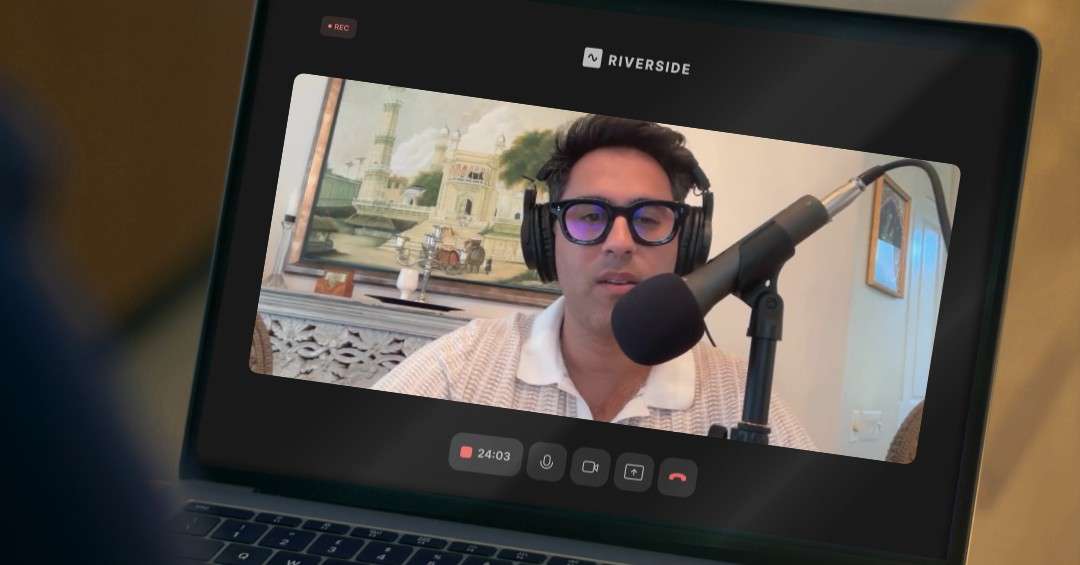
That single rule has brought clarity, confusion, opportunity, and risk all at the same time. In a recent episode of Letters of Intent, Carbon Law Group attorneys Pankaj Raval and Sahil Chaudry broke down the state of AI and intellectual property with one clear message for small businesses. You can use AI, but you must document and prove the human work behind your innovation.
For many founders this is not just a legal detail. It is a business risk. It can impact whether your product is protectable, whether your valuation holds up during investment, and whether your idea can withstand competitors who can now copy faster than ever before.
Below is a founder-friendly guide that explains what the human-only inventor rule means, why AI compliance now affects due diligence, and how businesses can protect their most valuable asset. their ideas.
The Human Only Inventor Rule Explained
In 2025, courts around the world reaffirmed something that had been debated for years. Only natural persons can be listed as inventors on a patent. This became headline news when the Thaler v. Vidal decision made it clear that naming an AI system as an inventor would not be accepted by the United States Patent and Trademark Office. Europe, Australia, and several Asian jurisdictions echoed the same position. If no human invents it, it is not patentable.
For small businesses, this matters more than many realize. The moment AI models became capable of designing molecules, generating product designs, optimizing code, or creating new workflows, founders faced a new question. If AI generates the solution, who is the inventor? And can that invention be protected?
Courts have now answered. AI cannot be named. AI cannot be credited. AI cannot own or originate intellectual property. This means the human directing the process is the true inventor.
But what counts as directing the process?
Courts have suggested that it must involve more than simply giving an AI tool a prompt. Human involvement must include judgment calls, refinements, evaluations, design choices, strategic decisions, or problem solving that shapes the final output. In other words, the human must be meaningfully involved.
Imagine two scenarios.
Scenario 1. A designer tells an AI tool to create ten prototype sketches for a consumer product. The designer reviews all ten, selects one, adjusts proportions, changes materials, and redesigns the ergonomics.
Here, the designer is the inventor.
Scenario 2. A founder asks an AI tool to generate a complete mechanical design for a wearable device. The founder does not meaningfully edit the structure or make any technical decisions. They simply submit the design as is.
Here, there may be no inventor that meets the legal threshold for human involvement. The invention may be unpatentable.
This shift has turned R and D on its head. For decades, businesses operated with the assumption that if you created something novel, you could protect it. Now, the question is whether you, as a human, created it enough.
This moment is especially important for small and growing companies because patents can create a moat that protects early market share. A small startup often relies on its intellectual property to compete with larger players. Without patent protection, competitors can copy the same innovation faster, cheaper, and with less risk.
The human only rule also influences how businesses must document their work. This includes keeping detailed records of brainstorming sessions, prototypes, decision logs, and human edits made throughout the development process. Many founders overlook this. They rely on files scattered across emails, Slack channels, and different AI tools. But in the new legal era, documentation is proof. And without proof, there is no protection.
This is why businesses are shifting from casual AI use to structured AI use. They need systems that track human prompts, human decisions, and human edits every step of the way. They need invention assignment agreements that include AI specific clauses. They need internal policies that clarify what employees can and cannot use AI for.
Courts are clear. Only humans can invent. The question that now determines protection is whether a human can prove they actually did.
How AI Is Disrupting R and D And Why It Matters For Small Businesses
AI has created a strange version of the future. On one hand, businesses can now build products faster than ever before. On the other hand, so can everyone else. This speed has transformed software development into something similar to fast fashion. As Pankaj explains, Sam Altman once described the new reality as fast fashion for SaaS. It is quicker, easier, and cheaper to copy digital products than ever before.
Think of how fashion brands release entire collections every few weeks. That same cycle now exists for software. A competitor can see your product update on Monday, recreate the features using an AI code generator by Wednesday, and launch a comparable version by Friday.
This is not science fiction. It is happening every day.
Because of this rapid pace, small businesses face three new challenges.
Challenge 1. Your competitive advantage now has a shorter lifespan
If your product can be copied in days rather than months, then your market lead shrinks dramatically. Small businesses used to rely on their secret sauce. Now they must rely on legal protection, quality relationships, and customer loyalty.
Challenge 2. Your patent strategy becomes more important
Software is notoriously hard to patent. AI generated software is even more complicated. Without clear proof of human involvement, your patent application may be rejected. And once you lose the chance to file, you cannot get that moment back.
Challenge 3. Investors and acquirers are becoming more skeptical
When a company’s code can be replicated quickly, the conversation shifts from patents to defensibility. Investors ask questions like.
- Who built this?
- How much AI was used?
- Is this IP actually protectable?
- If not, is the company still worth the valuation?
A strong IP portfolio increases valuation. A weak IP portfolio decreases it. And with AI involved, founders must be ready to prove everything.
The Fast Fashion For SaaS Effect
This idea describes how fast cloning has become in the tech world. A small development team can use AI tools to reverse engineer features at incredible speed. For example, imagine a startup spends eight months building a project management tool. They ship a unique feature that helps users categorize tasks intelligently. It gains traction. It gets attention.
Within weeks, three competitors could ship nearly identical versions simply by inputting your interface and descriptions into an AI agent. These rivals may not have the original vision, but they now have your functionality.
There are two major consequences.
First, copyright may not protect you.
Copyright protects expression, not ideas. If your competitor rewrites the code, even if it performs the same task, it may not be an infringement.
Second, trade secret protection becomes harder.
AI models can infer functionality from public demos. Even if your code is secret, your idea is not.
This is why founders must adapt. The new competitive advantage is not simply what you build. It is how fast you secure protection, how clearly you document human involvement, and how well you structure your agreements. It is also how well you control access to your systems.
Small businesses that treat AI like a tool, not a replacement, are thriving. They use AI to streamline processes but keep humans in charge of invention. They maintain strong documentation. They update their employment agreements. They refine their internal policies. And they approach their intellectual property not as an afterthought, but as a core business asset.
When your competitors can clone your features, your best defense is to ensure they cannot clone your IP.
How AI Compliance Is Now Affecting Due Diligence
This is one of the most important developments of the year, yet one many business owners have not heard about. AI use is now part of due diligence. It is being baked into every serious transaction, whether it is an investment round, an acquisition, or a merger.
This means that when someone evaluates your business, they are no longer simply asking about revenue, team strength, or product roadmap. They are asking how much AI was used to build your intellectual property. They want to know whether your patents are valid. They want to know whether the copyright issues are clean. They want to know whether your training data could expose you to liability.
If your IP portfolio is not clean, your valuation may drop. And in fast moving markets, the drop may be significant.
Below are the main reasons why AI compliance has become a mandatory checklist item for deal makers.
1. Investors Need To Know Your IP Is Actually Yours
Imagine a company that uses AI to generate code for its flagship product. There is minimal human involvement. The founder cannot articulate what part of the invention the human contributed. When an investor reviews the patent applications, they ask the critical question. Who invented this?
If the answer is unclear, the patent becomes vulnerable. And when the patent becomes vulnerable, the company becomes less valuable.
This scenario is more common than founders realize. Many startups rely heavily on AI tools to speed up development. There is nothing wrong with that, but without documentation, they create uncertainty. And uncertainty is the enemy of investment.
2. Buyers Want To Avoid Hidden Copyright Liability
AI models are trained on massive datasets. If a model produces something too similar to an existing copyrighted work, it could expose your business to infringement claims. This risk increases when AI is used without guardrails.
For example, one company hired a marketing freelancer who generated blog posts using an AI system that was not trained on licensed content. Months later, a competitor accused them of using copied text. They had no idea the content came from a potentially infringing source. They simply trusted the contractor.
When the company went through a transaction, the issue surfaced during the IP audit. The buyer negotiated a reduced price due to potential liability. What could have been a small issue became a seven figure valuation impact.
This is why businesses need policies that address:
- acceptable AI tools
- acceptable prompts
- acceptable use cases
- prohibited use cases
- required human review procedures
Without these, your team may unknowingly create legal risk.
3. Patent Offices Now Ask About AI Use
The USPTO and other patent offices have begun asking applicants whether AI was used in the invention process. They want to know whether the invention has enough human involvement to qualify for protection.
This means your application must be prepared with clarity. If you cannot explain the human role, your chances of approval weaken.
Small businesses that rely on AI must prepare early. Not after the invention. Not after the prototype. But from the moment ideation begins.
4. Contracts Must Reflect AI Ownership
Your employment contracts and contractor agreements must clarify who owns AI assisted inventions. Without this, your company could lose ownership rights if a team member creates IP using AI and the contract does not assign those rights to the business.
This issue is most common in startups that hire independent contractors. They often assume that anything created for the company belongs to the company. But unless the agreement specifically includes AI assisted work, ownership may be disputed.
This is why updating contracts is not optional. It is necessary.
The Founder Friendly Checklist To Protect AI Assisted Inventions
Pankaj and Sahil emphasize a simple but powerful checklist for founders heading into 2026. While large corporations have entire legal departments to manage risk, small businesses often overlook these steps. And in the AI era, overlooking small legal steps can create big problems later.
Here is the step by step checklist with real world examples for clarity.
Step 1. Document The Human Role In Every AI Assisted Creation
This is the foundation of your IP protection.
You need to record:
- Who created the idea
- Who evaluated the outputs
- Who made the decisions
- Who edited drafts
- Who refined the invention
- Why certain choices were made
If a human directed the process, you must be able to prove it.
One simple method is maintaining a development log. This can be done in Google Docs, Notion, or any internal system. Each time AI is used, team members record their involvement. This can later be used to support patent filings or investor due diligence.
Step 2. List Humans, Not AI Systems, On Patent Applications
This rule is absolute. It is not negotiable. If AI appears anywhere as an inventor, the application will be rejected.
Your patent attorney will guide you, but your internal documentation must make clear who performed the inventive steps. If that person leaves the company, you still need their assignment agreement to ensure the invention belongs to your business.
For small teams, this means you must keep updated agreements. For growing teams, this means you must have a standardized onboarding process that covers invention assignment.
Step 3. Update Your Agreements To Address AI
This includes:
employment agreements
contractor agreements
invention assignment agreements
joint development agreements
vendor agreements
These documents should specify that:
- all AI assisted inventions belong to the company
employees must disclose AI use in development
prohibited types of AI use are clearly listed
This protects your ownership rights and prevents disputes.
Step 4. Train Your Team
Your team must understand:
- How to use AI
- When to use AI
- When not to use AI
- How to document AI use
- How to review AI outputs
Training reduces risk. It also increases consistency. A small business with clear AI policies looks more professional and more attractive to investors.
Step 5. Be Transparent With Investors And Regulators
If you are asked whether AI was used, answer honestly and clearly. Investors appreciate transparency. Regulators require accuracy. Cover up creates risk. Clarity builds trust.
Transparency also speeds up deals. When a buyer reviews your IP portfolio, having clean records avoids delays.
Move Fast, But Bring Your General Counsel With You
The old startup motto was move fast and break things. Today, the motto must be move fast and break things, but bring your general counsel with you. AI empowers founders to innovate at record speed, but innovation without protection can place your entire business at risk.
Human authorship is still the key to intellectual property. AI can assist. AI can accelerate. AI can inspire. But AI cannot invent.
Small businesses that treat intellectual property as an asset will win the next decade. They will build defensible products. They will navigate due diligence with confidence. They will attract stronger investors. They will scale with stability.
This is the moment to update your contracts. This is the moment to train your team. This is the moment to document your inventions. And if you want guidance, Carbon Law Group is here to help you protect what you create.