
When Bad Bunny walked onto the Super Bowl halftime stage, more than 128 million people watched. The lights, the sugar cane, the electrical poles shooting sparks, Lady Gaga, Ricky Martin. It was extraordinary.
But at Carbon Law Group, we watched it a little differently.
Underneath the music was a highly sophisticated business transaction. One packed with lessons about intellectual property, value strategy, creative control, and the attention economy. In fact, those lessons apply to every entrepreneur and small business owner, not just global superstars.
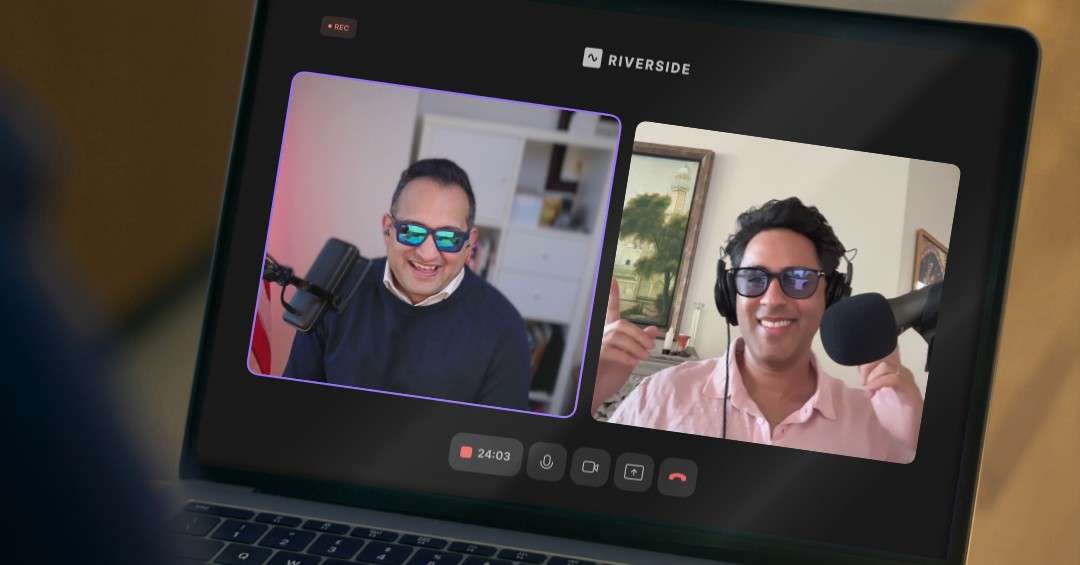
In Episode 49 of Letters of Intent, Pankaj Raval and Sahil Chaudhary put on what they call their “deal lawyer glasses.” They broke down the mechanics behind the world’s most-watched performance. Indeed, what they found is a blueprint that every business owner should understand.
This post covers the four big takeaways from that conversation.
The Paradox: Why Did Bad Bunny Perform for Free?
Let us start with the most surprising fact about the Super Bowl halftime show.
Bad Bunny did not get paid to perform.
Think about that for a moment. The most-watched musical performance in the world drew 128.2 million viewers. And the headliner walked away without a performance fee. That viewership number, notably, actually outperformed the game itself, which drew 124.9 million viewers. More people watched Bad Bunny than watched the football.
So why would one of the biggest artists on the planet agree to that arrangement?
Understanding Value Arbitrage
The answer is a concept called value arbitrage. It is the idea of giving up something of lesser value in the short term to capture something far more valuable in the long run.
In Bad Bunny’s case, the short-term sacrifice was a performance fee. The long-term gain, however, was something no check could replicate: simultaneous exposure to over 128 million people. That kind of platform, in fact, does not exist anywhere else. No other event allows a single artist to reach that many people at once.
Furthermore, the value does not stop with the live broadcast. For instance, social media clips from the performance generate billions of additional views. Streaming numbers spike immediately. New fans discover the catalog. Old fans revisit it. Consequently, all of that attention flows directly into touring revenue, merchandise sales, and long-term brand equity.
As Sahil put it on the podcast: “This is really a kind of value arbitrage where the artist is giving up short-term cash for a much longer-term play, and that play is amplification.”
The downstream numbers tell the story. Notably, after the halftime show, Bad Bunny’s streams surged. His upcoming tour will almost certainly be his biggest ever. Indeed, the short-term cost of a foregone fee becomes trivial compared to what that performance unlocks over the following months and years.
What This Means for Your Business
You do not need a Super Bowl invitation to apply this principle. Indeed, small businesses face versions of this trade-off constantly.
Perhaps you are considering offering a free workshop to a well-connected audience in exchange for referrals. Or maybe you are writing content for no upfront pay to build credibility and reach. In other cases, you might offer a discounted rate to a high-profile client whose name opens doors for years.
In each case, the core question remains the same. What is the long-term value of the exposure, and does it outweigh the short-term cost? Understanding how to evaluate that trade-off is one of the most important skills any business owner can develop. Moreover, knowing how to structure the legal terms around it is equally critical.
At Carbon Law Group, we help clients think through exactly these decisions. Not just whether to make the trade, but how to protect themselves while doing it. Specifically, we help ensure that any agreement clearly defines what you are giving up, what you are getting in return, and what happens if the other party does not deliver on the promised value.
It Is an IP Deal, Not a Service Contract
Here is where things get genuinely interesting for anyone who creates, performs, or builds anything with creative value.
Most people think of a performer at a major event as a vendor providing a service. The event happens, the artist performs, and everyone goes home. In reality, however, that framing misses almost everything that actually matters.
As Sahil explained on the podcast: “This is less like a contract for services, and this is more of an IP deal.”
Breaking Down the Bundle of Rights
Intellectual property, commonly called IP, is not a single thing. It is a bundle of distinct rights. Importantly, you can license, retain, transfer, or limit each one separately. In a deal the size and complexity of a Super Bowl halftime show, that bundle is significant.
Here are the key rights in play.
Public performance rights govern whether and how artists can perform the music live in front of an audience. These rights are typically managed through performance rights organizations, but in a broadcast context, they require separate negotiation.
Sync rights cover the synchronization of music with visual content. Specifically, when broadcasters record and air the performance, stream it online, or clip it for social media, sync rights determine who controls that use and who profits from it.
Master recording rights relate to the actual recorded version of the sound. The master is distinct from the underlying song composition. Specifically, whoever owns the master controls all usage and sublicensing of that recording.
Name, Image, and Likeness rights, commonly called NIL rights, govern how the artist’s identity appears in promotional materials and brand partnerships. These rights became especially significant given Apple’s involvement as a title sponsor.
Broadcast rights determine which territories the performance can air in and whether broadcasters can sublicense those rights internationally.
Each of these rights requires its own negotiation. The NFL owns the production once it enters a recorded medium. Bad Bunny, however, retains rights to his music, his name, and critically, his creative control over the show itself. Consequently, both sides walk away with something meaningful. Neither side gives up everything. That balance is the result of careful, experienced legal negotiation.
Three Things to Remember When Negotiating IP
Whether you are an artist, a content creator, a software developer, or a small business owner who has built anything of creative value, three words should be at the forefront of your mind every time you agree.
Usage. Terms. Territory.
Usage, for example, defines what the other party can actually do with your work. Terms define how long the permission lasts. Territory, in turn, defines where geographically, that permission applies.
Many small business owners sign agreements without thinking carefully about any of these three dimensions. Consequently, they hand over rights in perpetuity, globally, for uses they never anticipated, in exchange for a one-time payment that seems fair at the time but becomes deeply undervalued as others use that work further down the line.
Consider a photographer who licenses images to a client without defining territory or duration. That photographer may find those images appearing in global campaigns for years. Similarly, a software developer who does not clearly define IP ownership in a client contract may lose the right to reuse their own code in future projects. Furthermore, a consultant who creates proprietary frameworks without contractual protection may see their methodology adopted, repackaged, and sold by someone else entirely.
Understanding these concepts before you sign is how you retain the ability to benefit from your own creative work long after any single deal is done. At Carbon Law Group, we review and negotiate these agreements regularly. In fact, the difference between a well-drafted IP clause and a generic one can be substantial, and that difference compounds over years of business activity.
Creative Control Is Not Just an Artistic Preference. It Is a Business Asset.
One of the most compelling moments in the halftime show discussion on the podcast was the conversation about creative control.
Bad Bunny did not simply perform songs. In other words, he told a story. The sugar cane imagery referenced Puerto Rico’s agricultural history and colonial past. Additionally, the electrical poles with sparks flying referenced the catastrophic power outages Puerto Rico suffered after Hurricane Maria. The guest appearances, the choreography, the costumes, and the cultural symbols were all deliberate decisions.
None of that, in short, would have been possible without creative control.
Why Creative Control Matters in Business Deals
For artists and celebrities, people often frame creative control as an artistic issue. In reality, it is a business and legal issue. Specifically, it determines who has the final say over how you present your work, your brand, and your identity to the world.
When you give up creative control in a deal, you give up the ability to protect your reputation, tell your own story, and ensure your work reflects your values. For smaller artists or smaller businesses, that can sometimes be a calculated trade-off. For instance, you may need to accept certain constraints to access a larger platform or a more powerful partner.
However, the closer you get to being an irreplaceable voice in your space, the more leverage you have to retain that control. And accordingly, the more important it becomes to protect it contractually.
As Pankaj noted on the podcast: “If they wanted to pull such a big artist, they usually have to give up a lot of those rights.” The NFL needed Bad Bunny more than Bad Bunny needed the NFL. Consequently, that leverage translated directly into creative autonomy. And that autonomy is precisely why the performance became a cultural statement rather than just a spectacle.
Creative Control for Small Businesses
For small business owners, the equivalent of creative control shows up in brand licensing agreements, white-label arrangements, and partnership contracts.
Consider a bakery that licenses its signature product to a larger food company for distribution. Without the right contractual protections, that larger company could rebrand the product, change the recipe, or discontinue it entirely. The original bakery, accordingly, would have no say in the outcome.
Or consider a graphic designer who creates branding for a client. Without clear IP ownership clauses in the contract, the client may claim full ownership of work that the designer later needs in a portfolio or built using existing proprietary elements.
Creative control and IP ownership have direct, practical consequences for how your business operates and how much long-term value you can extract from your own work. The time to establish these protections is always at the beginning of a deal, when you have the most leverage. At Carbon Law Group, we help businesses negotiate these protections before problems arise, not after something has already gone wrong.
Small Businesses Are the Heart of the American Dream
Perhaps the most resonant moment in the halftime show, from a Carbon Law Group perspective, was the spotlight on small businesses.
Bad Bunny did not fill his stage with corporate sponsors or luxury brands. Instead, he filled it with barbershops, boxing gyms, and local community anchors. Real businesses, real people, real culture. In fact, it was a deliberate statement about what makes a community thrive, and it landed powerfully on the biggest stage in the world.
Why This Matters Beyond the Performance
At Carbon Law Group, this is something Pankaj and Sahil believe deeply. Pankaj said it clearly on the podcast: “These small businesses support their families, support others building businesses. That is really just paramount to what our American dream is all about.”
The American Dream is not a macroeconomic theory. It is millions of individual decisions made by people who built something from nothing, who hired their first employee, who opened a second location, and who figured out how to endure through difficult seasons.
Many of those people came from somewhere else. Pankaj and Sahil both spoke on the podcast about how their families came to the United States as immigrants and built remarkable lives. That story, notably, is not unique to them. Indeed, it is the story of countless business owners across Los Angeles and across the country.
Bad Bunny did not just celebrate Puerto Rican culture. He celebrated the local-to-global idea. As Pankaj observed: “Not only is it local, he talked about a lot of small businesses, but he also brought the global mindset to the local.” That is a powerful framing for what entrepreneurship at its best actually looks like.
What Carbon Law Group Stands For
We built Carbon Law Group for exactly those people.
Small and mid-sized business owners face a disproportionate share of legal complexity. Specifically, they navigate entity structuring, contract negotiations, intellectual property, employment law, and regulatory compliance. Often, they do this without the resources that larger companies bring to bear. Meanwhile, the consequences of getting any of it wrong fall directly on the founder, on their family, and on the employees who depend on them.
Our commitment is to make high-quality legal guidance accessible to the businesses that need it most. Not just the ones that can afford large firm retainers. Specifically, we are here for the businesses that are building something real, something meaningful, and something that genuinely contributes to their communities.
If you watched that halftime show and felt a spark of recognition, if you saw your own story reflected on that stage, then you already understand what we work toward every day. Indeed, the businesses we help grow do not just generate revenue. They create jobs, preserve culture, support families, and prove that the American Dream is still very much alive.
The Takeaway for Every Entrepreneur
The Super Bowl halftime show was not just entertainment. In fact, it was a live demonstration of concepts that every business owner should understand.
Value arbitrage teaches us to think long-term. Short-term sacrifices can produce extraordinary long-term returns when you structure the trade correctly. Similarly, IP strategy teaches us that creative work is not just a product or a service. It is a bundle of rights, and how you negotiate those rights determines how much value you extract over time. Creative control, furthermore, teaches us that protecting your ability to tell your own story is fundamental, not optional. And the celebration of small businesses on that stage reminds us that what we build every day matters, not just economically, but culturally and personally.
At Carbon Law Group, we help entrepreneurs make better deals, protect their intellectual property, and build the legal foundations that allow their businesses to grow with confidence. Whether you are negotiating your first major contract, understanding what rights you own in a creative collaboration, or simply making sure you have structured your business to protect what you have built, we are here to help.
Start with a conversation. It might be the most valuable business decision you make this year.