
Understanding How Service Drives Our Work
Two men share a tent on a camping trip in India. Neither knows the other. They are there through a program called Indicorps, which brings together people from across the diaspora who want to serve in some way.
Years later they practice law together in Los Angeles.
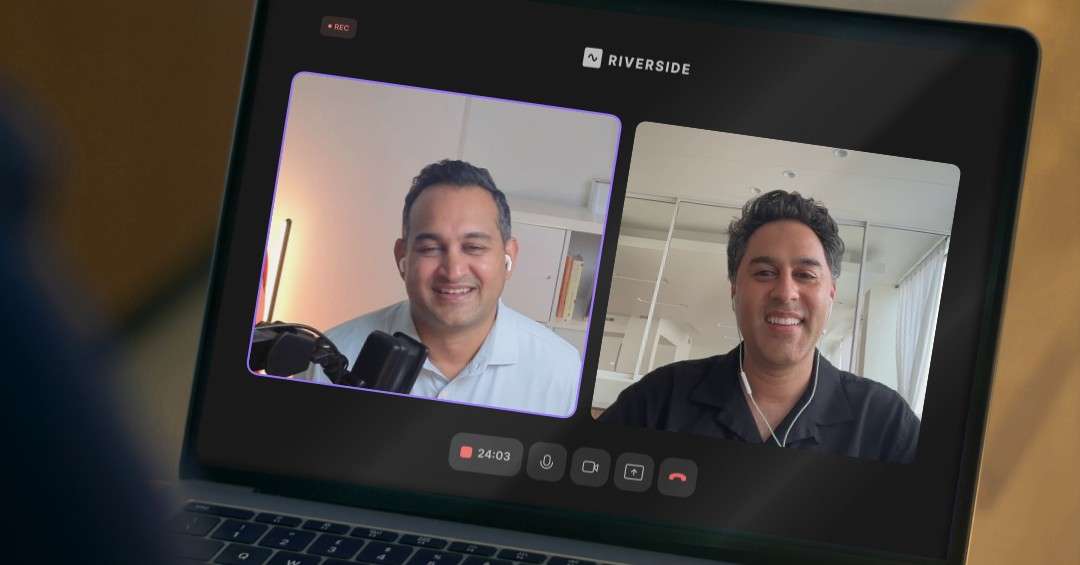
That is how Pankaj Raval and Sahil Chaudry met, and on a recent episode of Letters of Intent they talked about why that experience still shapes how Carbon Law Group operates. It is a different kind of episode. No term sheets, no statutes, no case breakdowns.
If you are choosing a lawyer, though, this may be more useful than any of that. Understanding what motivates a firm tells you something the practice area list never will.
Where the Story Starts
Indicorps brought together second-generation Indians living in the United States, the United Kingdom, and Australia, all connected to India but raised elsewhere.
That created a shared question. What does it mean to exist in a society that is Western and American, then come home to a world steeped in Indian tradition and culture?
An unpromising beginning
Pankaj’s first trip to India was not a good time. He was in high school, traveling between the homes of family and family friends. It was hot and uncomfortable, and he describes the experience plainly as unpleasant.
Something drew him back anyway.
Before law school he knew he wanted to do something connected to service. People he met through the program encouraged him to apply, one thing led to another, and he ended up there.
What made it transformative
He describes it as one of the most transformative experiences of his life, and the reason is not what you might expect.
It showed him how much fun helping people was. How gratifying. This was a period when he and nearly everyone around him was young and single, without the financial obligations that later dominate how people think about work.
That combination, meaningful work and no pressure to monetize it, is rare. Most people encounter it briefly if at all, and it tends to leave a mark.
Rejecting the Savior Mindset
Here is the part of the conversation that matters most, and it cuts against how service usually gets discussed.
Sahil described what happens when you actually immerse yourself in a community and work alongside people. You realize quickly that you are not really helping anyone.
His phrasing was direct. The people you are quote unquote helping are going to be just fine without you. They have been living in those places, with their systems and their world, long before you arrived.
What is actually happening
So if not help, then what?
Human beings getting together and discovering what it means to be human with each other. Learning that interdependence is satisfying and fulfilling in a way that one-directional charity never is.
Pankaj connected this to a larger pattern, the way Western ideologies sometimes arrive positioning themselves as saviors to the East, or the familiar north and south divide in how development gets framed. Deconstructing that assumption was part of the experience.
What he took away was similarity rather than difference. It is happenstance that he was born in Chicago rather than somewhere else. How much of that was in his control? Very little.
Why this matters for a law firm
The connection is not obvious until you hear him make it.
The moment your ego says “I am here to help you” rather than “we are here to learn together,” you have missed the point. And you have missed a substantial amount of satisfaction along the way.
Applied to legal practice, that means treating a client as a capable person who happens to need particular expertise, not as someone requiring rescue. The distinction shows up in how conversations go and in whether the client understands their own deal at the end.
Service and Business Are Not Opposed
Plenty of people assume public service and entrepreneurship pull in opposite directions. Sahil raised that assumption and rejected it based on what he has watched over a year and a half at the firm.
The mechanism
Pankaj described the connection as fairly simple. He and Sahil were given the ability to learn and understand business law. That knowledge now functions as an active service for clients in the context of entrepreneurship.
Then he stated the operating goal: always to provide more value than people are paying for.
What that looks like in practice
Sahil put it in terms of what a client should feel. If you are a client of Carbon Law Group, you should feel you received more than you paid for. Attention, care, urgency, quality, and a firm genuinely invested in your outcome.
The reason is not purely altruistic, and he was candid about that. Your success is connected to their success, financially and otherwise. They want you to reach the finish line, whatever that finish line means for you.
That alignment is worth looking for in any professional relationship. A firm that benefits when you succeed behaves differently than a firm that benefits from activity.
Democratizing Legal Information
The podcast itself came from a specific frustration.
Legal services are expensive. Most startups and entrepreneurs do not have capital to access the kind of strategic information typically gate-kept behind large firm hourly rates.
The problem with information abundance
There is no shortage of information available, particularly now. The difficulty is parsing it.
Pankaj framed the firm’s advantage as pattern recognition rather than access. They have seen founders raise money many times. They have watched businesses struggle and watched businesses fail. That accumulated experience is what allows them to help someone facing a decision for the first time.
Why give it away
His answer was philosophical rather than strategic.
He described approaching the practice with a giving mindset, and made a broader point about generosity. Imagine how much better the world would be if more people operated that way. He contrasted it with what he called poverty consciousness, a sense of lack and victimization that treats value as something to be hoarded.
Whether or not you share that worldview, it produces a practical result. Complex topics get broken down publicly rather than reserved for paying clients.
Learning in public
Sahil added something honest about the format. Neither of them pretends to have every answer.
New topics keep arriving, whether artificial intelligence, tariffs, or emerging deal structures. Rather than projecting certainty, they research and work through it. By the end of an episode, they know more than they did at the start.
Listeners get to watch that process rather than receive a polished conclusion. As Sahil put it, iron sharpens iron.
Advisory Relationships, Not Transactions
This is the firm value with the most direct implication for anyone considering hiring them.
Pankaj has made it explicit: they are not transactional draftspeople. The goal is advisory relationships.
What the difference means
A transactional lawyer receives your document, processes it, and returns it. Efficient, and it leaves you no better informed than before.
An advisory relationship means being the phone call when a founder says they just got hit with a term sheet and do not understand any of it. And then, rather than saying “give it to me, I will handle it,” breaking the information down so the client actually understands what they are signing.
Why respect is the operative word
Sahil grounded this in something specific. They respect their clients.
Clients are the ones paying the bill. They came up with the idea. They are the ones excited about dreaming and bringing that dream to life.
That respect produces a method. Take complex topics the client is not expected to know, break them into simple questions and answers, and get at the heart of what the client actually cares about. Then reflect that in the deal.
The alternative, complexity used as a demonstration of expertise, leaves the client passive and uninformed. Which means they cannot make a good decision, even when the document is technically flawless.
Why Transactional Work
At some point in law school you choose a track. Litigation or transactional.
Sahil remembers being drawn to transactional work for a specific reason. At the other end of that job is a deal. People agreeing to create value.
His contracts professor saw it immediately. Told him he would be a transactional lawyer, because he could see what motivated him: people coming together, creating value, making deals, growing.
The shared motivation
Pankaj agreed without hesitation. Wanting to see clients grow is what gets them both up in the morning.
That orientation is worth knowing about when you choose counsel. A lawyer motivated by deals getting done behaves differently from one motivated by billable disputes. Neither is wrong, and litigation serves a critical function in our society. But you want your interests aligned with your attorney’s temperament.
Letters of intent, both meanings
The podcast name carries a double meaning that Pankaj explained on the episode.
A letter of intent is a deal document, obviously. It is also a letter you write to yourself. Both he and Sahil write, journal, and think about ideas, and the name reflects a question about intention. How do you live with more of it?
Work With Us
Carbon Law Group works with founders, small businesses, and growing companies across Los Angeles on the transactions and decisions that shape whether a business holds up. Entity structure, contracts, financing, intellectual property, and acquisitions.
What the episode conveys better than any service list is the posture. Pankaj and Sahil are trying to be on the same team as their clients rather than advisors positioned above them, learning alongside people rather than dispensing wisdom.
If that sounds like the working relationship you want, contact Carbon Law Group at carbonlg.com to schedule a consultation. And if you would rather hear them make the case themselves, the episode is worth twelve minutes.
Carbon Law Group’s links: https://linktr.ee/carbonlawgroup