
AI Voice Cloning: Protect Your Vocal IP

Home / Podcast / AI Voice Cloning: Protect Your Vocal IP

AI Voice Cloning: Protect Your Vocal IP

Your voice is your most personal asset. In the era of generative AI, it is also one of your most vulnerable.

While you sleep, your vocal identity could be scraped from a podcast episode, a YouTube video, a social media clip, or a product demo you recorded two years ago. It could be cloned, trained into a model, and deployed in someone else’s campaign without your knowledge or consent. And right now, the law is moving too slowly to stop it.

This is not a hypothetical risk reserved for celebrities. It is a threat that affects podcasters, founders, content creators, voice-over artists, and any business owner whose voice is part of their brand. In Episode 59 of Letters of Intent, Pankaj Raval and Sahil Chaudry break down the legal landscape around AI voice cloning and provide a practical roadmap for protecting your vocal IP before the first byte of data is ever recorded.

Here is what you need to know.
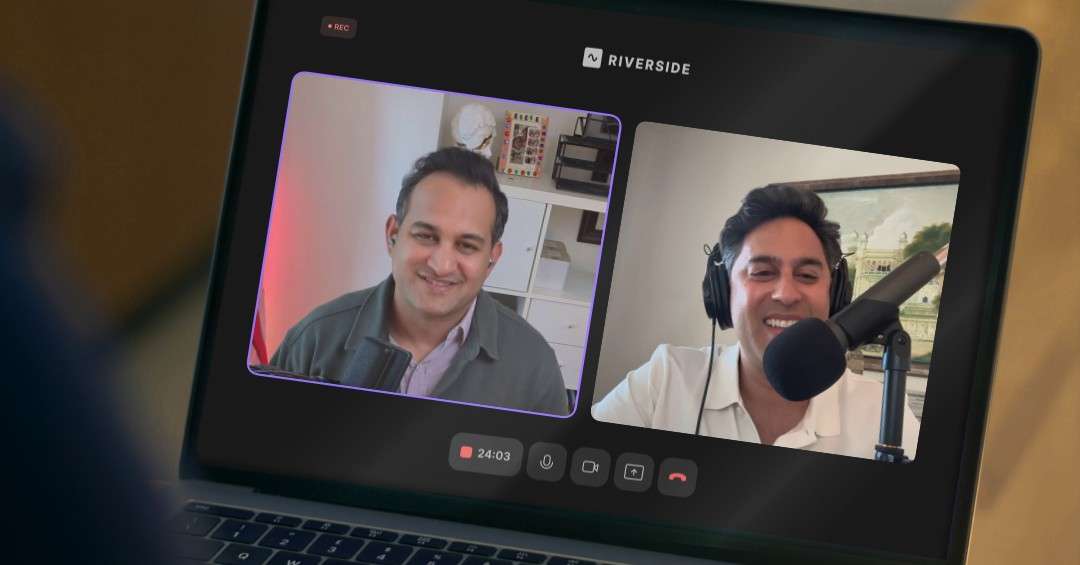
Pankaj Raval and Sahil Chaudry of Carbon Law Group recording a Letters of Intent podcast episode on Riverside, discussing AI voice cloning risks and how founders and small business owners can protect their vocal IP through trademark law, contract drafting, and data sovereignty strategies.
Your voice is being recorded right now. The question is whether your contracts, your trademark strategy, and your platform agreements are protecting it. Pankaj and Sahil break down exactly what to do before the law catches up.

The Problem: AI Can Clone Your Voice Without Copying a Single File

The core legal challenge of AI voice cloning is subtle but significant. Traditional copyright law protects specific recordings. If someone duplicates your song or reproduces your audio file without permission, copyright gives you a clear path to enforcement.

But AI works differently. A machine learning model does not copy your recordings. It trains on them, absorbing the patterns, cadence, tone, and inflection of your voice. Then it generates entirely new audio that sounds like you, without reproducing any existing file. That distinction matters enormously in court.

“AI can generate new content that mimics a sound without copying a specific file,” Pankaj explained on the show. This is precisely why copyright, the traditional shield for audio creators, is struggling to protect people from voice cloning.

The technology is advancing faster than any regulatory body can respond. Deepfakes are already saturating social media. Pankaj described the experience of scrolling through his feed and spending half his time wondering: “Is this AI? Is this AI?” That skepticism is not paranoia. It is a reasonable response to a media environment that has been fundamentally destabilized by generative tools.

For small business owners who use their voice in branding, marketing, or public content, this environment creates real exposure. The question is not whether someone could clone your voice. It is whether you have taken the legal steps to create consequences if they do.

From Copyright to Trademark: A Strategic Pivot

Because copyright protection has gaps in the AI context, some of the most prominent voices in the world are turning to trademark law instead.

Taylor Swift recently made headlines by filing three trademark applications specifically targeting her voice and image. One application covers her saying “it’s Taylor Swift.” Another covers a specific visual of her performing during the Eras Tour. Separately, Matthew McConaughey trademarked his famous catchphrase “all right, all right, all right” to establish a legal perimeter around his identity.

Why trademark? Because trademark law focuses on source identification. A trademark signals to the market that a particular name, phrase, sound, or image comes from a specific origin. When someone uses a confusingly similar identifier to profit commercially, trademark law gives the owner tools to stop it.

“Trademark law is all about the source identifier,” Pankaj explained. “Their fame is their brand. And their brand is their protection.”

For a celebrity, the name and voice together form the commercial identity that audiences pay for and engage with. When AI generates content that mimics that identity, it undermines the source identifier and creates consumer confusion. That is exactly the kind of harm trademark law was designed to address.

For founders and business owners, the lesson is clear. If your voice, your name, or your personal identity drives commercial value in your business, trademark protection is worth exploring seriously. Copyright alone is not enough in the current environment.

Carbon Law Group helps clients evaluate their trademark strategy for name, image, and likeness in the context of emerging AI risks. If you are a creator, podcaster, or founder whose voice is part of your brand, now is the time to have that conversation.

The Most Dangerous Phrase in Any Contract: “In Perpetuity”

Once you understand the trademark layer, the next critical area is contract language. Specifically, the terms you agree to when you create, record, or license your voice.

Sahil put it plainly on the show: “In perpetuity is a very scary phrase in the era of the digital age. If you give up rights forever, you have no leverage when the technology evolves.”

Think about what granting perpetual rights actually means in 2026. When you signed that voiceover contract or that content licensing deal, AI voice cloning did not exist commercially. The person who drafted the agreement had no idea that ten years later, someone could use your recording to train a model that generates infinite synthetic versions of your voice. But if the contract grants rights “in perpetuity,” that is exactly what you may have agreed to.

Every agreement involving your voice, name, image, or likeness should include strict time limits, geographic boundaries, and specific use case restrictions. A voiceover agreement for a specific marketing campaign should state that the audio is only for that campaign, in those markets, for that defined period.

In California, specific legislation is developing around AI use of voice data in commercial contexts. Contracts must explicitly address whether the recorded content can be used for AI training or synthetic voice generation. If that language is absent, the rights may default to whoever commissioned the work.

Do not assume that “industry standard” language protects you. Review your existing contracts now. If you find perpetual grant language without AI exclusions, bring it to a business attorney who understands both entertainment law and emerging technology. Carbon Law Group regularly helps clients audit and renegotiate agreements to close these gaps before they become costly.

Ring-Fencing Work Made for Hire: Excluding AI From Your Agreements

The “Work Made for Hire” doctrine is another area where small businesses and creators frequently get caught off guard.

Under copyright law, when someone creates a work within the scope of employment or certain commissioned works, the employer or commissioning party owns the copyright. Companies have increasingly used this doctrine to argue that because they commissioned a recording, they own the full bundle of rights, including the right to use that audio for AI training.

That argument needs to be stopped in the contract itself.

Modern agreements involving any audio or video content must explicitly carve out machine learning, data scraping, neural network training, and synthetic voice generation from the rights granted. If you do not carve it out, the other party may claim it is included.

Sahil was direct on this point: “You want to make sure that your drafting language explicitly excludes the right to use any of your recordings for machine learning, data scraping, or synthetic voice generation. You have to carve it out or it’s included.”

If a company does want to license a synthetic replica of your voice, that requires a separate agreement. That agreement should establish residuals for every deployment of the synthetic voice, not just a one-time payment for the recording session. You should get paid every time your synthetic voice is used, just as you would for any other licensed performance.

This is not about being difficult in negotiations. It is about recognizing that your voice is an asset with long-term commercial value, and structuring agreements accordingly.

Data Sovereignty: Your Recording Platform Might Be the Weakest Link

Here is a scenario that should concern every founder, podcaster, or content creator: you negotiate a flawless contract with a production company. Every AI exclusion clause is in place. The terms are precisely defined. You feel protected.

Then someone uses audio from the recording platform you used to make that content.

Most creators do not read the terms of service of the tools they use every day. Recording platforms, hosting services, video conferencing software, and content management systems often include language that grants the platform broad rights to use user-generated content to “improve services.” That phrase is frequently legal code for AI model training.

“If the platform’s default terms say they can use user-generated content to improve their services, you have some concerns,” Pankaj said on the episode. The platform may hold rights to your audio that you never intended to grant.

This is why Pankaj and Sahil recommend a terms of service audit as a core part of any IP protection strategy. Review every platform where your voice is recorded, stored, or published. Look specifically for data processing agreements, AI training provisions, and language about how user content gets used. If a platform’s terms are unacceptable, either negotiate a data processing agreement or choose a different tool.

You can also take a proactive step that Pankaj recommends: send written notice to platforms stating that you do not consent to the use of your voice data for AI training or commercial purposes. This creates an affirmative record that puts the compliance obligation back on the platform.

Data sovereignty is not just a privacy issue. It is an IP issue with direct financial consequences.

The Corporate Container: Structuring Your NIL Rights in an LLC

One of the most practical structural tools discussed in this episode is the use of a dedicated LLC to hold your name, image, and likeness rights.

The concept is straightforward. Instead of licensing your voice and identity directly as an individual, you transfer those rights into a dedicated LLC. That entity then becomes the contracting party for all voice-related and identity-related deals.

The advantages are significant. First, the LLC limits your personal liability if a dispute arises over a licensing agreement. Second, the business expenses related to protecting and monetizing your identity, including legal fees, recording costs, and negotiation expenses, become deductible through the entity. Third, having a professional corporate structure around these rights makes enforcement far more straightforward if a violation occurs. Calculating damages and pursuing remedies is cleaner when the rights are clearly held by a single legal entity.

“Having those rights housed in a corporate entity can make enforcement and calculated damages much more straightforward,” Sahil noted during the episode.

Additionally, if the asset becomes highly valuable, a dedicated LLC creates a structure that could attract investment or facilitate a future sale or licensing arrangement.

For founders and creators who are just beginning to build public profiles, setting up this structure now, before the rights become complicated, is significantly easier and less expensive than trying to restructure later. Carbon Law Group advises clients on NIL structures regularly and can help you evaluate whether a dedicated LLC makes sense for your situation.

What You Should Do Right Now

The law will eventually catch up to AI voice cloning. Congress will pass legislation. Courts will establish precedents. Regulators will issue guidance. But that process will take years. And while it unfolds, your voice remains exposed.

Fortunately, you do not have to wait for Congress to act. You can build your own protective structure right now, through contract drafting, trademark registration, entity formation, and platform audits.

Start by auditing your existing contracts for perpetual rights grants and missing AI exclusion clauses. If you find gaps, get them addressed before the agreements renew or expand. Review the terms of service on every platform where your voice is recorded or hosted. Consult a business attorney about whether trademarking your voice or name makes sense for your situation. And consider whether a dedicated LLC for your NIL rights is the right structure for where your business is heading.

At Carbon Law Group, we work with founders, creators, and small business owners to build the legal protections that actually hold up in an AI-driven world. Whether you need a contract audit, a trademark strategy, or help structuring a voice licensing deal, our team is ready to help.

Contact Carbon Law Group today at carbonlg.com to schedule a consultation. Your voice is your asset. Do not let someone else profit from it without your permission.

🔗 Learn More
Website: carbonlg.com

AI Voice Cloning: Protect Your Vocal IP

Pankaj Raval (00:00)
Welcome back to Letters of Intent, I’m Pankaj Raval.

Sahil Chaudry (00:02)
And I’m Sahil Chaudhary, corporate attorney here at Carbon Law Group.

Pankaj Raval (00:06)
This is a show where we break down the legal and business issues that matter to founders, operators, and growing companies.

Sahil Chaudry (00:12)
Today, we’re diving into the new frontier of identity theft and Pankaj, we’re going to need your expertise here. Pankaj, as you all may know, is Mr. IP. And today we’re going to be talking about AI voice cloning and how deal makers can protect their most personal assets before the first byte of data is ever recorded. We’re starting off with a huge warning. Your voice could be stolen while you sleep. And right now, the law is not fast enough to stop it.

Pankaj Raval (00:37)
So if you don’t secure your vocal IP today, you may lose the rights to own your sound forever. Scary, right? Dun, dun, dun. So if you’re a founder who does public speaking, a creator, or whose business kind of depends on your voice, or just a business owner trying to protect your brand’s digital footprint, you need to listen closely. The legal landscape is shifting right beneath our feet.

Sahil Chaudry (00:57)
I don’t know how many more shifts I can take here. Recent rumors are we’re gonna find out that there are aliens. We’re dealing with a lot of massive change all at once. So we’re gonna need some help getting grounded here. ground this in what’s happening right now.

Pankaj Raval (01:13)
I agree, man. All this all this change happening,

man, all this shit’s happening today. This makes me want to take a nap. You know, there’s so much going on in the world. know, we got wars, got AI, you know, threatening our jobs, our voices now. what it take? You know, I’ll just tell you, anecdotally, like, you and I both kind of, spend a little time on social media, looking at it, studying getting news from it, as many people do and

Sahil Chaudry (01:17)
Yeah, seriously

Yeah.

Pankaj Raval (01:37)
The amount of AI slop and digital slop that you’re seeing today is next level. Like I’m at a point where like, what am I even, why do I even watch this anymore? Like 90 % and half my time is thinking, is this AI? Is this AI? Is this AI? You know, so it’s just, it’s.

Sahil Chaudry (01:43)
Yeah.

Yeah, totally. That’s so true. I mean,

I actually think that if today we found out that aliens had landed on would just kind of scroll past it. I think this is, you know, there was a time where that would be big news, but today we’re dealing with the war, we’re dealing with AI, we’re dealing with a transforming economy.

Pankaj Raval (02:02)
Right.

Sahil Chaudry (02:12)
⁓ We’re dealing with major, major changes and it seems like aliens are going to be the least of our concerns.

Pankaj Raval (02:20)
Exactly. I’m

ready to say like, yeah, just take me away, man. Just let’s go. Let’s go. Yeah, let’s get to it.

Sahil Chaudry (02:23)
Right?

So let’s get into this to make sure we know how

our voices don’t get stolen from us. This is the property that you need to protect now. this is an interesting situation. Taylor Swift. So over the last week, Taylor Swift made headlines, not for a new album, but for a major legal maneuver. She filed three trademark applications specifically targeting her voice and image.

Pankaj Raval (02:30)
Let’s do it.

Yeah, you’re And, she’s trying to trademark the of she’s trying to trademark essentially her saying, hey, it’s Taylor Swift, and hey, it’s Taylor, along with very specific image of her on stage during the ERAs tour. And there’s a reason behind this. Taylor Swift is one of the biggest stars in the world right now. she filled stadiums, she’s got millions and millions of followers.

this makes a lot of sense for these kind of stars where their voice could be, hijacked essentially and taken over by unsavory characters leveraging star power.

Sahil Chaudry (03:21)
It’s so interesting that she went the trademark route because usually when we think about singers, we’re thinking about copyright, we’re thinking about songs and lyrics, but we’re talking about trademark because artists are now facing this massive wave of unauthorized AI deepfakes. It’s exactly what you alluded to. You’re looking online and you’re scrolling past something. You have no idea if that’s that person or not. And the traditional legal shields just aren’t cutting it.

Pankaj Raval (03:45)
Exactly. this is the big issue right now. And this is the challenge of AI and especially a challenge of AI in an unregulated world, right? huge pushback about regulating AI people worry that, China, Russia, other people are going to be able to get ahead of us. it’s going to create real negative externalities, real problems that we’re to be seeing and we’re going to be seeing even more of. I mean, this is the tip of the iceberg. With regard to Taylor Swift, historically singers relied on copyright law to

protect the recorded music, but with users to generate entirely new content and mimic voice without actually copying an existing recording. So, it actually mimics them. But does it violate copyright? definitely could. I think there claims for copyright infringement as well. it definitely is goes to brand goes to, the source identifier. And that’s what trademark law is all about.

we saw Matthew McConaughey do something similar in January when he trademarked his catchphrase, all right, all right, all right, to establish a perimeter around his identity. So this is going to be coming up more and more with especially the stars and celebrities because their fame is their brand. Right. And their brand is So it’s it’s critical that they protect that. And in a world of AI, when it’s so easy to copy something or someone

or someone’s voice, the lines are gonna get blurrier and blurrier.

Sahil Chaudry (04:59)
Alright, alright, alright. The world is changing. if you want to learn more about that, we actually recorded an episode about Matthew McConaughey…

speaking with Timothy Chalamet about trademarking his voice. So spend a little more time with us on Letters of Intent. Celebrities are using trademark law to plug the holes left by copyright and right of publicity laws. What’s fascinating to me is that we’re watching a new branch of law emerge right in front of our eyes. And that’s related to AI. when AI was unleashed on us, it

entered this environment that didn’t have the rules and regulations that were ready to deal with it. It was dealing with the internet. dealing with, you know, when you think about communications law, the cable laws weren’t ready to deal with the internet and the laws related to the internet aren’t really ready to deal with AI yet.

Pankaj Raval (05:48)
Right. Exactly. Exactly. And that’s the thing about the law, man. as you and I know, and I think, you know, being business and operators for so many years, you realize, you know what, the law is very slow to catch up and we’re in technology is moving so fast. It’s going to take years for the law to catch up and for these bad actors to really be held accountable. So, it’s kind of the Wild West right now going on in AI how it’s going to be.

affecting businesses, entrepreneurs, celebrities and the likes because unfortunately, just the law cannot keep up with what’s happening, especially in a global environment and the Internet where people in Pakistan or people in, the Philippines could be, could be doing this. And what’s your recourse against them? It’s going to be a lot harder to catch these bad actors, which is why we need, smart, consistent regulation now.

Sahil Chaudry (06:34)
Exactly.

So that’s the big shift we wanna talk about today. As a deal firm, we want to identify new asset classes that you should be negotiating when it comes time to make a deal for something like your voice.

This is new asset class and you need to be able to trademark it and there are new applications. When trademark laws were written, they did not anticipate that you would be able to have a deep fake AI voice of someone else. so now until the law catches up, contracts need to play that role. So I want to get into some mechanics. What is the very first thing that needs to change in a modern contract that addresses AI?

Pankaj Raval (07:03)
Absolutely.

getting into mechanics here, you know, I think you’ve got to look at the rights that are being conferred, right? Like any, if you’re doing deals in 2026, you know, especially with these bigger companies, AI, you have to look out for language related to AI and the use of your name, image likeness, and voice even, right? Like you need to be…

aware of what are the rights you’re giving up in contracts. have to look at training models. You have to look at words like neural training, network, LLM, any kind of IP-related authorized any language around IP you’ve got to be really keyed into because now more than ever, a lot of these companies are going to be expanding

Sahil Chaudry (07:38)
models.

Pankaj Raval (07:53)
their claimed use and rights of the work that they’re contracting.

Sahil Chaudry (07:56)
Exactly, we see this a lot when it comes to entertainers or actors.

And the contract says that they have the right to use that person’s name, image, likeness and voice for future training models. And essentially that means you’re giving your name, image, likeness and your voice in perpetuity to a company. Oftentimes the company is asking for that and we need to limit those the use of your name, image, likeness, your voice as much as possible. There need to be time limits. there need to be geography limits.

When you’re looking at an agreement and it’s using you as the product, just keep in mind that you need to keep some limit on the application of your identity.

Pankaj Raval (08:37)
Absolutely, Sahil, in the past, if you signed a standard media release or work for a higher agreement, the company owned the recording or the production.

Today, however, the companies are using that broad outdated language to justify scraping your audio to train their AI models. have to think about all this data out there exists, and now it’s being mined to train these models. Think about how much footage there is out there that these models are training on.

Sahil Chaudry (08:58)
I could imagine I’m just scrolling on Instagram and I find an image of me promoting a brand I don’t like or using my voice to sell some kind of product I don’t like.

And also there are certain situations you might not want to see your image in. Eventually we’re going to see AI actors that are coming out. If you’re able to essentially take what’s a hologram of someone and place it in circumstances that the person didn’t originally intend, that’s a totally different intent than what was originally behind the Work Made For Hire concept.

in Work Made For Hire, can ring fence, okay, we created this together. Let’s say a photo shoot, for example, or a film. You know the situation you were in. You know the other people who are around you. You know the clothes you were wearing. You know the lines you had to say. But now, if a company could take my image and my voice and place it in a completely new circumstance, there is an unlimited and unchecked right

to use my personal brand for a purpose I didn’t anticipate. And that’s something that we will fight for. And that’s something that you have to fight As someone who’s negotiating those kinds of rights, you need to know that you have a right to fight for your image.

Pankaj Raval (10:08)
Absolutely Sahil. So that brings us to massive issue here is the term of the agreement. A lot of these agreements will if you’re not careful, ask for your rights in perpetuity and that you really needs to be addressed and modified if you’re seeing that in agreements, because if it says in perpetuity, now you’re giving your rights forever. And that’s not a good thing because

The world is changing fast and why shouldn’t you be able to on your name, likeness or other it might be in the future? And essentially you could be giving up that right if that agreement says in perpetuity.

Sahil Chaudry (10:41)
In perpetuity is, those are very scary words in the era of the digital age. If you give up rights forever, you have no leverage when the technology evolves.

Pankaj Raval (10:50)
Absolutely, So really, we need term limits. We need to specify usage and types of usage and ways you use the And when it comes to voiceovers, when we’re talking about voice, if you record a voiceover for a marketing campaign, the contract must state that the audio is only for that specific campaign.

in California, there are laws coming out around the country, but in California there are specific laws regarding that if they’re gonna use that information for AI or if they’re gonna use that content in AI, has to be explicitly stated in the contract. So just be aware of that. you did something and then you see it’s being used in AI, you should let them know that, you didn’t give this authorization.

And there’s specific contract language that’s required for them to be able to do that.

Sahil Chaudry (11:33)
So you want to make sure that your drafting language explicitly excludes the right to use any of your recordings for machine learning, data scraping, or synthetic voice generation. You have to carve it out or it’s included. But, Pankaj, what happens if a company does want to license a synthetic replica of your voice? How should we structure that?

Pankaj Raval (11:52)
So Sahil, you need to structure a separate deal for that. You need to establish.

residuals for replicas. You should also be getting paid for every single time your synthetic voice is deployed and not just for the hours you spent in the recording booth.

Sahil Chaudry (12:03)
Okay, so let’s talk about structure and the ways that founders and prominent creators can insulate this asset. We need to talk about the right of publicity, which I know, Pankaj, you engage with a lot in many of the deals you do.

Pankaj Raval (12:16)
Right, absolutely, absolutely. So the right publicity is really, really important. kind of crosses over with a lot of trademark issues, copyright issues. You know, if you’re doing deals, really in the content space or marketing, entertainment, you need to really consider how you’re going to protect your right of publicity. And that means your name, image, maybe even transfer them into a

dedicated LLC or trust or company corporation, professional services corporation, whatever it might be to protect it and to ensure you can leverage it in the future.

Sahil Chaudry (12:48)
I actually love that idea.

mean, if you transfer your name image likeness rights into an LLC, you basically, you become the business. Now, whatever income you earn on that, you would be able to expense any deductible expenses against that. Plus you have limitation of liability. Let’s say you get sued.

Pankaj Raval (12:57)
Right.

Sahil Chaudry (13:06)
So there are some benefits I could see to placing those rights or right of publicity into a corporate container or company container. if a breach occurs and someone closed your voice, having those rights housed in a corporate entity can make enforcement and calculated damages much more straightforward.

And then that’s the entity that’s signing the contract on your behalf. And you’re going to have expenses. You’re to have to pay lawyers to negotiate those kinds of deals. So that’ll keep your books clean. It’ll keep your licenses clean. And eventually, if that asset becomes very, very valuable, you could raise capital in it.

Pankaj Raval (13:37)
Exactly, exactly.

Sahil Chaudry (13:39)
And so I want to pivot to the tech itself. Even if your contract drafting is flawless, you still have to record the audio somewhere.

Pankaj Raval (13:47)
Absolutely. And this is where due diligence comes in. You or your lawyer or whoever advisor needs a terms of service audit on the recording software and hosting platform you use. Because, who knows? we’re using Riverside and, we got to make sure that Riverside is anthropic AI

train on this data and review those terms of service and privacy policy, they very well could.

Sahil Chaudry (14:11)
Right, Pankaj, we’re looking at the fine print. We’re looking at data processing agreements. We’re looking at how the tools we use are using and controlling our data. So really, we’re talking about data sovereignty.

Pankaj Raval (14:20)
Absolutely, yeah. Data sovereignty is exactly what we’re looking at. We need to know exactly where audio data is being stored, who has access to it, and critically, who has the right to delete it. If the platform’s default terms say that they can use user-generated content to improve their services, which is code for AI training, you have some concerns.

Sahil Chaudry (14:38)
Yeah, absolutely. Then that means your voice is locked away forever with whatever tool you’re using. So, okay, let’s wrap this up with some immediate actionable advice for our audience. If you’re a founder or small business owner listening right now, we want you to ensure that you’re auditing your current contracts.

If you don’t have an AI exclusion clause, it’s time to prepare to renegotiate. And step two is you need to check the terms of service on the platforms where your media is hosted. So number one, when you’re doing a deal, you need to narrow the scope and the time.

that you are permitting a third party from using your right of publicity, your voice, your any kind of image related rights. And second, you might be silently giving those rights away if you haven’t audited the licenses of the tools you’re using.

So we don’t want you to wait for Congress to pass a law because that’s gonna take forever. You know, they’re dealing with aliens right now. So you have to build your own protective mode. And you do that with contract drafting.

Pankaj Raval (15:36)
Contract drafting and yeah, being proactive. Exactly. your voice is your asset, especially in entertainment. if you’re one of the 50 million people that have a podcast today, you’ve got to make sure that your voice is being protected recognize that there is a likelihood that there’s going to be data leakage out there. So, if you want to be proactive, if you’re concerned about this, you should probably be sending out letters, you maybe saying, hey,

I use this and I don’t want my information sold, being stored. And then, that creates a affirmative obligation on these platforms to protect your data and your voice. You may not be able to use those platforms, if that’s their terms. But at least if you’re very concerned about this and how your voice is being proactive and take steps to notify these platforms that you don’t want to use this way. So because the onus is on them.

to ensure they comply terminate your agreement. But these are all contract terms that can be negotiated sometimes. And other times, you just got to be aware that maybe that’s not a service you want to use if they’re going to your assets in such a way.

Sahil Chaudry (16:36)
That’s right. Well, to our audience, thank you so much for listening to this episode.

That’s absolutely right. That’s all for today’s episode of Letters of Intent. If you’re out there in the audience, do not record my voice and include it on any of your memes that you’re putting out on social media because you need to get my license first. I’m looking to make some money off this

Pankaj Raval (16:57)
Exactly. He’s worked hard to cultivate this. This didn’t happen overnight, ladies and gentlemen. ⁓ This took many years, 30 some odd years. We won’t say how many, but we’ll say it took a while to get this, you know? So he’s not giving it up that easy. you’ll definitely be hearing more from us about this in the future. next time, everyone, we hope you continue to do.

Sahil Chaudry (17:01)
This did not happen overnight.

You’ll be hearing from my lawyer. Yeah.

Pankaj Raval (17:19)
Make big deals, swing for the fences. And looking for a legal partner, Carbon Law Group is here to support you along the way. Best luck with building and growing. Thank you again for listening to Letters of Intent. Like, follow, share for more. And we always love to hear from our listeners to see ways we could actually improve the podcast or answer any specific questions you

Get in touch with us

Lead Form Main

The main Lead Form

This field is for validation purposes and should be left unchanged.
Name(Required)

Download Our Free Guide

We respect your privacy. No spam, ever.(Required)