
Why 90% of Founders Ask This Question Wrong

Home / Podcast / Why 90% of Founders Ask This Question Wrong

Why 90% of Founders Ask This Question Wrong

Why 90% of Founders Ask This Question Wrong

Should I be an LLC or an S corp?

Pankaj Raval and Sahil Chaudry get that question more than any other, and on a recent episode of Letters of Intent they argued that most people asking it are asking the wrong thing entirely.

Sahil put it plainly. It is like asking whether you should drive a BMW or drive stick.

Here is the reframe, the numbers that changed for 2026, and the case that decides how much salary you actually have to pay yourself.
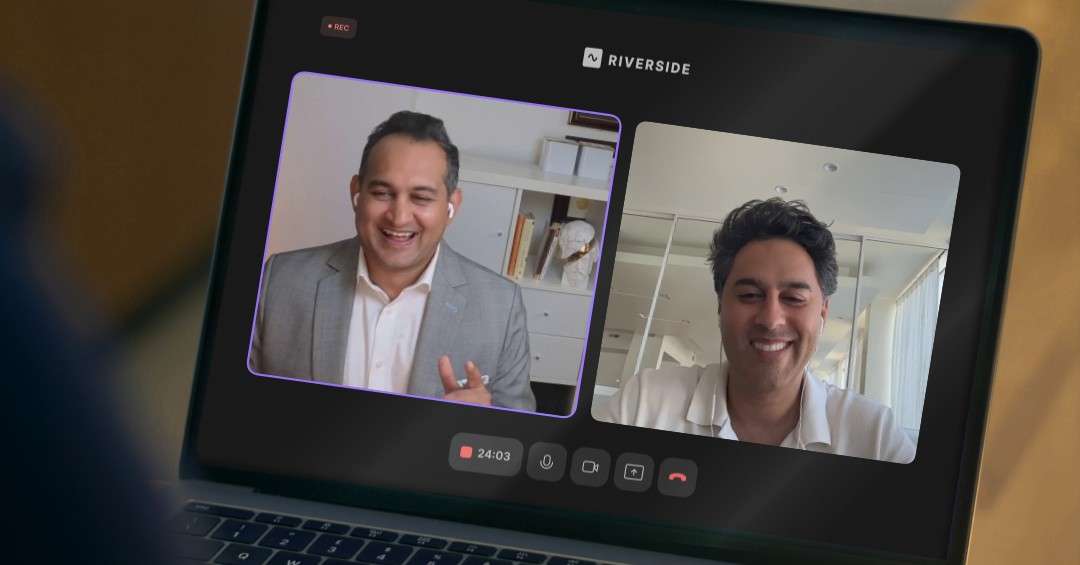
Pankaj Raval and Sahil Chaudry recording a Letters of Intent podcast episode on LLC and S corporation structure
Pankaj Raval and Sahil Chaudry on why the LLC or S corp question is really two separate questions: what wrapper, and how it is taxed.

The Category Error

An LLC and an S corporation are not two versions of the same thing. They sit on different layers.

An LLC is a state law entity. You file with the Secretary of State, you get limited liability, and you get an operating agreement that says whatever the owners agree it should say.

An S corporation is a federal tax election. You file Form 2553 with the IRS. That is the entire mechanism.

Which means an LLC can be an S corp

This is the part that breaks people, and it is straightforward once you see it.

Form an LLC in California, file the 2553, and you now have a limited liability company taxed as an S corporation. One entity, two labels. Extremely common.

So the real question is two questions. What legal wrapper do you want, and how do you want that wrapper taxed?

The answer to the first is usually an LLC

The wrapper question is generally the easier one. An LLC is inexpensive, flexible, and its governance document is whatever the partners negotiate.

The tax question is where the analysis actually lives.

What happens if you never elect

You still get an answer. It is simply a default that nobody chose deliberately.

One owner and the IRS disregards the entity entirely, so everything lands on your Schedule C. Two or more owners and you are taxed as a partnership.

Those defaults are perfectly workable. They are just defaults.

What Changed for 2026

Two numbers moved, which is why this conversation reopened.

The wage base

Social Security tax runs 12.4% and applies only to the first slice of earnings. According to the episode, that slice for 2026 is $184,500, up $8,400 from the prior year.

If you are self employed, you pay both halves of it. That is not an abstraction.

The qualified business income deduction

The second change matters more. The One Big Beautiful Bill Act, signed July 4, 2025, made the Section 199A qualified business income deduction permanent.

That deduction had been scheduled to expire at the end of 2025. Anyone running entity analysis in recent years carried an asterisk warning that the whole calculation would change.

Pankaj offered a useful clarification on air. Permanent means the sunset was repealed. It does not mean Congress cannot change it later. It means the provision no longer expires on its own.

Why this matters practically

You can now build a ten year plan around a pass-through structure instead of a two year one.

More broadly, the episode’s framing is worth carrying with you. Your entity structure is not a decision you made once and filed away. It is a position you hold while the tax code keeps moving underneath you.

The S Corporation Guest List

The election comes with eligibility restrictions most founders never see at formation.

No more than 100 shareholders.

Individuals and certain trusts only. Not LLCs, not corporations, with narrow exceptions such as one S corporation wholly owning another.

No non-resident alien shareholders.

One class of stock. Voting and non-voting shares are permitted. Preferred stock with a liquidation preference is not, which means no Series A or Series B in the conventional venture sense.

What happens when you violate one

The election terminates. As Sahil put it, there is no warning letter.

Your company reverts to whatever the default treatment is, which may be a partnership, a sole proprietorship, or a C corporation depending on the wrapper.

That outcome is manageable when the owners are you, a co-founder, and a family member. It is a serious problem on the day a fund wants to invest, because a fund is an entity shareholder and entity shareholders are not permitted.

Worth knowing before you take outside money rather than during the term sheet.

Watch the drift

These restrictions do not announce themselves. An early employee moves abroad and changes residency status. A shareholder puts shares into an entity for estate planning. A founder agrees to preferred terms for one investor.

Each of those is a normal business event, and any of them can terminate the election quietly. Review eligibility annually rather than assuming formation-day compliance still holds.

The Core Mechanic, and Its Limit

Understanding why anyone bothers with this election requires one piece of arithmetic.

As a sole proprietor or partner, your net business income faces self-employment tax at 15.3%. That breaks into 12.4% for Social Security up to the wage base and 2.9% for Medicare with no ceiling, plus an additional 0.9% above certain income thresholds.

Elect S corporation treatment and the company puts you on payroll. Your salary carries employment tax. Distributions beyond that salary do not.

That is the entire pitch. Everything else in this conversation is about the conditions attached to it.

The savings are real. Owners at meaningful profit levels often reduce their tax bill noticeably, which is why accountants raise the election so frequently.

Why a tiny salary does not work

Sahil raised the obvious follow-up during the episode, framed as something a founder might say. Just pay yourself almost nothing in salary and take everything as distributions.

Pankaj’s answer was direct. The IRS does not care what you label a payment. It cares about economic reality.

The Watson Case

David Watson, a CPA in Iowa, held a 25% interest in an accounting firm through an S corporation.

The company paid him a salary of $24,000 a year. In 2002, he took $203,000 in distributions. In 2003, he took $175,000.

His salary was roughly eleven percent of what he actually took home.

What the IRS did

The IRS looked at the arrangement and concluded that it was not a salary. It brought in a valuation expert who used professional survey data and determined the market rate for Watson’s actual work was $91,044.

The district court agreed and recharacterized roughly $67,000 a year as wages. In 2012, the Eighth Circuit affirmed.

The reasoning worth holding on to

The courts said the taxpayer’s intent does not control. The label does not control.

What controls is whether the payment is, in substance, compensation for services actually performed. And courts look at market rates to answer that.

Or as Pankaj summarized it: you cannot paperwork your way out of economic reality.

The working rule

Pay yourself what you would have to pay a stranger to do your job. Then write down how you arrived at that number before anyone asks, rather than afterward.

Contemporaneous documentation means a compensation survey, a board resolution, and an actual employment agreement. That work costs an afternoon, and it is the difference between a conversation and an assessment.

The Optimization Nobody Mentions

Here is the genuinely counterintuitive part, and it is the reason simple online advice about S corps tends to be wrong.

Your W-2 wages are not qualified business income.

So every dollar you move from the distribution column into the salary column is a dollar that shrinks the base of your Section 199A deduction.

Two forces pulling opposite directions

Lower salary saves payroll tax and grows your qualified business income. Higher salary costs payroll tax and shrinks it.

That is a real optimization problem rather than a lower-is-always-better problem, which is exactly how it gets sold online.

Running it properly means modeling both variables together rather than minimizing one. Your accountant should be able to show you the combined effect at several salary levels.

And above the threshold it flips again

Once income passes certain thresholds, the W-2 wage limitation phases in. At that point you may actually need wages on the books to claim the deduction at all.

The episode cited 2026 thresholds of $201,750 for single filers and $403,500 for married filing jointly, with the phase-in range running to $276,750 and $533,500.

Specified service businesses, including law, accounting, consulting, medicine, and financial services, phase out entirely above the top of that range.

The California Layer

California charges you either way, and the structure of the charge differs.

Every entity filing with the Franchise Tax Board owes the $800 minimum franchise tax. LLC, corporation, S corporation, partnership. That floor does not move.

The LLC gross receipts fee

LLCs owe a second charge stacked on top, based on revenue rather than profit.

The episode walked through the tiers: an additional $900 at $250,000 to $500,000 in receipts, $6,000 at $1 million to $5 million, and $11,790 above $5 million.

Note that this applies to gross receipts, not profit. A business investing heavily in growth pays on revenue regardless.

What an S corporation pays instead

California taxes S corporations at 1.5% of net income, with the same $800 floor.

Why the answer genuinely flips

High revenue with thin margins means 1.5% of a small profit number is often the cheaper state bill. High margin with modest revenue may favor the LLC fee.

You have to run both. There is no rule of thumb that survives contact with actual numbers.

The Los Angeles addition

Businesses engaged in business within the City of Los Angeles also register with the Office of Finance and pay a gross receipts based tax, with rates varying by business classification.

Location matters here, though not as simply as it might appear. The city taxes businesses engaged in business within its limits, so a nominal address elsewhere does not necessarily resolve it. Worth a real conversation rather than a quick fix.

One Thing to Know Before You Elect

The episode closed on a point that belongs in every entity conversation.

Stock issued by an S corporation can never be qualified small business stock. Not with planning, not with restructuring at the last minute. Never.

For the right company, that is a seven figure difference at exit.

Pankaj Raval and our team at Carbon Law Group work through these decisions with Los Angeles business owners, including entity formation, S corporation elections, reasonable compensation documentation, and the structural questions that determine what happens when you eventually raise money or sell.

We ask for financials and projections, because the honest answer depends on your actual numbers rather than a general rule.

If you are choosing a structure or wondering whether your current one still fits, contact Carbon Law Group at carbonlg.com. Bring your revenue, your margin, and your plans for the next few years. That is what the analysis actually requires.

🔗 Learn More
Website: carbonlg.com

Why 90% of Founders Ask This Question Wrong

Sahil (00:00)
Most business owners ask, should I be an LLC or an S-Corp? As if they’re choosing between two completely different types of businesses. But they aren’t. One is a state legal wrapper, the other is a federal tax setting. If you’re choosing between them, you’re asking the question backwards.

Pankaj (00:18)
The 2026 Social Security wage base just jumped to $184,500. That’s an $8,400 increase. Why does this matter? That means as of January 1st, your tax base for an S-corp quietly increased without you knowing. Let’s get into why this matters to you.

Sahil (00:34)
Your S-corp might be saving you money on payroll taxes today, but it could cost you a seven-figure payday at the finish line. Why?

Because S-Corp stock can never qualify as qualified small business stock, otherwise known as QSBS. It’s a non-negotiable weakness that you need to know about before you’re ready to exit.

Here’s what I do. I just pay myself basically nothing in my salary and just give myself distributions because it’s all about whatever I label my salary.

Pankaj (01:05)
Well, here’s the thing, Sahil. The IRS doesn’t care what you label your salary. They care about the economic reality. If you’re using an S Corp to pay yourself a tiny salary while taking a massive distribution, you’re inviting an audit. We’re gonna break down the Watson case to show you how the IRS handles reasonable compensation when you try to paperwork your way out of reality.

So Sahil, S Corp is obviously always the best choice, right?

Sahil (01:28)
Is an S-Corp always the best move? Not if you’re ignoring the 199A deduction. Every dollar you shift from distribution to salary to saved payroll tax might just be shrinking your 199A deduction in the exact opposite direction. It’s an optimization problem, not a simple lower is better choice.

Pankaj (02:07)
Ladies and gentlemen, welcome back to Letters of Intent, the podcast for deal makers and risk takers. I am your co-host, Pankaj Raval, and I’m joined by my trusted co-host.

And corporate lawyer of Carbon Law Group, Sahil Chaudry. Sahil, how are you doing today?

Sahil (02:19)
I’m doing great. This is Sahil Chaudry reporting live from Letters of Intent. Pankaj, I want to start with a number, one hundred eighty-four thousand five hundred dollars.

Pankaj (02:29)
Interesting. what is that number exactly?

Sahil (02:31)
The

2026 Social Security wage base. And it went up $8,400 from last year, which means if you own a business, the math on how you’re structured quietly changed on January 1st, and nobody sent you an email about it.

But today, S-Corp or LLC, this is the single most common question we get, and I’d say ninety percent of the people asking it are asking the wrong question.

Pankaj (02:55)
Yes, Sahil. I mean that’s a strong claim, but I’m also gonna ask you to defend it because I think there’s a lot to what you’re saying.

Sahil (03:01)
I am prepared to. I’ve got my armor on today.

Pankaj (03:04)
So this is part one of two. Today is gonna be how you choose. Next week is gonna be what happens when you choose an S Corp and when somebody wants to hand you a large amount of money and your beautiful little pass through turns out to be a big problem. So we’re gonna get that into that next week. But this week we’re talking about the benefits, the drawbacks, and all the drama in between

choosing to be taxed as an S Corp. I think that’s more of the question, right? And

Sahil (03:24)
Actually, that’s

that’s a good distinction, and that’s what we’re gonna clarify today. Choosing between an S-corp and an LLC. People think about this as a choice between two of the same thing, but in fact, they’re not. One is like a car and one is like the transmission of a car, and we’ll get into why that is. So Pankaj,

Pankaj (03:39)
Yeah.

Sahil (03:40)
is this a live question in 2026? I thought everybody settled this years ago.

Pankaj (03:44)
No, and honestly, it’s not settled and it’s something that comes up every day for us, like you said. And the unique issue in 2026 is that two things moved because of this big beautiful bill, whatever it’s called. The first is the wage base. Social security tax is twelve point four percent and only applies to the first slice of your earnings. For 2026, that slice is $184,500. Last year it was $176,100.

Sahil (04:08)
So the ceiling went up $8,400.

Pankaj (04:10)
That is correct. The ceiling went up $8,400 and if you’re self employed, you’re paying both halves of it. And that’s not an abstraction, that’s real money.

Sahil (04:17)
The second thing is bigger, and it’s the actual reason this conversation reopened. On July 4th, 2025, the One Big Beautiful Bill Act made the 25% qualified business income deduction permanent.

Section 199A. And that thing was scheduled to die at the end of 2025. I mean, if you were anybody in the entity analysis game, you were running that in 23, 24, 25, you had an asterisk on that and it said, This all goes away in two years.

Pankaj (04:48)
Right, and now that asterisk is gone.

Sahil (04:50)
It’s gone. It’s permanent, which is different from extended. And it’s better because now you can actually build a 10-year plan around a pass-through structure instead of a two-year one.

Pankaj (05:00)
Absolutely. And one clarification for the tax people out there who are gonna email us or, you know, put a comment on there is we know we see you, we see your content. When we say permanent, that means that the sunset was repealed. It does not mean Congress can’t change it. It just means it it doesn’t expire on its own.

Sahil (05:16)
Correct. There’s no cliff on the calendar anymore.

Pankaj (05:18)
So here’s what I want people to take from this. Your entity structure is not a decision you made once at the formation and filed away in a drawer. It’s a position you’re holding and the tax code keeps moving under you while you’re busy running your business. That means

this is dynamic, not static, and is something you need to be paying attention to each year.

All right, so Sahil, I’m gonna revisit something you said at the beginning of the episode. You said ninety percent of the people asked the wrong question. Explain.

Sahil (05:42)
Happily, counselor, I will defend my position. When somebody says, should I be an LLC or an S-corp, they’re comparing two things that aren’t the same category of thing. It’s like asking whether you should drive a BMW or drive stick.

An LLC

is a state law entity. You file with the Secretary of State, you get limited liability, you get an operating agreement. An S corporation is a federal tax election. You file Form 2553 with the IRS, different layers entirely. And here’s the part that breaks people: an LLC can be an S-corp.

You form an LLC in California, you file the 2553, and now you have a limited liability company that is taxed as an S Corp. One entity, two labels. Extremely common.

Pankaj (06:25)
So the real question isn’t which one?

Sahil (06:27)
Exactly. The real question is two questions. What legal wrapper do I want? And how do I want that wrapper taxed? And the answer to the first is almost always LLC, because it’s cheap, it’s flexible, and the governance document is whatever you and your partners agree it should be.

Pankaj (06:44)
And what if you don’t make that election at all?

Sahil (06:46)
You get a default. One owner, the IRS ignores the entity entirely. This is what we call a disregarded entity. Everything lands on your Schedule C. Two or more owners, it’s a partnership. Those defaults are perfectly fine. They’re just defaults. Nobody chose them for you on purpose.

Pankaj (07:03)
So let me add the part nobody thinks about at formation, because it’s the part that shows up five years later. The S Corporation election comes with a guest list.

Sahil (07:14)
This is like when

we were in college, and I don’t know if you remember like the South Asian parties. There was always a very strict guest list. And you had to be from the right college too. You know, sometimes they had the the

Pankaj (07:20)
Yes. Exactly, exactly. This is the you

Sahil (07:26)
interclub parties, and so yeah, you’ve got to be part of the right club to become a shareholder in an S Corp.

Pankaj (07:33)
Yeah, it’s a very exclusive, limited guest list. And, you

Sahil (07:36)
Right.

Pankaj (07:36)
know, and just important to notice know that it only accepts one type of guests. You know, it’s it’s also quite restrictive and perhaps discriminatory if we look at it. Because you could only have it’s a little bit darker, you know, it when you when you apply it to the our metaphor, but but

Sahil (07:44)
Right, right, right, yeah, to make it a little darker. Yeah. Yeah, that’s right.

Pankaj (07:52)
in the context of an S Corp, there’s important limitations that everyone should be aware of because if you violate any of these limitations

or requirements, now you have violated your S election and now you are gonna be taxed either as an LLC partner you know, either sole proprietor partnership or if you’re a corporation, taxed as a corporation. So these are things you gotta be aware of. and and yeah

Sahil (08:13)
You know, the S Corp

is like a xenophobic, introverted person. So because you can

Pankaj (08:19)
You’re right. It is very much

Sahil (08:21)
no foreign investors, no non resident aliens, and then no corporations or companies. You can only have individuals, domestic American individuals, and no more than a hundred shareholders.

Pankaj (08:34)
Right. It’s like a combination of like the most extreme right and the most extreme left people coming together. It’s like it’s like

Sahil (08:39)
Exactly. Yes, that’s right. That’s right. Yeah. It is. If Bernie Sanders

and President Trump had a child, it would be the S-Corp.

Pankaj (08:48)
Yeah. The S-Corp.

Probably not very good looking. so

Sahil (08:54)
Right, right.

Pankaj (08:55)
so but yeah, important to understand there are those like important limitations people need to know about. And those are, no more than a hundred shareholders. You cannot have non-resident alien shareholders, meaning you also have to be like individuals or trusts. You can’t really be LLCs or other entities. There are certain exemptions, like if you have like one

S Corp or wholly own another S Corp. There are some nuances there, but overall you generally need to be individuals or it could be trust in some situations. and then yeah. And only one class of stock.

Sahil (09:21)
and then one only one class of stock. So no preferred

and no series A, series B preferred with different liquidation preferences. It’s one class of stock.

Pankaj (09:31)
Exactly. The one nuance there is you can have one voting and non-voting but that’s about it. You can’t have distributions in those stocks, things

Sahil (09:34)
Right. Right.

Pankaj (09:36)
like that. That’s when you will be violating the S election. And now the IRS, if they come knocking, could say, Hey, you’re not in compliance with these rules. We’re actually taking away your S election and now you’re going to be taxed as whatever the default entity is. So these are really important ramifications to not complying with these S Corp rules that everyone should be aware of.

Sahil (09:55)
Right, right. And that election terminating there’s no warning letter. It just terminates, which is totally

Pankaj (10:02)
Absolutely.

Sahil (10:02)
fine when it’s you and your co-founder and your brother in law. It’s not fine on the day a fund wants to buy in, which is the entire subject of next week’s episode.

Pankaj (10:11)
Absolutely. Absolutely.

Sahil (10:13)
But let’s make this usable. So somebody’s listening to us for some reason right now. They’re at 400,000 of profit, single-member LLC, everything lands on their Schedule C. Let’s walk them through it.

Pankaj (10:27)
So let’s look at this core mechanic first. As a sole proprietor or a partner, if you have two of you, especially all your net business income gets hit with self employment tax. 15.3%. Okay, that’s a significant amount of money. And 12.4% of that goes to Social Security, up to the wage base, which we said increased this year, and 2.9% go to Medicare with no ceiling at all.

Sahil (10:48)
Plus another nine tenths of a percent above two hundred thousand or two fifty joint.

Pankaj (10:54)
Right. So now if you elect S Corp, the company puts you on a payroll, the salary gets hit with an unemployment tax, everything comes out as a distribution, and distributions aren’t subject to this additional self employment tax or 15.3% tax.

Sahil (11:08)
And that’s the whole pitch, that’s the entire thing.

Pankaj (11:11)
That is the entire thing. But you know, there’s always nuance, right? And anytime people come to us and say, Hey, should I be an S Corp? Especially if you talk to other tax attorneys or accountants, usually they say, Okay, wait till you’re making a certain amount of money to make it actually worthwhile. So, you want to take that into consideration as well before you make the election and also whether you want to raise money and sell, which we’re gonna talk about next week. But there are real advantages that we’ve kind of gone over today.

Sahil (11:34)
So okay, tell me about this David Watson.

Pankaj (11:37)
David Watson, he’s a CPA in Iowa, his professional corporation elected an S status.

He held that and held a 25% interest in an accounting firm and it paid him a salary of $24,000 a year. In 2002 he took $203,000 in distributions, and 2003, a $175,000.

Sahil (11:57)
Okay, so salary was about eleven percent of what he actually took home.

Pankaj (12:01)
Right. And the IRS looked at it and said, That’s not a salary, that’s a costume. They brought in a valuation expert who used his AI CPA survey data and said that the market rate for what Watson actually did was $91,044. District court agreed, recharacterized the $67,000 a year as wages, and in 2012, the eighth circuit affirmed this decision. Yeah.

Sahil (12:22)
Ouch, that

that hurts. I mean, you pull out 203,000 and then I can’t imagine what the attorney’s fees were to take this through the Eighth Circuit.

Pankaj (12:32)
My God, yeah. I mean, this has been litigated for how many years, right? So

Sahil (12:35)
Yeah.

Pankaj (12:35)
ten years almost, like that’s crazy. Yeah.

Sahil (12:37)
Wow. And the reasoning is the part to hold on to. The courts said the taxpayer’s intent doesn’t control, the label doesn’t control. What controls is whether the payment is in substance compensation for services you actually performed. And the courts are looking at market rates here.

Pankaj (12:53)
Right, you cannot paperwork your way out of economic reality.

Sahil (12:56)
So the working rule is pay yourself what you’d have to pay a stranger to do your job and write down how you got to that number before anyone asks, not after.

Pankaj (13:04)
Absolutely. So contemporaneous documentation, comp survey, a board resolution, an actual employment agreement, it costs you an afternoon and it’s the difference between a conversation and an assessment.

Sahil (13:14)
Okay, but there’s a second complication, and this one is genuinely counterintuitive.

The 199A interaction, your W2 wages are not qualified business income. So your salary, the one that you’re paying yourself as you know, that’s gonna get hit with the self-employment, is not qualified business income. So every dollar you move from the distribution column into the salary column is a dollar that shrinks the base of your 20% deduction.

Pankaj (13:44)
Which pulls in exactly the opposite direction from payroll tax savings.

Sahil (13:47)
Exactly the opposite direction. Lower salary saves payroll tax and grows your QBI. Higher salary costs payroll tax and shrinks your QBI. It is a real optimization problem. It is not a lower is always better problem, which is how it gets sold on the internet.

Pankaj (14:04)
And above the threshold it flips again?

Sahil (14:06)
Above the threshold, it flips again because that’s where the W-2 wage limitation phases in. And at that point, you may actually need wages on the books to claim the deduction at all.

Pankaj (14:15)
So what are the 2026 thresholds?

Sahil (14:17)
So the thresholds are $201,750 single, $403,500 married filing jointly. Above that, you’re into the phase in range and it runs out at $276,750 and $533,500. And if you’re a specified service business, law, accounting, consulting, medicine, financial services.

Above the top of that range, you’re out entirely.

Pankaj (14:43)
So third number and this one is specific to where we sit, California.

Sahil (14:47)
California charges you for the privilege either way.

Pankaj (14:50)
So that’s right, Sahil. $800 minimum franchise tax in California either way, no matter what kind of entity you are, LLC, corporation, S Corp, partnership if you file, all that. If you file with FTB as an entity, you’re paying $800 a year as a minimum. However, if you’re an LLC, there’s also a second charge on top of that stacked up. That’s called the gross receipts tax. That’s what a lot of people don’t realize. And that kicks in based on stages of revenue that you’re making. So

if you’re making $250,000 to $500,000, you have to pay another $900. If you make a million to five million, you’re paying another $6,000. And if you make five million and up, now you’re paying $11,790. That’s a gross receipts tax if you’re an LLC.

Sahil (15:29)
California knows that it’s got it, huh? That

Pankaj (15:32)
Yeah.

Sahil (15:33)
California knows that if you wanna be here, you’re gonna pay to play. And and that’s on gross

Pankaj (15:36)
The sunshine tax, man.

Sahil (15:38)
receipts. We’re not even talking about profit.

Pankaj (15:40)
Right. Gross receipts. Yeah. Another thing people wanna realize is like if you’re in LA, LA’s got his own tax too. If you have to file with the Department of Finance to get a permit in LA, now you’re paying one percent as well on gross receipts. California loves his gross receipts tax, which

Sahil (15:52)
Yeah.

Pankaj (15:52)
is, which is kind of BS, I think, in many cases, because if you’re spending all that money on investing in the business, why should you be taxed on it? You know, that’s not how the federal government sees it. But here it’s gross receipts. So you gotta be really aware of this.

This is a pro tip for all of you listening in an LA area. Think about, maybe having your business somewhere else, especially if you’re remote virtual office somewhere outside of LA, think about how you could address this and if that one percent could be a very large number. And even, with the gross receipts in California, maybe it makes sense to be an S Corp, but S Corp has its own California taxation as well.

Sahil (16:24)
So, okay, an S-corp pays one and a half percent of Californian net income and it has the same eight hundred dollar floor.

Pankaj (16:31)
That is correct. That is correct. That is correct.

Sahil (16:35)
Okay, so that’s why the answer genuinely flips depending on your margin. High revenue, thin margins, one and a half percent of a small profit number is often the cheaper state bill. High margin, modest revenue, the LLC fee may be the better deal.

But you actually have to run both. Like you have to run the models to know which is the correct answer.

Pankaj (16:56)
Exactly. And so this is something we do with our clients a lot, right? We ask these questions. We ask for proformers. We ask for financials to help understand, okay, what’s the actual implication here, legal and then financial, of making these elections and thinking about how you want to grow. And again, you know, foreshadowing to next week’s episode, if you want to raise money, if you want to maybe take home some more money and save on taxes now, what’s the implication if you want to raise money later through an S Corp?

So these are things you really want to think about and ask your attorney or you know, reach out to us if you have questions because there’s not actually simple answers to a lot of these questions.

Sahil (17:29)
And if you’re not able to reach out to us directly, just make sure you include in your prompt what would bunkage and sawhill do when you’re using any AI tools? And it will generally give you

Pankaj (17:37)
Very important, very important.

Sahil (17:38)
a you know a moderately good answer on most of life’s big questions. Yeah. So

Pankaj (17:41)
I think generally speaking, we s we stand by it. We stand by it.

Sahil (17:45)
well, the last thing, and this is the bridge into next week, everything we talked about is about this year’s tax bill. There’s a whole second column nobody puts on the whiteboard, which is what your structure does to you at

exit, which is what we all want. We all want that big sweet exit where you’re, spraying champagne off the yacht, off the coast of Italy. And we’re gonna help you get there. On that column, the S Corp has one specific permanent non-negotiable weakness. And that is that the stock issued by an S Corp can never be qualified small business stock. QSBS, never. Not with planning, never.

Pankaj (18:21)
Which for the right company is a seven figure difference at the finish line.

Sahil (18:25)
Exactly. And that’s why we’re gonna discuss that next week.

So on today’s episode, we taught you how to get into an S-corp, but on next week’s episode, we’re gonna teach you how to get out of the negatives. And this reminds me, Pankaj, when we were kids, you know, most Indian kids heard this story about there was this, it’s kind of like India’s Iliad, the Mahabharata, okay, the Great War.

And the greatest fighter, his name is Arjun. He has a son named Abimanyu. And he’s explaining how to get out of this thing called the Chakravyuh which is like a circle of chariots that can trap you. So he explained to him how to get in, but before Abimanyu learned how to get out, he fell asleep. So do not sleep on next week’s episode. We’re gonna teach you how to get out of that S-corp and those limitations.

So that you can take advantage of QSBS. This is this is our great war. Our great war is This is our Great War. Our

Pankaj (19:19)
Amazing. This is our great word. This is our

Sahil (19:24)
Great War is this exit. They will write epics about how you formed an S-corp and still took advantage of QSBS. But that’s only if you listen

Pankaj (19:32)
Yeah, we’re gonna l we’re gonna

Sahil (19:33)
to letters of intent.

Pankaj (19:35)
We’re gonna lead you into battle and most importantly out of battle, right?

Sahil (19:38)
Out of battle. That’s right. That’s right. Exactly. Exactly. But we are here to lead you out. This is not the 300

Spartans. You know, this is not like tonight we dine in hell. You know, we’re not Persian, we’re Indian. So tonight we’re going home and we’re eating Parathas. Okay. Tonight we’re going

Pankaj (19:52)
No we Exactly. Amazing, amazing. Well.

Sahil (20:01)
home. We’re having Pav bhaji. So and we’re gonna make some money along the way. That’s that’s our epic.

Pankaj (20:07)
Absolutely. All right. So well, thank you, man,

Sahil (20:08)
Yeah.

Pankaj (20:09)
for another illuminating episode here. I think we talked about a lot of important topics. Hopefully, this will be very helpful to all our listeners. Like, comment, share. We’d love to hear your feedback, any questions you have about what we said. Again, this is not legal advice. This is just, information we’re providing to all of you because we want it to make sure everyone is set up for success. And we’re here as a resource when people need it.

And with that said, happy building and happy deal making.

Get in touch with us

Lead Form Main

The main Lead Form

This field is for validation purposes and should be left unchanged.
Name(Required)

Download Our Free Guide

We respect your privacy. No spam, ever.(Required)