
Is the movie theater industry dying? Or is it simply suffering from terrible, generic marketing?
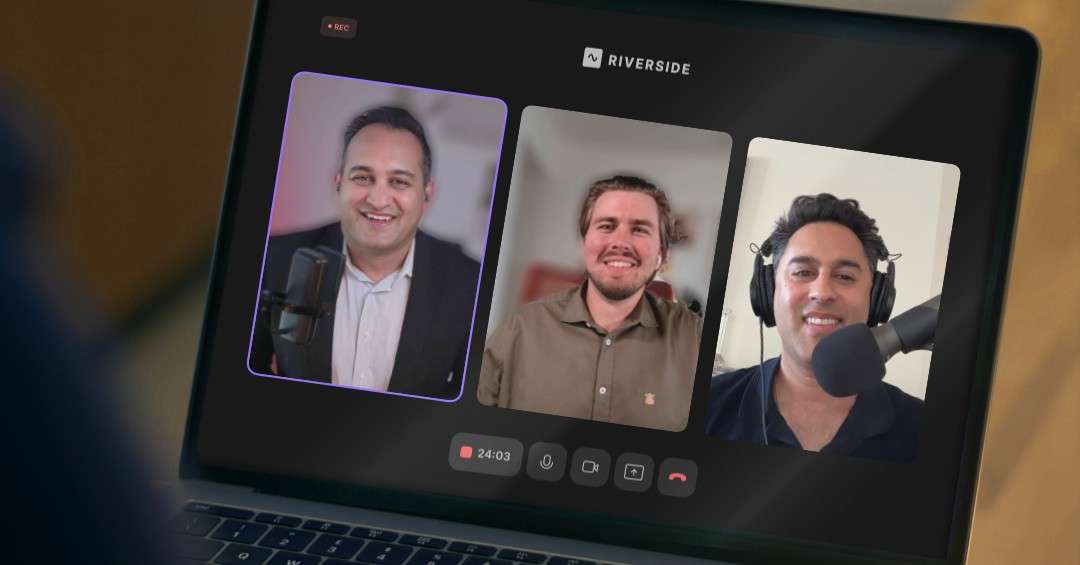
That is the question at the heart of Episode 53 of Letters of Intent. Pankaj Raval and Sahil Chaudhary sat down with Alvaro de la Cruz, a founder building Showlytics, an AI-powered personalization and analytics platform for movie theaters. The conversation covered far more than box office numbers, naturally. Indeed, it explored pivoting, networking, AI strategy, and the kind of entrepreneurial thinking that every small business owner can apply right now.
Specifically, this post breaks down the four biggest lessons from that episode.
The Pivot Mentality: Why Detours Are Part of the Plan
Alvaro’s journey did not follow a straight line. He was born in Puerto Rico, studied at Georgetown, taught himself filmmaking through YouTube, and eventually drove across the country to pursue a career in Hollywood. He worked as a production assistant, a second assistant director, and on independent films across the country. Then the industry strike hit. Work dried up. The path forward was suddenly unclear.
Rather than treating that moment as a failure, Alvaro treated it as a redirection.
Instead, he took a logistics role at Picnic, a startup later absorbed into Cloud Kitchens, which Travis Kalanick founded. When he joined, the company processed hundreds of orders daily. By the time he left, it was handling thousands. He learned how tech companies are built. Systems thinking became second nature. Specifically, what good operations look like from the inside became clear.
Finally, he asked himself a simple question. What if there was a way to solve a real problem in the film industry and use that as a path back in?
Eventually, that question became Showlytics.
What This Means for Small Business Owners
Specifically, the pivot mentality is something most entrepreneurs understand intellectually but struggle with emotionally. Typically, you come to your industry with a specific dream. However, when circumstances force a detour, it feels like failure. It is not. It is information.
Alvaro put it clearly on the podcast. He has an end goal in mind. But just like a story, you are not going to get there in one shot. You have to go up the hill, down the hill, take the wrong exit, and turn around. The key is always knowing where you want to end up, even when the path keeps changing.
Indeed, for small business owners, this plays out constantly. Market conditions shift. A product does not land. A partnership falls apart. In fact, the founders who survive are not the ones who avoid these moments. They are the ones who extract lessons from them and apply those lessons to the next move.
At Carbon Law Group, we work with founders at exactly these inflection points. For instance, whether you are restructuring an entity after a pivot, protecting new IP developed during a product shift, or navigating a contract that no longer fits your business, the legal foundation of your company needs to adapt when you do. We help make sure it does.
Network Without an Agenda: The Hollywood Lesson That Works Everywhere
Notably, getting a foothold in Hollywood is notoriously difficult. Notably, it is a relationship-driven industry where access is guarded and most people are constantly asking for something. Alvaro figured out a way through, specifically by doing the opposite of what everyone else was doing.
Instead, he reached out to people simply to get coffee. Not to pitch a project, ask for a job, or request an introduction. Simply to hear their story.
As he explained on the podcast, in Los Angeles, nearly everyone reaches out with an ask first. Can you fund my film? Can you introduce me to a producer? Getting on set was always the subtext. Alvaro approached it differently. He wanted to learn. He wanted to listen. And because of that, he was memorable.
Over time, consequently, those genuine relationships opened doors that a transactional approach never would have. A director he had simply befriended posted a call for a PA. Because they had already built a real connection, Alvaro messaged casually and offered to help. He became the key PA on that project. One conversation at a time, he built a network that worked.
The Business Principle Behind the Story
Importantly, this is not just a Hollywood lesson. It applies to every entrepreneur trying to break into a new market, land a first enterprise client, or build relationships with investors.
Most founders approach networking as a transaction. They show up to events with a pitch ready. LinkedIn connections come with an immediate ask. Every relationship becomes a potential transaction. The result is that they come across as just another person in a room full of people asking for things.
Instead, the founders who build the best networks are the ones who show genuine curiosity. They ask questions and listen more than they talk. Value gets offered before anything gets requested. Over time, those relationships become the most valuable assets their business has.
For small business owners, this also has a legal dimension. The partnerships, referral relationships, and vendor agreements that grow out of genuine networking need to be properly documented. A handshake deal between friends can create significant legal exposure if the terms are never formalized. At Carbon Law Group, we help founders take the relationships they have built and put the right legal structure around them, without losing the spirit of how those connections started.
The Problem Is Awareness, Not Desire: What AI Actually Solves
In fact, here is the core insight behind Showlytics. People still want to go to the movies. Notably, the problem is not that audiences have lost interest in the theatrical experience. The problem is that they are overwhelmed, confused, and under-informed about what is actually playing.
Think about how movie marketing works today. Studios spend enormous amounts on advertising campaigns. Billboards, social media ads, YouTube pre-rolls, influencer partnerships. But most of that advertising is for the movie itself, not for a specific theater. The message is effectively: go find a theater near you and figure out the rest yourself.
Consequently, that creates two problems Alvaro identified clearly. The first is a lack of awareness. People simply do not know what is playing at their local theater right now. The second is decision fatigue. Even when they do know, the volume of options makes choosing feel overwhelming. So they do nothing.
Accordingly, Showlytics addresses both problems through behavioral data and personalization. The platform works as a B2B tool for theater chains. It does not ask customers to download another app. Instead, it gives theaters better tools to understand their own customers and communicate with them in ways that actually drive action.
What Good AI Personalization Actually Looks Like
Alvaro gave a specific example on the podcast that stuck. Imagine a platform that knows you typically buy movie tickets on the day of the showing, that you prefer Sunday evenings, and that you almost always choose seats in the center rows toward the back. Instead of sending a generic email blast about the latest blockbuster, Showlytics might notify you on a Sunday afternoon, with the seats you prefer already pre-selected, for a film featuring an actor you have consistently responded to in the past.
Clearly, that is not spam. That is service.
As Alvaro said, “We are trying to make your life easier. We are not trying to spam you with more content. We are not trying to give you more emails in your inbox.”
Furthermore, the platform incorporates outside behavioral signals. Weather patterns, social media trends, and booking timing. If your data shows you go to movies when it rains, Showlytics might surface a recommendation when rain is forecast for the weekend.
This kind of AI-driven personalization is already transforming retail. Amazon’s one-click purchase, Netflix’s recommendation engine, and Spotify’s Discover Weekly all reduce friction and increase frequency. Showlytics is applying the same logic to the in-person entertainment experience.
What Small Businesses Can Learn from This
In short, the lesson here goes beyond movie theaters. Many small businesses are sitting on behavioral data about their customers that they are not using. Purchase history, browsing patterns, communication preferences, and seasonal trends. All of that data tells a story about when, how, and why customers buy.
In fact, generic marketing is expensive and ineffective. Targeted, behavior-driven communication builds loyalty and increases purchase frequency. Even a modest improvement in frequency has a significant impact on revenue over time.
If you are building a product or service that uses customer data, the legal infrastructure matters enormously. Data ownership agreements, privacy policies, and IP protection for your proprietary algorithms are not optional. They are the foundation that allows you to scale. Carbon Law Group helps growing businesses build that foundation correctly from the start.
Stop Killing Demand: The Streaming Date Problem and What It Means for Your Business
Specifically, one of the most pointed moments in the episode came when Alvaro addressed a marketing mistake that major studios keep making. They announce streaming release dates too early, and in doing so, they actively destroy the demand they spent millions of dollars building.
The logic is straightforward. If you tell an audience that a film will be available at home in three weeks, a significant portion of that audience will simply wait. The urgency of the theatrical experience disappears. The event-driven nature of the cinema visit evaporates. And the box office suffers as a result.
Indeed, Alvaro was direct about it on the podcast. “You need to stop telling the audience when the movie is coming out on streaming.” Maintain the mystery. Protect the theatrical window. Let the urgency of the exclusive in-person experience drive people to buy a ticket now, rather than bookmark something to watch at home later.
He pointed to a personal example. He saw Mad Max: Fury Road three times in theaters because it was so good, and he did not want to wait for the home release. That kind of repeat viewing only happens when audiences do not know when the film will be available elsewhere.
The Principle Behind the Principle
In short, this is not just about movies. It is about how you manage scarcity and urgency in any business.
When you give customers a reason to wait, many of them will. Early-bird pricing that runs too long loses its urgency. Exclusive products that get announced too far in advance allow customers to defer the decision. Promotional windows that are open-ended train buyers to never act quickly.
Consequently, smart founders think carefully about how they sequence information. What do you announce, and when? What do you withhold, and why? Controlling the information timeline is a genuine business strategy that affects conversion rates, pricing power, and customer behavior.
This also has a contractual dimension. If you are building partnerships with distributors, retailers, or platforms, the terms governing exclusivity windows, release timing, and competitive restrictions all affect your ability to create and protect demand. Getting those terms right at the LOI stage and in the final agreement is exactly the kind of work Carbon Law Group does with founders and growing businesses every day.
What Showlytics Teaches Every Entrepreneur
Alvaro de la Cruz is in the early stages of building something genuinely interesting. Showlytics is pre-revenue, bootstrapped, and still finding its first design partners. But the thinking behind it is sharp, the market problem is real, and the approach is disciplined.
More importantly, his story illustrates principles that apply far beyond movie theaters. Embrace the pivot. Build genuine relationships. Use data to reduce friction, not to generate noise. And protect the exclusivity that creates urgency.
For small business owners, specifically, the takeaway is practical. The legal foundation you build in these early stages determines how much of the value you create you actually get to keep. Contracts, IP protection, data ownership agreements, and governance structures are not bureaucratic overhead. They are the infrastructure that allows a good idea to become a sustainable business.
Contact Carbon Law Group today to schedule a consultation. Whether you are pivoting your business model, building AI-powered tools, or negotiating your first major partnership, we are here to help you do it right.