
Your voice is your most personal asset. In the era of generative AI, it is also one of your most vulnerable.
While you sleep, your vocal identity could be scraped from a podcast episode, a YouTube video, a social media clip, or a product demo you recorded two years ago. It could be cloned, trained into a model, and deployed in someone else’s campaign without your knowledge or consent. And right now, the law is moving too slowly to stop it.
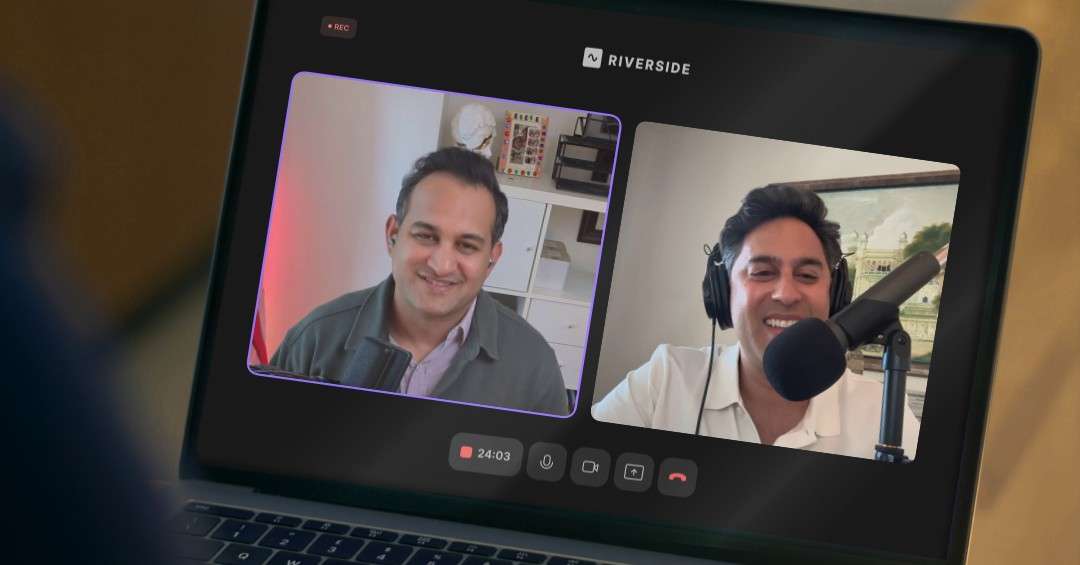
This is not a hypothetical risk reserved for celebrities. It is a threat that affects podcasters, founders, content creators, voice-over artists, and any business owner whose voice is part of their brand. In Episode 59 of Letters of Intent, Pankaj Raval and Sahil Chaudry break down the legal landscape around AI voice cloning and provide a practical roadmap for protecting your vocal IP before the first byte of data is ever recorded.
Here is what you need to know.
The Problem: AI Can Clone Your Voice Without Copying a Single File
The core legal challenge of AI voice cloning is subtle but significant. Traditional copyright law protects specific recordings. If someone duplicates your song or reproduces your audio file without permission, copyright gives you a clear path to enforcement.
But AI works differently. A machine learning model does not copy your recordings. It trains on them, absorbing the patterns, cadence, tone, and inflection of your voice. Then it generates entirely new audio that sounds like you, without reproducing any existing file. That distinction matters enormously in court.
“AI can generate new content that mimics a sound without copying a specific file,” Pankaj explained on the show. This is precisely why copyright, the traditional shield for audio creators, is struggling to protect people from voice cloning.
The technology is advancing faster than any regulatory body can respond. Deepfakes are already saturating social media. Pankaj described the experience of scrolling through his feed and spending half his time wondering: “Is this AI? Is this AI?” That skepticism is not paranoia. It is a reasonable response to a media environment that has been fundamentally destabilized by generative tools.
For small business owners who use their voice in branding, marketing, or public content, this environment creates real exposure. The question is not whether someone could clone your voice. It is whether you have taken the legal steps to create consequences if they do.
From Copyright to Trademark: A Strategic Pivot
Because copyright protection has gaps in the AI context, some of the most prominent voices in the world are turning to trademark law instead.
Taylor Swift recently made headlines by filing three trademark applications specifically targeting her voice and image. One application covers her saying “it’s Taylor Swift.” Another covers a specific visual of her performing during the Eras Tour. Separately, Matthew McConaughey trademarked his famous catchphrase “all right, all right, all right” to establish a legal perimeter around his identity.
Why trademark? Because trademark law focuses on source identification. A trademark signals to the market that a particular name, phrase, sound, or image comes from a specific origin. When someone uses a confusingly similar identifier to profit commercially, trademark law gives the owner tools to stop it.
“Trademark law is all about the source identifier,” Pankaj explained. “Their fame is their brand. And their brand is their protection.”
For a celebrity, the name and voice together form the commercial identity that audiences pay for and engage with. When AI generates content that mimics that identity, it undermines the source identifier and creates consumer confusion. That is exactly the kind of harm trademark law was designed to address.
For founders and business owners, the lesson is clear. If your voice, your name, or your personal identity drives commercial value in your business, trademark protection is worth exploring seriously. Copyright alone is not enough in the current environment.
Carbon Law Group helps clients evaluate their trademark strategy for name, image, and likeness in the context of emerging AI risks. If you are a creator, podcaster, or founder whose voice is part of your brand, now is the time to have that conversation.
The Most Dangerous Phrase in Any Contract: “In Perpetuity”
Once you understand the trademark layer, the next critical area is contract language. Specifically, the terms you agree to when you create, record, or license your voice.
Sahil put it plainly on the show: “In perpetuity is a very scary phrase in the era of the digital age. If you give up rights forever, you have no leverage when the technology evolves.”
Think about what granting perpetual rights actually means in 2026. When you signed that voiceover contract or that content licensing deal, AI voice cloning did not exist commercially. The person who drafted the agreement had no idea that ten years later, someone could use your recording to train a model that generates infinite synthetic versions of your voice. But if the contract grants rights “in perpetuity,” that is exactly what you may have agreed to.
Every agreement involving your voice, name, image, or likeness should include strict time limits, geographic boundaries, and specific use case restrictions. A voiceover agreement for a specific marketing campaign should state that the audio is only for that campaign, in those markets, for that defined period.
In California, specific legislation is developing around AI use of voice data in commercial contexts. Contracts must explicitly address whether the recorded content can be used for AI training or synthetic voice generation. If that language is absent, the rights may default to whoever commissioned the work.
Do not assume that “industry standard” language protects you. Review your existing contracts now. If you find perpetual grant language without AI exclusions, bring it to a business attorney who understands both entertainment law and emerging technology. Carbon Law Group regularly helps clients audit and renegotiate agreements to close these gaps before they become costly.
Ring-Fencing Work Made for Hire: Excluding AI From Your Agreements
The “Work Made for Hire” doctrine is another area where small businesses and creators frequently get caught off guard.
Under copyright law, when someone creates a work within the scope of employment or certain commissioned works, the employer or commissioning party owns the copyright. Companies have increasingly used this doctrine to argue that because they commissioned a recording, they own the full bundle of rights, including the right to use that audio for AI training.
That argument needs to be stopped in the contract itself.
Modern agreements involving any audio or video content must explicitly carve out machine learning, data scraping, neural network training, and synthetic voice generation from the rights granted. If you do not carve it out, the other party may claim it is included.
Sahil was direct on this point: “You want to make sure that your drafting language explicitly excludes the right to use any of your recordings for machine learning, data scraping, or synthetic voice generation. You have to carve it out or it’s included.”
If a company does want to license a synthetic replica of your voice, that requires a separate agreement. That agreement should establish residuals for every deployment of the synthetic voice, not just a one-time payment for the recording session. You should get paid every time your synthetic voice is used, just as you would for any other licensed performance.
This is not about being difficult in negotiations. It is about recognizing that your voice is an asset with long-term commercial value, and structuring agreements accordingly.
Data Sovereignty: Your Recording Platform Might Be the Weakest Link
Here is a scenario that should concern every founder, podcaster, or content creator: you negotiate a flawless contract with a production company. Every AI exclusion clause is in place. The terms are precisely defined. You feel protected.
Then someone uses audio from the recording platform you used to make that content.
Most creators do not read the terms of service of the tools they use every day. Recording platforms, hosting services, video conferencing software, and content management systems often include language that grants the platform broad rights to use user-generated content to “improve services.” That phrase is frequently legal code for AI model training.
“If the platform’s default terms say they can use user-generated content to improve their services, you have some concerns,” Pankaj said on the episode. The platform may hold rights to your audio that you never intended to grant.
This is why Pankaj and Sahil recommend a terms of service audit as a core part of any IP protection strategy. Review every platform where your voice is recorded, stored, or published. Look specifically for data processing agreements, AI training provisions, and language about how user content gets used. If a platform’s terms are unacceptable, either negotiate a data processing agreement or choose a different tool.
You can also take a proactive step that Pankaj recommends: send written notice to platforms stating that you do not consent to the use of your voice data for AI training or commercial purposes. This creates an affirmative record that puts the compliance obligation back on the platform.
Data sovereignty is not just a privacy issue. It is an IP issue with direct financial consequences.
The Corporate Container: Structuring Your NIL Rights in an LLC
One of the most practical structural tools discussed in this episode is the use of a dedicated LLC to hold your name, image, and likeness rights.
The concept is straightforward. Instead of licensing your voice and identity directly as an individual, you transfer those rights into a dedicated LLC. That entity then becomes the contracting party for all voice-related and identity-related deals.
The advantages are significant. First, the LLC limits your personal liability if a dispute arises over a licensing agreement. Second, the business expenses related to protecting and monetizing your identity, including legal fees, recording costs, and negotiation expenses, become deductible through the entity. Third, having a professional corporate structure around these rights makes enforcement far more straightforward if a violation occurs. Calculating damages and pursuing remedies is cleaner when the rights are clearly held by a single legal entity.
“Having those rights housed in a corporate entity can make enforcement and calculated damages much more straightforward,” Sahil noted during the episode.
Additionally, if the asset becomes highly valuable, a dedicated LLC creates a structure that could attract investment or facilitate a future sale or licensing arrangement.
For founders and creators who are just beginning to build public profiles, setting up this structure now, before the rights become complicated, is significantly easier and less expensive than trying to restructure later. Carbon Law Group advises clients on NIL structures regularly and can help you evaluate whether a dedicated LLC makes sense for your situation.
What You Should Do Right Now
The law will eventually catch up to AI voice cloning. Congress will pass legislation. Courts will establish precedents. Regulators will issue guidance. But that process will take years. And while it unfolds, your voice remains exposed.
Fortunately, you do not have to wait for Congress to act. You can build your own protective structure right now, through contract drafting, trademark registration, entity formation, and platform audits.
Start by auditing your existing contracts for perpetual rights grants and missing AI exclusion clauses. If you find gaps, get them addressed before the agreements renew or expand. Review the terms of service on every platform where your voice is recorded or hosted. Consult a business attorney about whether trademarking your voice or name makes sense for your situation. And consider whether a dedicated LLC for your NIL rights is the right structure for where your business is heading.
At Carbon Law Group, we work with founders, creators, and small business owners to build the legal protections that actually hold up in an AI-driven world. Whether you need a contract audit, a trademark strategy, or help structuring a voice licensing deal, our team is ready to help.
Contact Carbon Law Group today at carbonlg.com to schedule a consultation. Your voice is your asset. Do not let someone else profit from it without your permission.