
The Future of IP: Blockchain vs. Copyright Law
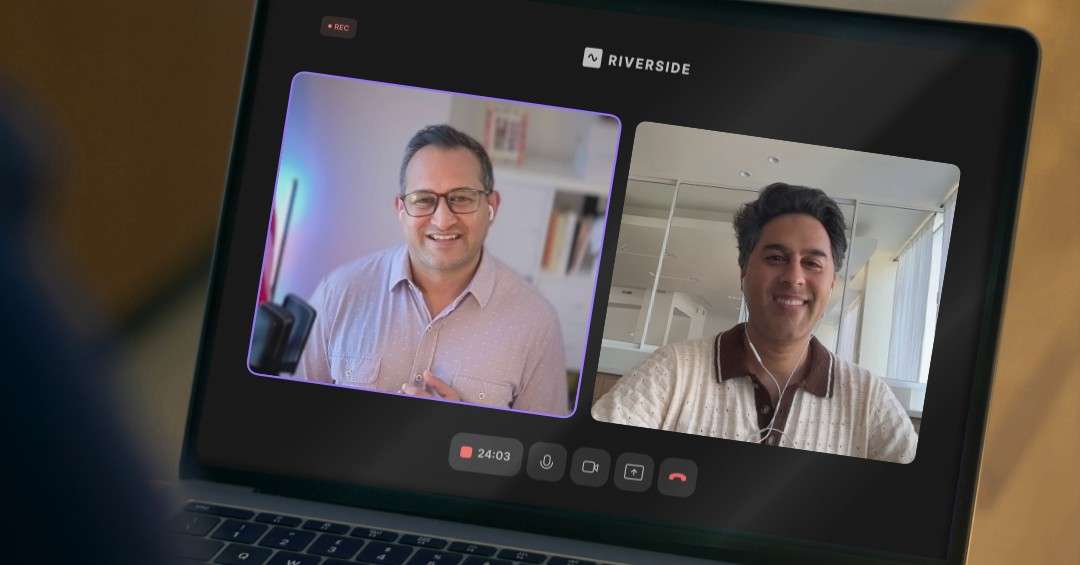
Can blockchain replace the U.S. Copyright Office? That is the bold claim making the rounds online, and it deserves a closer look. In Episode 68 of Letters of Intent, Pankaj Raval and Sahil Chaudry dug into the messy intersection of blockchain, AI, and intellectual property.
The conversation started with a video of Gary Vee suggesting blockchain could replace the Copyright Office. As Pankaj noted, Gary Vee is a smart, bright guy, but he is not a lawyer. The reality of protecting creative work is far more complex than a 30-second sound bite. Here is what every creator and founder should understand.
What Copyright Actually Protects
Let’s start with the foundation. Copyright protects the tangible expression of an idea. Not the idea itself, but the expression once you fix it into a medium.
So if you draw a picture on a piece of paper, you instantly hold a common law copyright to it. The same goes for a musical composition, a piece of writing, or even choreography. The moment you fix a creative work into a tangible form, basic copyright protection kicks in automatically.
But here is where it gets interesting. That automatic protection has limits. Say you are not a professional artist, and someone copies your doodle. Are you really harmed? Probably not, and proving damages would be tough.
Registration changes everything. When you register a unique work with the U.S. Copyright Office, you unlock something powerful called statutory damages. That means the law awards you damages when someone infringes, without requiring you to prove exactly how much you lost.
Think of it as the difference between having a right and having teeth. Common law copyright gives you the right. Registration gives you the teeth to enforce it against a commercial infringer. This distinction matters enormously for any business built on creative work. At Carbon Law Group, we help creators register their work so they actually have the power to defend it.
The Difference Between a Record and a Lock
Here is the core of the whole debate, and Sahil framed it perfectly. Blockchain and copyright solve two different problems. One creates a record. The other provides a lock.
Blockchain is excellent at recording provenance, or chain of title. It creates a transparent, hard-to-alter public ledger showing who registered a work and when. In fact, it may track origin better than the Copyright Office, whose website has long been notoriously clunky.
But recording ownership is not the same as protecting it. Sahil compared it to owning a house. You want a clean chain of title registered with the county. Yet you also need a lock on your front door. Blockchain handles the title. It does nothing about the lock.
This is the flaw in the “blockchain replaces copyright” claim. The internet already runs on copies. Memes are copies. We copy and paste our way to new content every day. A ledger entry does not prevent any of that.
The lesson for businesses is clear. A record of ownership is useful, but it is not protection. You still need real legal tools to stop and punish infringement. We help clients build both the record and the lock.
Can Blockchain Decide What Is Even Copyrightable?
There is a second problem that blockchain cannot solve. Someone has to decide whether a work qualifies for copyright in the first place.
Creating something is only step one. The harder question is whether that creation is actually copyrightable. This is exactly what the Copyright Office evaluates before it grants registration. It is a genuine legal analysis, not a simple yes or no.
Blockchain has no mechanism for this judgment. It can record that you submitted a work. It cannot rule on whether that work deserves protection. So who plays that role in a decentralized system? Right now, no one.
Consider how nuanced copyright law really is. Lawyers rely on a massive treatise called Nimmer on Copyright to navigate it. Courts constantly shift the lines of what qualifies. The fashion industry shows this beautifully. Courts have ruled that a garment’s shape is a “useful article” and cannot be copyrighted. But the unique prints and patterns on that garment can be. This is why fast fashion can legally copy a $2,000 luxury silhouette and sell it for $20, as long as they swap the print.
That gray area requires human judgment and evolving case law. A blockchain ledger simply cannot make these calls. This is why the technology, for all its promise, cannot replace the legal system that interprets these rules.
AI and the Human Authorship Requirement
Now add artificial intelligence to the mix, and things get even trickier. This is one of the fastest-moving areas in all of IP law.
Here is the key rule. The Copyright Office requires a meaningful level of human authorship to grant protection. If you simply type a prompt into an AI tool, generate an image, and use it commercially, you probably cannot copyright that output.
Why? Because a human did not create enough of it. Someone, currently a person at the Copyright Office, has to determine that enough human creativity went into the work. Without that human element, the work may not qualify at all.
This creates real risk for businesses. Imagine you build your brand around AI-generated art. You invest heavily in that look. Then you discover you cannot copyright it, and competitors can freely use it. Your investment is suddenly exposed.
The line here keeps shifting too. As AI improves, the boundary between human author and machine output grows blurrier. Courts and the Copyright Office are still working out where to draw it. What passes today might not pass in a year.
So founders using AI tools need to be careful. Document your human contribution. Understand what you can and cannot protect. We are already drafting agreements that address these exact questions, because the businesses that plan ahead will avoid painful surprises.
The OpenSea Cautionary Tale
If you want proof that a record is not a lock, look no further than NFTs. Pankaj called this his favorite stat of the whole episode, and it is striking.
OpenSea was the biggest NFT marketplace in the world, huge news back in 2022. In January of that year, the company admitted something damning. More than 80 percent of the NFTs created with its free minting tool were plagiarized works, fake collections, or spam.
Think about what that means. Bots were scraping artwork from real artists on platforms like Twitter and DeviantArt. Then they minted that stolen art as NFTs without permission. The blockchain dutifully recorded every one of these transactions.
Here is the tragic irony. The technology that was supposed to protect creators became the machine for monetizing stolen work at scale. It recorded the origin of works that could not even have been copyrighted in the first place.
The NFT comparison to art makes the point vivid. You can right-click and save a $60 million NFT image, and the file on your computer is essentially identical. Just like you can hang a print of a Picasso, the copy exists freely. The blockchain record did not stop any of it.
This is a hard lesson for the digital age. Unchecked technology can facilitate IP theft at an exponential scale. Once creative work escapes into the wild, it is incredibly hard to pull back. That is precisely why strong legal safeguards still matter so much.
What This Means for Your Business
So where does all of this leave founders, creators, and business owners? With a balanced and practical takeaway.
First, give blockchain its due. It genuinely helps with three things: provenance, authenticity, and royalties. It is a great timestamp, a solid way to trace authorship, and an increasingly useful tool for licensing and royalty payments. As Sahil noted, your voice, image, and creative work all have value, and blockchain can help you track and monetize that value.
But do not overstate what it does. As Pankaj put it, we are not ready to replace the court system with blockchain yet. If anything, we need a strong legal system more than ever. AI and unchecked technology are undermining the entire IP framework, letting people steal and monetize work without paying creators.
So here is the practical playbook. Use blockchain for what it does well, tracking title. But also do the fundamentals. Register your trademarks and copyrights. Register your patents. Use contracts to protect your trade secrets. These safeguards are not optional, even in a world of blockchain and AI.
One more piece of advice for founders. If you can license the IP you use, license it. That is exactly what major companies like OpenAI and Anthropic are doing. Yes, there is a cost, but it is the safe path as copyright infringement grows more rampant.
The law is slow to catch up with technology, but it always does. If you build on stolen IP, it will catch up with you eventually. At Carbon Law Group, we protect creators, artists, and entrepreneurs. We file infringement claims, register works, and build the legal foundation that blockchain alone cannot provide.
If you want to protect what you have created in this fast-changing digital world, contact Carbon Law Group today at carbonlg.com. Until next time, keep making smart deals and taking calculated risks.
Carbon Law Group’s links: https://linktr.ee/carbonlawgroup