
409A Explained: The Hidden Tax Bill in Your Startup Equity

Home / Podcast / 409A Explained: The Hidden Tax Bill in Your Startup Equity

409A Explained: The Hidden Tax Bill in Your Startup Equity

409A Explained: The Hidden Tax Bill in Your Startup Equity

A company does everything right. Good lawyers. A reputable valuation firm. A board that does its job.

And it still hands an employee a tax bill she never saw coming, on stock she never sold, from options she never exercised.

That scenario is the subject of a recent Letters of Intent episode, where Pankaj Raval and Sahil Chaudry worked through how it happens. The mechanism is a rule most founders think they understand and most do not.

If your company issues options, or if you hold them, this determines what you eventually owe.
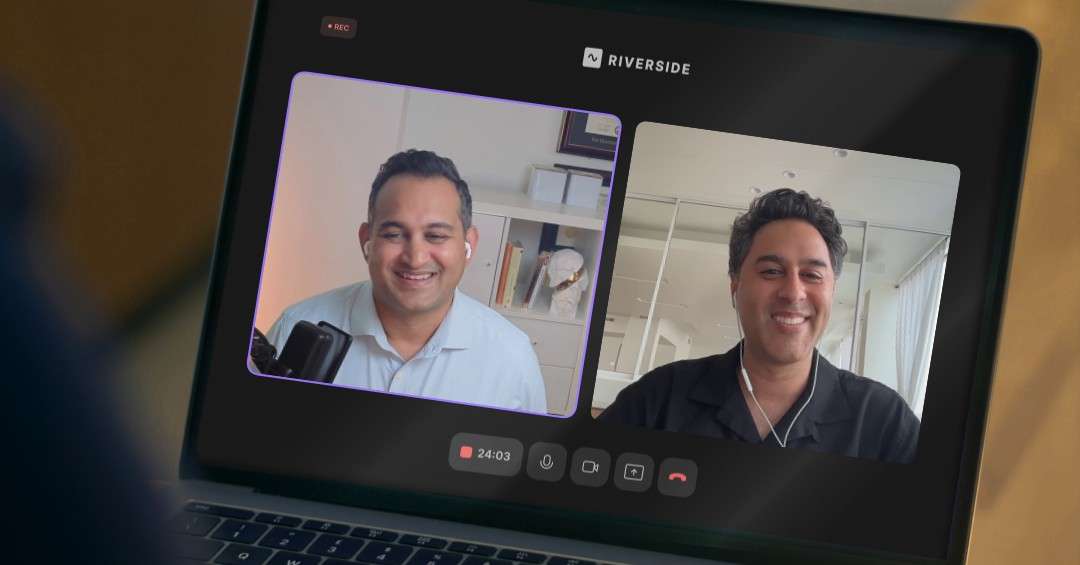
Pankaj Raval and Sahil Chaudry recording a Letters of Intent podcast episode explaining 409A valuations
Pankaj Raval and Sahil Chaudry break down what a 409A actually buys you: not a number, but a legal presumption.

What a 409A Actually Is

Start with the misconception. Most people treat a 409A as a valuation you purchase once a year, file away, and forget.

That is not what you are buying.

The name and the origin

Section 409A entered the Internal Revenue Code through the American Jobs Creation Act in 2004 and took effect in January 2005. Final regulations followed in April 2007, and the core rules have stayed remarkably consistent since.

That stability is unusual for tax law.

The provision came out of Enron. Executives accelerated payment on their deferred compensation in the weeks before the company collapsed, while everyone else lost everything. Congress responded by regulating deferred compensation tightly.

What people mean when they say 409A

In common usage, a 409A refers to an independent appraisal of the fair market value of a private company’s common stock.

That fair market value becomes the strike price on employee options. And the strike price determines what an employee eventually pays tax on, because tax falls on the spread between the exercise price and the price at which shares are sold.

The rule itself

Here is the statutory requirement, stated plainly. A nonqualified stock option is exempt from Section 409A only if the strike price is at least equal to fair market value on the grant date.

No discounts. Price at or above fair market value and you are fine.

Go below that line and the option stops being an option in the eyes of the statute. It becomes deferred compensation, which is taxed very differently.

How a Grant Goes Wrong

The episode walked through a composite example. Pankaj and Sahil were explicit that the company is hypothetical, assembled from patterns they have seen, with the details changed to preserve confidentiality.

Call it Meridian Robotics. Six years old, roughly forty people, warehouse automation, Series B, based in Los Angeles.

January

Meridian obtains a 409A valuation from a reputable independent firm. Common stock comes back at $1.10 per share. The board formally adopts it, and the report states in plain language that it is good for twelve months.

All of that is correct and normal.

April

A strategic buyer sends a letter of intent. Non-binding. The number implies roughly $4.20 per share for the common stock, about four times the January figure.

May

Diligence is underway. Meridian hires a VP of operations specifically to help close the deal. She accepts a below-market salary because she is receiving equity.

The board grants her 60,000 options at $1.10, because the January valuation is four months old and everyone knows it lasts a year.

August, and then two years later

The deal dies. That happens constantly, and Meridian keeps building. Nobody thinks about the grant again.

Two years on, a different buyer arrives and this deal closes. During diligence, the buyer’s counsel does something entirely routine. They request the valuation history and the grant history, then lay them side by side.

There it is. A May grant priced off a January number, with a signed letter of intent sitting between them.

Who has the problem

Not the board, and not the founders.

The VP of operations, who took less cash, exercised nothing, sold nothing, and had no vote on any of it.

The Rule Nobody Internalizes

The twelve-month figure in that valuation report is a ceiling, not a guarantee.

The safe harbor from an independent appraisal lasts a maximum of twelve months from the valuation date, or until a material event occurs, whichever comes first.

What counts as a material event

Anything that could significantly affect the value of the company. In practice that means a priced financing round, a signed term sheet or letter of intent, filing an S-1, a secondary sale of shares, a major shift in financial performance, or a down round.

At Meridian, the letter of intent ended the safe harbor in April. The May grant was priced off a valuation that had already expired.

The nuance worth understanding

Sahil raised an important distinction during the episode. A signed LOI does not retroactively invalidate grants made before it.

Going forward, though, the company can no longer claim ignorance. A new number sits on the table, and pricing the next grant at the old figure becomes indefensible.

Pankaj added practical texture. Receiving an LOI does not automatically make your company worth that amount. Someone offering $100 per share does not establish that value by itself, and the legitimacy of the offer matters.

But a signed LOI that leads into diligence is different from an unsigned one you decline. If you sign and proceed, update the valuation. Either way, document what happened so it does not surface awkwardly years later.

The Three Safe Harbors

The IRS provides three paths. In practice, most companies use one.

Independent appraisal

An appraisal by a qualified independent appraiser is the strongest and most common option.

Qualified means something specific. The regulations look for significant knowledge and experience in business valuation, generally five or more years of relevant experience. That usually appears as a credential such as an ASA, CVA, or ABV.

Independence matters just as much. No material financial interest in your company, and no family or employment relationship with management. Your CFO cannot do it. Neither can the CPA who handles your books.

The illiquid startup presumption

This one lets someone inside the company perform the valuation, such as a financially sophisticated board member or a CFO.

It is narrow. The company must be under ten years old with no publicly traded securities, and you cannot be anticipating an IPO within 180 days or a change of control within ninety.

Pankaj noted that plenty of early-stage startups do qualify, and the firm has relied on this safe harbor for companies that are not yet liquid and would rather not spend five to ten thousand dollars. His caution: have an opinion and documentation behind it rather than simply asserting it.

Note also that this option disappears exactly when you would most want it, meaning once you are in a process.

Binding formula

You set a mathematical formula and apply it to every transfer of stock, including buybacks from founders. Rigid, and it breaks the moment you sell the company in an arm’s length deal.

In practice this shows up in closely held family businesses rather than startups.

Choose the Appraiser Carefully

Cost pressure produces bad decisions here.

Plenty of services now offer 409A valuations. Cap table platforms like Carta provide them and Pankaj described those as good options. Other providers, particularly unverified overseas ones, may not produce something defensible.

What defensible means

Ask whether the appraiser could actually stand behind the number if questioned. Someone based in the United States with real credentials and more than five years of experience gives you that.

Expect to pay around five thousand dollars or more. Choosing the cheapest option available risks paying for something that provides no protection when it matters.

What you are actually purchasing

This is the reframe from the episode worth carrying with you.

Inside the safe harbor, your valuation is presumed valid. If the IRS wants to challenge your strike price, they must prove the valuation was grossly unreasonable.

That word matters. The distance between unreasonable and grossly unreasonable is substantial, which is precisely why the qualifier appears throughout contract drafting.

Outside the safe harbor, the presumption flips. You and your employees must affirmatively defend the number years later, with hindsight running against you.

As Sahil put it, you are not buying a number. You are buying a legal presumption. The question is never whether this is the right price. The question is who has to do the proving if someone challenges it three years from now.

Why Employees Bear the Damage

Understanding the consequence explains why this deserves attention.

An option priced below fair market value becomes deferred compensation under the statute. Section 409A permits payment only on six specific events: separation from service, death, disability, change of control, an unforeseeable emergency, or a fixed date set in advance.

A normal stock option does not work that way. The employee decides when to exercise, and that choice is not on the list.

Phantom income

The result is tax on value the employee has not received. She has no cash from the options, no sale, and a bill anyway.

Sahil framed the broader lesson for founders. Any time money or value lands in your pocket, ask your attorney and your CPA how it gets taxed and whether you will have cash available when the tax comes due.

Situations where the IRS values something you hold but cannot readily convert to cash require planning well in advance.

What the employee can do

If you hold options and suspect a pricing problem, ask two questions. What was the valuation date used for your grant, and did anything significant happen at the company between that date and your grant date?

You are entitled to understand how your own strike price was set. A company handling this properly will have a clear answer ready.

Get the Timing Right

409A compliance is inexpensive relative to the exposure. A valuation costs a few thousand dollars. Reclassified options create penalties and personal tax liability for people who had no say in the decision.

Refresh your valuation annually, and refresh it again whenever a material event occurs. A signed letter of intent is a material event, even when the deal later collapses.

Pankaj Raval and our team at Carbon Law Group advise Los Angeles founders on equity compensation, including option grants, safe harbor analysis, board approvals, and the documentation that survives buyer diligence. We coordinate with your CPA, because the legal structure and the tax consequence are one decision.

If you are issuing options, considering a sale, or reviewing grants made in the past, contact Carbon Law Group at carbonlg.com. Spending a little now avoids a great deal later, usually for someone who never had a vote in the matter.

🔗 Learn More
Website: carbonlg.com

409A Explained: The Hidden Tax Bill in Your Startup Equity

Pankaj (00:03)
Welcome back to Letters of Intent, the podcast for deal makers and risk takers. I am your co-host, Pankaj Raval, and I’m joined by my trusted co-host and colleague Sahil Chaudry. Sahil, how are you doing today?

Sahil (00:13)
I’m doing great. And today we’re going to tell you about a company that did everything right. They hired good lawyers, they hired a reputable valuation firm, the board did its job, and they still handed one of their employees a tax bill that she had no idea was coming. On stocks she never sold from options, she never exercised bunkage. We are getting into the 409A Safe Harbor.

Pankaj (00:34)
That is right. We’re talking about 409As today. Okay. And if you guys have not heard of 409As, and you’re in the startup world, you will at some point. And if you’re not in the startup world, if you’ve gotten options, if you work for a company that issues options or any kind of employee deferred compensation, 409A is very important because it determines the price of those shares when you receive them, and that matters because

What you pay tax on is really the spread between the price at which you can exercise and the price at which the company is or the shares are sold. So this is a really important. It’s not really sexy to talk about tax code, but we’re talking about in the context of making money and making money’s sexy. And that’s why I want you guys to continue listening.

Sahil (01:10)
Absolutely right. So most people think that 409A is a valuation, but actually 409A refers to a safe harbor. It changes the burden of proof for who has to prove the fair market value of shares. It’s a number that people think it’s a number you buy once a year, you put it in a folder and you move on. But it in fact that number expires every 12 months. And we really want to share with you what you’re buying when you do

conduct 409A valuation.

Pankaj (01:39)
Absolutely. What the upsides are, what the downsides are. So we’re gonna get into all that today. So stay tuned. There’s a lot to discuss and a lot to learn in this episode. and hopefully afterwards, you’ll come out extremely informed and ready to ask the right questions when these issues come up. A quick note before we start, the company we’re talking about is kind of a hypothetical company, it’s a kind of a composite of a lot of companies we’ve dealt with

over the past and the pattern is real but the company’s not to preserve confidentiality.

Sahil (02:06)
So, okay, let’s get into it. This is gonna be just like we’re back in law school Pankaj. We’re gonna talk about a company, and this company is called Meridian Robotics. It’s six years old, about 40 people, warehouse automation, Series B based here in Los Angeles. And I wanna be clear from the start that nobody in this story is doing anything dishonest or careless, and that’s the point.

Pankaj (02:28)
Exactly.

So let’s walk us through it.

Sahil (02:30)
Okay, so picture this. It’s January. Meridian gets a 409A valuation from a reputable independent firm. The common stock comes back at $1.10 per share. So the 409A valuation is going to take into account multiple factors. Now, the 409A valuation has to come from an independent appraiser. So someone who doesn’t have a vested interest in your company. Typically, once the independent appraiser comes up with its appraisal,

The board will formally adopt it and the report will say in plain language that it’s good for twelve months.

Pankaj (03:03)
Okay, which is which is true. Which is true. That’s all true. Yes.

Sahil (03:05)
That’s true. Yeah,

it’s true. But now we hit April. A strategic buyer sends Meridian a letter of intent, non-binding, and the number in it implies something like four dollars and twenty cents a share for the common stock.

Pankaj (03:18)
So four times that January number.

Sahil (03:19)
That’s right, roughly four times. Now it’s May. They’re deep in diligence. Meridian hires a VP of operations specifically to help get this deal across the line. She decides to take a below market salary because she’s getting equity, and the board grants her sixty thousand options at a dollar ten.

Pankaj (03:35)
Because the January valuation is four months old.

Sahil (03:37)
Exactly. The January valuation is four months old and everybody knows it’s good for a year.

Pankaj (03:41)
Okay, so now what? What happens next?

Sahil (03:44)
Next, we’re in August. The deal dies, which happens all the time. We see these deals die on the vine. That’s not unusual. Meridian, though, keeps building, and nobody thinks about that grant again. Two years later, a different buyer comes to the table, and this time the deal does close. And during diligence, the buyer’s council does something completely ordinary. They ask for the valuation history, they ask for the grant history, and they lay them side by side.

Pankaj (04:09)
And there it is.

Sahil (04:10)
There it is, a May grant priced off a January number with a signed letter of intent sitting in between them.

Pankaj (04:16)
So I wanna sit on who has the problem here because it isn’t the board. It isn’t the founders, it’s the VP of operations who took less cash, exercised nothing and sold nothing, and had no vote on any of this.

Sahil (04:29)
That’s exactly right. So that’s what we were talking about up front. This is a situation where you’re going to be taxed on cash that you haven’t realized yet. And this is what we want to prevent. That’s what the safe harbor is meant to prevent. So if we back all the way up, Pankaj, we need to answer the question, truly, what is a 409A?

Pankaj (04:48)
So yeah, the name comes from section 409A of the internal revenue code. It was added by the American Job Creation Act in 2004 and took effect in January of 2005. The final regulations came out in April of two thousand seven and honestly the core rules haven’t really meaningfully changed since then.

Sahil (05:05)
Which is

unusual for tax.

Pankaj (05:06)
It is, it is. We’re seeing tax rules change all the time. But this one has funny enough or interesting enough stayed pretty consistent.

And this was all written in response to Enron, with the storied catastrophes of corporate America many, many years ago. And if you’re a millennial or older, you’ll remember this. It was executives accelerating payment on their deferred compensation in the weeks before the company collapsed, while everybody else lost everything.

The executives made out like bandits. This is actually a prelude to something that kind of comes up comes up later.

Sahil (05:33)
And people use that term 409A as a shorthand. And I think people get it confused with a valuation, but it’s not just a valuation, right?

Pankaj (05:42)
You’re right. It’s not just a valuation.

So now what people call a four nine A is shorthand. It’s an independent appraisal of the fair market value of a private company’s common stock. And that fair market value becomes the strike price on your employee options.

Sahil (05:54)
And the rule itself is simple to state.

Pankaj (05:56)
Very, you know, what the rule says is a non qualified stock option is exempt from Section 409A only if the strike price is at least equal to the fair market value on the grant date. So let me repeat that again. So the non qualified

Sahil (06:10)
So no discounts.

Pankaj (06:11)
right, no discounts, it has to be equal to the fair market value on the grant date. What is the fair market value of those shares on the grant date? And that’s it. Price it at or above the fair market value and you’re fine.

Price it below and the option stops being an option in the eyes of the statute. It becomes deferred compensation, and now that’s taxed differently.

Sahil (06:28)
Okay, and that’s fatal because basically that creates the problem we’re talking about, which is you’re getting taxed on before you’re actually liquid.

Pankaj (06:36)
Absolutely.

Yes.

So and is fatal immediately at the moment of the grant, because 409A only permits payment on six specific events: separation from service, death, disability, change of control, an unforeseeable emergency, or a fixed date set in advance. And a normal stock option doesn’t work that way. The employee decides when to exercise, whenever she feels like it, is not on that list.

Sahil (06:56)
Okay, so how do you know you priced it right? Because the whole problem with private company stock is that there’s no market telling you what it’s worth on any given Tuesday.

Pankaj (07:04)
That’s true, Sahil. That’s true. We need an independent third party to come in. This is the part that also is kind of generally misunderstood. The IRS gives you what are called safe harbors. There are three. One virtually everybody uses as an independent appraisal by qualified independent appraiser.

Sahil (07:20)
And qualified means something specific.

Pankaj (07:22)
It does. It means the regulation is looking for significant knowledge and experience in business valuation as a benchmark, generally five or more years of relevant experience in the market. That usually shows up as a credential: an ASA, a CVA, an ABV, and critically independence. No material financial interest in your company, no family or employment relationship with your management. So that means your CFO can’t do it, your CPA that works with you consistently. It has to be independent.

And there has to be someone who has some experience. And you know, just a word of caution that comes up for a lot of people is that you want to make sure that the party you choose is defensible because there’s a lot of services that offer it now. Carta, a lot of like cap table companies offer these 409As which are good. And Carta, other services that may offer are good, but there’s also kind of foreign parties that offer it. Those may not be as defensible, especially if they’re not someone that you know can defend you.

If there’s ever a question, right? Like you want to make sure that you’re hiring someone who’s ideally probably in the US who has these skills and has been doing it for some time, over five years. Because if you hire someone who’s like the cheapest option out there, you could run a risk that it’s not even useful at the end of the day. So these are not always cheap, and you’re probably looking at five thousand dollars or more for these, but necessary if you are planning on, issuing this kind of

compensation to your employees.

Sahil (08:33)
Okay, so

that’s one of the safe harbours, but what are the other two?

Pankaj (08:36)
One of the other safe harbors that’s called the illiquid startup presumption. That lets somebody inside a company do the valuation, a financially sophisticated board member, a CFO, instead of an outside firm. But it’s narrow. The company has to be under ten years old, no publicly traded securities, and you can’t be anticipating an IPO within 180 days or a change of control within ninety. So this is really interesting, right? A lot of startups may in fact fall into this exemption, early stage startups.

So this is something to consider. We’ve actually had this situation come up for us in the past with certain companies that are, not that old, but also not that liquid and don’t want to spend the five to ten thousand dollars for a 409A. We’ve been able to rely on this safe harbor in some situations. So it’s something to consider as well. But you know, it’s good to have an opinion, good to have some justification behind it, not just rely on it without any documentation.

Sahil (09:21)
Okay, but really the moment you’re actually in a process, let’s say preparing for an IPO, that one evaporates.

Pankaj (09:27)
That is true. Right. That option evaporates when you’d most want it. So the third option that we need to discuss is a binding formula. You set a mathematical formula and you use the same formula for every single transfer of stock, including buybacks from founders. It’s rigid. It breaks the moment you sell a company in the normal arm’s length deal. And in practice, you mostly see it in closely held family businesses, not startups.

Sahil (09:48)
Okay, so for anyone venture backed, it’s really one option.

Pankaj (09:51)
Really one option. You’re right. Yes. Anyone venture backed is really one option. If you have angel investors, arguably you could still potentially rely on the second option. But yeah, we generally suggest, the most defensible option is getting a independent third party appraiser to provide you with that number.

Sahil (10:06)
Okay, so let’s say you get the appraisal, what does that actually get?

Pankaj (10:09)
So it shifts the burden of proof. If you’re inside the safe harbor, your valuation is presumed valid. And this is important. so if the IRS wants a challenge your strike price, they have to prove that your valuation was, and this is the actual standard, grossly unreasonable.

Sahil (10:23)
Which that sounds like a high bar, judging from the word grossly.

Pankaj (10:28)
Right. Yeah. We do a lot of contract work, you know, Sahil,

here. You know, we always try to include grossly when it’s like a question of negligence or whatever it might be.

Sahil (10:35)
That’s right.

Pankaj (10:36)
This is the same situation here. The standard between unreasonable and grossly unreasonable is, a big chasm that you have to

pass. So it’s important to really have that qualifier in there if you want to

create as much protection as possible.

Sahil (10:48)
Right. But for everyone listening, if you add gross or grossly in front of something, it means a very high bar. So that’s

Pankaj (10:54)
Yes.

Sahil (10:55)
why this safe harbor is valuable, because the IRS is basically saying, We’re really not gonna touch that valuation. It’s very unlikely, let me put it that way, it’s very unlikely we’re going to attack your valuation if you go through this independent appraiser process.

Pankaj (11:08)
Right. So and then let’s flip this now. Okay, Sahil, so if you’re outside a safe harbor, the presumption flips with it. Now you and your employees have to affirmatively defend that number years after the fact with hindsight running against you.

Sahil (11:22)
So here’s the reframe I want every founder and listening to takeaway. You are not buying a number. You are buying a legal presumption. And the question is never, is this the right price for my company? The question is if somebody challenges this three years from now, who has to do the proving?

Pankaj (11:36)
Absolutely. So that’s it. That’s the product.

Sahil (11:38)
So if we go back to Meridian, they bought the presumption in January, what happened to it?

Pankaj (11:43)
Well, it expired in April.

Sahil (11:45)
Not January plus twelve?

Pankaj (11:46)
Not January plus twelve. So here’s the rule nobody internalizes. The safe harbor from an independent appraisal lasts a maximum of twelve months from the valuation date or until a material event occurs, whichever occurs first.

Sahil (12:00)
Okay, so what’s a material event?

Pankaj (12:02)
Anything that could significantly affect the value of the company. In practice, that means a price financing round, a signed term sheet or letter of intent, filing an S-1, a secondary sale of shares, a big shift in financial performance, or a down round.

Sahil (12:15)
It was the letter of intent.

Pankaj (12:16)
Letter of intent. See?

There’s a reason that we picked that name for our podcast. So yes, a

Sahil (12:20)
That’s right.

Pankaj (12:21)
signed letter of intent.

Sahil (12:22)
Wow, a signed letter of intent, a material economic event just like this podcast. So

Pankaj (12:28)
Yeah.

Sahil (12:29)
Pankaj, There’s some nuance here. I mean, retroactively, that signed letter of intent doesn’t affect the grant that was granted to the VP of operations. But going forward, basically, we can’t claim that we don’t know anymore. The company is not going to be able to go forward and say,

Still $1.10. Now we’ve got a new figure on the table, the $4.20 proposal. And so now we need a fresh 409A to justify the next round of pricing because this counts as a material economic.

Pankaj (12:59)
Absolutely. So I think that’s a really good point and really good nuance to bring up. So practically speaking, just because you get a LOI for, four dollars and ten cents, or let’s say, a hundred dollars a share, right? Like that doesn’t all of a sudden make your company worth that, but it could. It could change the value of your company in some way, right? That someone does see your company as worth this much. But of course, you always have to see okay, what’s the legitimacy of that offer? Is it valid?

Those could change things, right? So I think there’s factors to consider there. But fundamentally the point is that if you get a LOI, it’s assigned LOI, right? Like if you actually sign it and discuss moving forward, if you just get it without signing it and say, you know what, we’re not gonna move forward, maybe that doesn’t affect things as much. But if it’s assigned LOI, you move forward with diligence and then it falls apart, you’ll probably update your 409A.

Because you know, that could have some effect on the value of your company. It should be disclosed either way and put in some kind of writing so it doesn’t come up to kind of bite you in the butt later on.

Sahil (13:50)
Yeah, absolutely. And I just want to flag on a related level this general concept. We talk about phantom income, and this is a related concept here, and it all has to do with tax. So in general, entrepreneurs, founders, if you’re listening to this, when you’re getting income, you have to pay tax. When you’re getting a distribution or dividend, you have to pay tax.

The thing that we can help guide you on and that your CPA is going to help guide you on is making sure you have the cash in your pocket when it’s time to pay the tax. Because there are situations where the IRS is looking to you to pay for the value of something that it says you have, but you actually aren’t liquid and you’re not able to pay that. So that’s the kind of planning that you need to work with your attorney on and your CPA on.

But

it’s just a flag that anytime money goes in your pocket, you need to bring that up to your CPA and attorney and say, Hey, how am I getting taxed? Let’s make sure I have the money to pay the tax when the time comes.

Pankaj (14:44)
Absolutely. Absolutely. So I think that wraps it up for today, talking about 409As. Sahil, I think people just need to remember that they’re important when you’re handing out options to establish the strike price, to create a safe harbor, right? That’s what we’re talking about here today, is creating that safe harbor to support the price that you’re pricing these options at. So in the future, if the IRS does come knocking and asking questions, you have something to fall back on.

And without it, you could have some really negative tax consequences, penalties that you don’t want to be dealing with. So better to spend the money now, a little bit of money now could save you a lot of money later on. And we wanna make sure that people don’t get hit with these penalties unnecessarily.

Sahil (15:18)
Thank you all for joining us on this episode of Letters of Intent, the podcast for deal makers and risk takers brought to you by Carbon Law Group. If you enjoyed this episode, remember to share it with your founder, entrepreneur, and dreamer friends.

Pankaj (15:34)
Thanks again.

Get in touch with us

Lead Form Main

The main Lead Form

This field is for validation purposes and should be left unchanged.
Name(Required)

Download Our Free Guide

We respect your privacy. No spam, ever.(Required)