
Dealmaker’s Guide: Phantom Equity

Home / Podcast / Dealmaker’s Guide: Phantom Equity

Dealmaker’s Guide: Phantom Equity

Dealmaker’s Guide: Phantom Equity

Every founder dreams of reaching that magical inflection point in business where they can finally step back from daily operations. You have spent years grinding, wearing every hat, and building a company from scratch. Now, you want to bring in a high-performing executive to manage the day-to-day work. This milestone allows you to focus on high-level strategy, explore new ventures, or simply enjoy well-deserved personal time. However, attracting and retaining top-tier executive talent requires offering a compelling financial upside. Key employees want to share in the long-term wealth created by their hard work.

This situation creates a classic dilemma for small business owners and startup founders. How do you give a valuable key employee a meaningful piece of the financial pie without giving away control of your company? Handing over actual equity shares creates permanent co-owners. Actual stock comes with voting rights, corporate governance requirements, inspection rights, and cap table dilution. Furthermore, actual equity forces you to navigate complex federal Securities and Exchange Commission regulations and state securities laws.

In Episode 70 of the Letters of Intent podcast, Carbon Law Group founder Pankaj Raval and corporate attorney Sahil Chaudry tackle this exact challenge. They break down a powerful, highly flexible legal mechanism designed specifically for private enterprise leaders: phantom equity. As counsel for dealmakers and risk-takers, the team at Carbon Law Group regularly helps growing businesses structure smart employee incentive plans that protect founder control while motivating key talent.
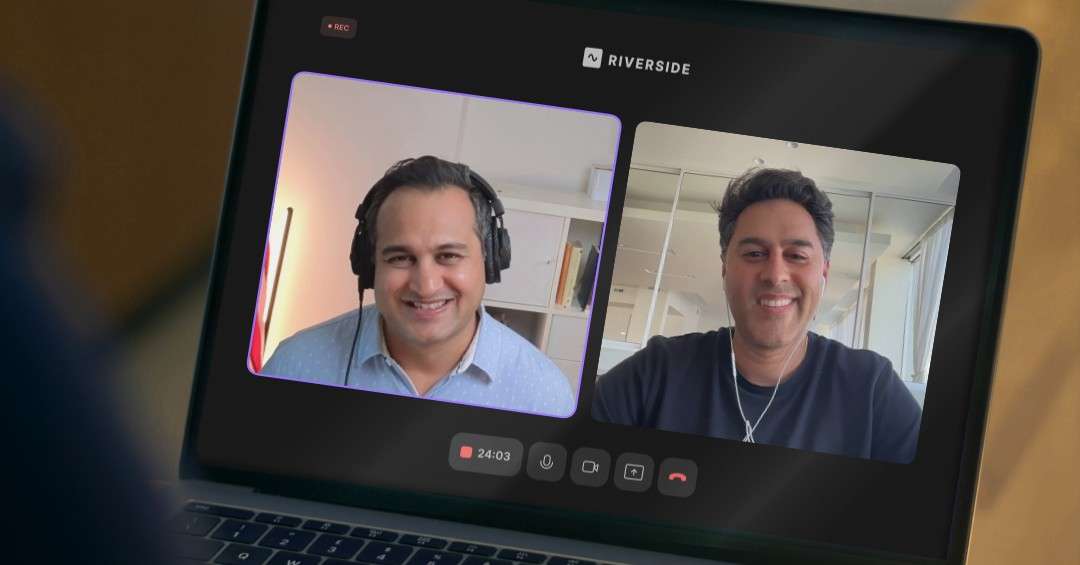
A laptop screen displaying a Riverside virtual recording session with podcast hosts Pankaj Raval and Sahil Chaudry smiling during Episode 70 of Letters of Intent.
Pankaj Raval and Sahil Chaudry record Episode 70 of Letters of Intent, breaking down how founders can use phantom equity to incentivize key executives without diluting their cap table.

What Exactly is Phantom Equity? (Demystifying Synthetic Options)

To understand phantom equity, you first need to look at what lawyers mean when they talk about synthetic financial options. Legal professionals love using fancy terms like synthetic because it sounds technical and impressive. In plain English, synthetic simply means created purely by contract. You can draw the lines however you like, create custom exceptions, and establish specific carve-outs.

Actual stock ownership gives an individual real equity in your corporate entity. That ownership grants the holder both political rights and economic rights equal to other owners. Political rights include the right to vote on corporate decisions, inspect financial books, and sit at the table alongside you as a partner. Economic rights include receiving dividends and sharing in the cash proceeds when the company gets acquired or liquidated.

Phantom equity, by contrast, is an entirely contractual arrangement. It traces the exact economic lines of your company’s actual equity without giving the participant real shares. The key employee never sits on your capitalization table. They hold zero voting power, zero corporate decision-making authority, and zero statutory inspection rights. Instead, they hold a legally binding contractual right to receive a cash payout that mirrors the financial upside of actual stock.

Because phantom equity relies on contract law rather than statutory stock issuances, founders hold immense flexibility. You can establish custom rules, create specific financial carve-outs, and offer lucrative profit participation without diluting your cap table or triggering heavy securities filings.

Real-World Case Study: Dissecting an SEC Filing for Phantom Stock Units

During their discussion on Letters of Intent, Pankaj Raval and Sahil Chaudry analyzed a real-world case study pulled directly from the public SEC database. Examining public filings of major companies provides valuable lessons for private business owners looking to adopt sophisticated legal structures.

The case study focused on an employment agreement between IES Holdings Inc. and a senior executive, Mr. Gendal. In addition to a substantial base salary of $62,500 per month ($750,000 annually), the company awarded the executive a one-time grant of 100,000 Phantom Stock Units under their equity incentive plan.

This public filing beautifully illustrates how phantom stock works in practice. The award agreement explicitly defined each phantom stock unit as a contractual right regarding one share of common stock. The executive received no actual shares on day one. Instead, the units created a tracking mechanism tied directly to the public stock’s financial performance.

For small businesses and growing private companies, this case study offers a clear template. You do not need to be a publicly traded conglomerate to implement this structure. A private enterprise can issue phantom units that mirror the economic growth of the business. If your company sells five years down the road, the phantom equity holder receives a cash payout reflecting their granted percentage, exactly as if they held real equity. Yet, throughout those five years, you maintain total corporate authority as the sole true owner.

Designing the Mechanics: Vesting Schedules, Service Rules, and Performance Hurdles

One of the biggest mistakes founders make when trying to retain talent is giving away upside upfront. Handing out unearned equity or immediate profit participation removes the employee’s long-term incentive to stay and build value. A well-crafted phantom equity plan incorporates strict vesting schedules and strategic performance hurdles.

Vesting means an employee must earn their rights over time or by achieving specific company milestones. In the IES Holdings agreement analyzed by Sahil Chaudry, the executive’s phantom stock units were subject to both service-based vesting and performance-based vesting.

Service-based vesting requires continuous employment. If an employee gets fired or quits before a vesting date, they forfeit their unvested phantom units. Common schedules include multi-year vesting structures, such as a one-year cliff followed by equal installments over three to four years. This structure incentivizes the executive to remain with the firm long-term.

Performance-based vesting ties the financial payout to concrete business milestones. In the SEC agreement, the executive satisfied the performance requirement only if the company’s stock price met or exceeded $50 per share for twenty trading days within a twenty-five consecutive trading day period. If the company failed to hit that price target within three years, all phantom units were immediately forfeited for zero consideration.

For private companies, founders can establish valuation hurdles. For example, if you have spent ten years building your business to a $5 million valuation, you can set $5 million as the hurdle rate for a new executive. The key employee only participates in profit distributions or sale proceeds above that $5 million baseline. They share in the new growth they helped generate, while your historic value remains completely protected.

Navigating M&A and Change in Control: Single Trigger vs. Double Trigger

Because most phantom equity plans aim to reward key employees during a business sale, defining what happens during a change in control is critical. A change in control refers to a major liquidation event, such as a third-party acquisition, merger, or sale of substantially all company assets.

In dealmaking, legal agreements address change in control scenarios using either single-trigger or double-trigger acceleration clauses.

Single-trigger acceleration means that the moment the company gets sold, all of the employee’s unvested phantom stock units instantly vest. The employee immediately cashes out alongside the founder. While this sounds attractive to employees, it can sometimes complicate M&A negotiations. Acquiring companies often buy a business specifically to retain its key operational leaders. If an executive receives a massive cash payout and fully vests on day one of the acquisition, they may have little financial incentive to stay post-sale.

Double-trigger acceleration offers a balanced alternative. Under a double-trigger provision, two distinct events must occur before unvested units accelerate. First, the company must undergo a change in control. Second, the acquiring company must terminate the employee without cause within a specified window after the sale.

Double-trigger provisions protect both the employee and the buyer. The key employee knows they will get paid if the new owner lets them go, while the buyer gains confidence that the executive will stay on board during the operational transition. Structuring these change in control provisions requires careful legal drafting to ensure your company remains an attractive acquisition target.

Tax Implications and Section 409A Compliance: Avoiding Costly Legal Pitfalls

While phantom equity offers unmatched flexibility for founders, business owners must navigate important tax laws and regulatory considerations. Failing to properly structure a phantom equity plan can result in severe tax penalties for both the company and the employee.

From a tax perspective, phantom equity does not receive capital gains treatment. Because phantom stock is a contractual right rather than actual stock ownership, payouts are taxed as ordinary income. When a liquidation event occurs and the employee receives their cash payout, the funds are subject to standard income tax rates and employment taxes. While this tax rate is higher than long-term capital gains, the employee benefits from not having to pay any money upfront to purchase shares or exercise options.

Furthermore, phantom equity plans in the United States must strictly comply with Section 409A of the Internal Revenue Code. Section 409A governs nonqualified deferred compensation plans. If an agreement promises a payout in a future tax year, it must strictly adhere to 409A rules regarding payment timing, election periods, and distribution events. Non-compliance with Section 409A can trigger immediate income inclusion plus a 20 percent federal penalty tax on the employee.

Additionally, robust phantom equity agreements include clawback provisions. A clawback clause allows the company to recover or cancel phantom awards if the employee engages in bad behavior, breaches restrictive covenants, or if regulatory adjustments require financial deductions. Working with experienced corporate attorneys ensures your incentive agreements comply with Section 409A while protecting your firm against bad actors.

Strategic Advice for Founders: Choosing the Right Incentive Structure with Carbon Law Group

As a founder or business owner, retaining key talent while preserving your ownership is one of the most important balancing acts you will face. Every business is unique, and choosing between actual equity, stock options, profits interests, and phantom equity depends heavily on your corporate structure and strategic goals.

Generally speaking, founders should hoard their actual equity whenever possible. You need to reserve actual equity for strategic partners and equity investors who bring substantial capital to the table. For key employees, executives, and operational managers, phantom equity offers an ideal middle ground. You grant your leadership team the exciting upside of a future exit without sacrificing your voting control or clogging your cap table with minor shareholders.

At Carbon Law Group, co-hosts Pankaj Raval and Sahil Chaudry serve as trusted counsel for dealmakers, risk-takers, and growing enterprises. They work closely with business owners to design customized executive compensation strategies, draft compliant phantom equity plans, and navigate complex M&A transactions.

Before offering any equity or incentive structure to a key employee, ask yourself three essential questions:

  1. What is the current realistic valuation of your business, and what is your target exit value?

  2. Do you want the employee to participate in profit distributions along the way, or strictly upon a final sale?

  3. Should the employee share in total value, or only in growth above a specific hurdle rate?

By answering these questions alongside seasoned legal counsel, you can build an incentive plan that drives sustainable growth, aligns employee performance with your vision, and protects your hard-earned equity.

Conclusion: Securing Your Enterprise with Carbon Law Group

Growing a successful private enterprise requires a talented team and a bulletproof legal framework. Phantom equity provides small business owners with a sophisticated, highly practical tool to reward top performers without compromising ownership or control.

Do not leave your equity strategy to chance or rely on generic online contract templates. Partnering with corporate law experts ensures your incentive agreements are legally enforceable, tax-compliant, and aligned with your long-term exit goals.

Whether you are preparing to hire your first key executive, restructuring your cap table, or planning for a future acquisition, Carbon Law Group is here to guide you every step of the way.

Schedule a consultation with Carbon Law Group today to discover how custom phantom equity plans can transform your business growth and secure your company’s future.

🔗 Learn More
Website: carbonlg.com

Dealmaker’s Guide: Phantom Equity

Pankaj (00:16)
Ladies and gentlemen, welcome back to another episode of Letters of Intent. I am Pankaj Raval, your co host and founder of Carbon Law Group, and I’m joined today by my trusted co host, Sahil Chaudry. Sahil, how are you?

Sahil (00:27)
Doing great. We’re gonna dive into something that is very mysterious today, Pankaj. Phantom equity.

Pankaj (00:32)
Yes, absolutely.

Phantom equity in the context of rewarding your key employees as your company grows. Now, Sahil.

This is something that every client needs to think about as they grow their company. You know, a lot of companies, if they may stay a couple people and the founder run the whole time, but a lot of our clients hope to get out of the company at some point. And that means hiring someone to replace them. That’s really the dream of entrepreneurship. When you can grow your company to a place where now you can hire someone else, replace you and actually you have more time to think strategically or do other things or golf. whatever it might be you want to do, you can actually bring someone in to help run the company. And this is where

Equity incentive plans or employee incentive plans really matter to keep your employees engaged, feeling rewarded, and help drive the growth of the company. So Sahil, let’s set this up, for everyone. Tell me why is it relevant to think about this and spend time going through equity incentive or even phantom stock plans and what are phantom stock plans in the context of all the different options that people have when rewarding employees?

Sahil (01:30)
Well, I think the most important reason is that as you grow, you need to incentivize employees and you want the people who have been trained, people who are key employees to stick with you. And in order for them to stick with you, they generally want to see more upside the longer they are with you. And generally they’re gonna be making big contributions, they’re gonna be adding value to your company. So you do wanna reward those people. And generally we’re on the company side here.

And companies wanna have some options. If you’re a founder, if you’re an entrepreneur, you need options for what you can offer to high performing employees. And you actually have quite a few options. There are more options than you might imagine in this case. Sometimes people think it’s just straight equity, which means somebody gets ownership, and ownership comes with political and economic rights that are equal to the founder, usually.

Equal to the owner, whoever that is. But you have a lot of other options. And lawyers like to invent fancy terms for things and we like to use words like synthetic that makes us sound like scientists, but really that just means contractual. So when a lawyer says that the terms are synthetic, usually they mean that it’s been drafted by contract. You can draw the lines however you like, you can create exceptions, you can create carve outs

You’re not governed by the fixed rules of equity. Whereas when you own equity in something, you’re also governed by the SEC, you’re governed by securities compliance and state and federal law. whereas if you’re going to create something like phantom equity or synthetic options, those are governed by contract.

in addition to phantom equity, you also have, and we’ll dive into a little bit more of what that means, but you also have something like

Stock options. you have employee equity incentive plans. And just to briefly touch on stock options, stock options are actually not stock. Stock options are a contract to buy stock at a certain price.

And otherwise, you have equity incentive plans where the company actually is awarding you stock that is vesting on a certain schedule, usually either based on performance milestones or time-bound.

And so we want to lay it out, just to keep it simple. Either you are offering your employee equity, and though that equity can actually come in the flavor of stock options, the right to buy equity or the equity itself that vests over time or is awarded up front, or you’re offering a contractual right to participate in profit.

Pankaj (03:52)
Interesting. Interesting. So yeah, so it sounds like there’s some nuances to all this and the pros and cons. I’m sure there’s, tax implications for all this. But from our experience, it sounds like Phantom Equity correct me if I’m wrong, the idea with Phantom Equity is to provide almost like a profit participation for this employee.

without having to create like option plans and things like that.

Sahil (04:12)
That’s right. So basically, Phantom Equity traces the lines of your actual equity. But instead of the participant getting actual equity, that participant gets their reward or gets the outcome, realizes that gain on either liquidation or distributions or dividends, depending how the documents are drafted. So a similar concept exists in LLCs.

which are called profits interests. The defining element in profits interests, and you can also incorporate this in Phantom Equity as well, is what’s called a hurdle. So in an LLC, if you’ve been building a company for 10 years and you want to bring someone on and they’re not putting in any money, but they’re going to be the next president and so they want some upside for leading your company to greater amounts of growth, you can say, okay, look, I’ve grown this company up to five million dollars.

So 5 million becomes the hurdle. You grow this company over $5 million and we sell it, or we distribute value that exceeds that $5 million valuation, you can participate. But below that, you don’t get to participate. Now, with Phantom Equity, you have some options. You can draft your Phantom Equity so that it strictly traces an equity provision. You can add a hurdle so that

the company has to grow it to a certain value before you get to participate. And you can also offer what are effectively phantom dividends. So every time a certain class of stock gets their dividend, you would participate in that as well. Now, most of the time, Pankaj, we see liquidation-based phantom stock. So this means that, hey, if we sell the company, you get to participate in the value of that sale.

up to a certain percentage. And usually that percentage is earned over time and it mirrors a vesting schedule that you might see with equity.

Pankaj (06:02)
Interesting. Interesting. So this is all kind of complicated. I’m sure, everyone’s listening who’s like, all right, well what the hell are we talking about? I think it’d be helpful to look at an actual agreement and let’s walk through some of the provisions that I think are most important for our listeners. If you’re a founder, if you’re an executive who may be getting one of these agreements, if you’re a founder who may be hiring someone and providing phantom equity. This is all really important information for you to know. And we’re gonna look at it practically because that’s what we’re about here.

on letters of intent at Carbon Law Group we’re about practical solutions for our clients. So with that being said, Sahil, why don’t we pull up that agreement? and let’s go through it. and talk about some of the important terms here that our listeners should be aware of.

All right. So Sahil, What is this agreement we’re looking at? Where did you find it? And why is this relevant to our discussion?

Sahil (06:42)
So, if you’re a law nerd like us, this is fun because you can actually find this agreement on the SEC’s website. This is an employment agreement between IES Holdings Inc. and a Mr. Gendal here. And so you can actually see what the deal terms are that they’re offering. They’re offering a monthly salary of $62,500 or $750,000 on an annual basis. And then boom, here we go. We’ve got Phantom Stock Unit Grant.

On October 2nd, 2020, you will receive a one-time grant of 100,000 Phantom Stock Units pursuant to the Company’s Amended and Restated 2006 Equity incentive Plan, as further described in the Phantom Stock Unit Award Agreement attached as Exhibit A. Okay. And then they also describe the benefits. So, like we said, this is an employee incentive program. And it’s interesting, they’re using the word Phantom Stock Unit here.

But this is a corporation, and you know that because it’s IES Holdings Inc. So they’re not using unit in the same way we would use with an LLC. They’re just actually creating a new defined term here for the Phantom Stock Unit. And here, if we dive a little deeper into section one of this amended and restated 2006 Equity Incentive Plan Phantom Stock Unit Award Agreement, we get a little more information on what this is. So

Each Phantom Stock Unit represents a contractual right in respect of one share of stock, subject to both the service-based vesting requirements set forth in section 2(a) and the performance-based vesting requirements set forth in section 2(b). So Pankaj now this touches on a few different concepts. So I’m going to slow down just so we can dive into each one. Now, number one, like we mentioned, Phantom stock is a contractual right. So that’s right here.

Saying that it’s the contractual right in respect of one share of stocks. So that means this phantom stock tracks the actual stock units of this company. The second element here is vesting. So you don’t get these 100,000 units up front, but actually you do get them, but they’re subject to forfeiture. And they vest on certain things happening. That’s what vesting means. It means you don’t get.

to own these units, or in this case, these phantom stock units, you don’t get the contractual right to the phantom stock units unless these two things happen. And in this case, there’s service based vesting, and there’s also performance based vesting. So service based refers to your continued employment. So that means you have to be employed

in order to receive the tranche that you’re going to receive of Phantom Stock.

And the second component, which we will explore, there’s a performance requirement, which, if we scroll down here, the participant shall have satisfied the performance requirement for all tranches set forth in the table above, only if the closing price per share of the company’s common stock equals or exceeds $50. The performance period shall commence on the grant date and end three years following the grant date. If the performance requirement is not satisfied during the performance period,

None of the phantom stock units shall vest, and all of the phantom stock units shall be immediately forfeited for no consideration.

So in this case, we have a requirement. If effectively this employee’s value is so tied to the company’s value that if the company’s stock does not equal or exceed $50 for any

20 trading days within a 25 consecutive trading day period during the performance period, then they don’t get this stock.

So to zoom out, and this applies to actual equity as well. You can have a service component, and usually there is a continuous service requirement. You have to be employed. If you get fired before your vesting date, then either you lose all of your shares or you lose some of those shares, or you get to keep the ones you’ve already vested. You can contractually agree to that with the employer.

These are some options. If we’re covering a few topics for our founders, entrepreneurs, phantom stock, contractual right to participate in profits. That’s not equity, but tracks equity. Vesting means that you don’t have to give it all at once. And the benefit of that is you get to have the employee incentivized to stay for a longer period of time and contribute, or you can base it off of milestones and performance incentives so that way.

You’re not giving away this major upside without ensuring that you’re going to receive the value, the benefit of this bargain.

And then if we explore this down here, number of Phantom stock units. We have Tranche 1, 33,333. And then three equal installments here that are vesting. Number one, the first tranche vests on the grant date.

The second tranche vests one year after the grant date, and the third tranche vests on the second anniversary of the grant date, which this is actually a common formula that we see. I mean, we also see a lot of agreements that use a one-year cliff, and then vesting one one forty-eighth in equal installments over the next three or four years.

In that case, it would be four years. So these are different options that an entrepreneur has. And Phantom Equity is one that not many entrepreneurs are familiar with, but we’re starting to see more entrepreneurs use it over time. And it’s actually one that we suggest.

Pankaj (11:59)
Why is that? Like what what’s the benefit of using this versus options or restricted units or something like that?

Sahil (12:05)
The number one benefit is you’re not giving away ownership. And ownership comes with rules and regulations, it comes with notice requirements, inspection requirements, it comes with economic rights, it comes with political rights. When you’re offering equity to someone, you are putting them in the owner’s position. So they have decision making authority alongside you.

You might be able to outweigh their voting, but that doesn’t mean they have no rights. So now, when you’re making decisions, you have to take your partners, the other owners into consideration. But when it comes to Phantom stock, that’s not the case. The other thing is that the equity pie is going to be limited to some degree. And there’s only so much equity you can offer without completely diluting the ownership. But

With Phantom Equity, you’re able to offer a contractual upside without diluting the equity in the company.

I want to touch on this section four here because this talks about a change in control. So

Why would that matter? Well, let’s say you have phantom stock units in this company, and the company gets purchased by another company. What happens to your stock in that situation? Well, that is exactly the kind of liquidation event that the phantom stock unit is meant to take into account.

But this is handled in two different ways. One is called single trigger acceleration, which means that upon a change of control, all of your phantom stock units vest at once and you’re able to cash out. The

second option is called double trigger acceleration, which means all of your phantom stock units, they don’t vest upon the initial change of control. They vest if you are terminated from the company.

That acquires your company because that means you’re still employed by the second company. And upon termination, that company by buying the acquisition target inherits your employment agreement and then pays you out if they terminate you. And

Pankaj (13:56)
Mm.

Sahil (13:57)
you can contract around how that happens.

If we keep scrolling down,

you’re usually gonna see this section 409A paragraph in these agreements because the Phantom stock is usually drafted to comply with the rules promulgated under section 409A because of the tax benefits involved. And effectively

you get the benefits of deferred compensation.

And then finally, this is also a critical section here, clawback. So, in this case, Notwithstanding any other provisions in the plan or this agreement, any compensation payable pursuant to this agreement that is subject to recovery under any law, government regulation, or stock exchange listing requirement will be subject to such deductions and clawback as may be required to be made pursuant to law, to such law, government regulation, or stock exchange listing requirement. Now, this is an interesting.

Clawback component. Usually the clawback is related to a bad lever provision, meaning your stock is vested, but you’ve done something bad. You’ve disparaged the company, you’ve breached the contract in some way. And so there’s a clawback that your shares are going to get pulled back. But in this case, what this clawback is about if the company is required to incorporate deductions.

as it relates to cashing out your phantom stock, then the company reserves the right to do that.

So if you’re an entrepreneur or a founder and you’re looking for ways to incentivize your high performing employees, Phantom Stock is an excellent option. It’s one that we recommend. There are certainly benefits to offering equity. And ultimately it’s a negotiation.

Each party has an intended outcome. Some people are more interested in cash, some in short-term cash, some people are interested in more long-term exit outcomes. This is a way where, if you want to give your employee the benefit of a long-term exit outcome, you’re working on a valuation play, then this is an excellent way to do that without diluting your cap tape.

This is a great way to offer an incentive to your employee to help build the long term value of the company.

you’re able to offer the upside of that eventual sale without having to dilute your cap table. So Pankaj, this is an option that we like presenting to our founders and entrepreneurs. And it can be a great option.

Pankaj (16:13)
Absolutely interesting. Yeah, so you’ve really helped us kind of understand the nuances of phantom equity plans. If a founder is wanting to set something like this up, or an owner of a company and saying, Hey, I wanna bring on another executive, I want to set this up, what’s required? Do they have to have a separate plan? What goes in that plan? What should they be thinking about early on to set this up?

Sahil (16:32)
So, if you’re an entrepreneur or a founder and you want to offer this plan, I would say the important thing to know is what is the valuation of your company and where do you want to take it? Because this is valuable to employees when they know that the company is going to grow in value and they can participate in that upside. So I would say it’s important to have a valuation done of your company.

Second, I would say you want to ask yourself a few questions. Number one, do you want the employee to participate in the upside from the inception of the company to the sale point? Or do you want them to participate from a certain hurdle rate? Because you’ve done all the work to bring the company to a certain place. Number two, do you want the employee to participate in distributions or dividends?

Whenever you give yourself a dividend or you’re offering dividends to the ownership, to the owners of the company, the shareholders, do you want to also offer a dividend to this employee? And then the final question you should ask is: Is this the best incentive plan for your employee? We’ve gone over that you can offer equity. You’re able to offer a stock option, which means the contractual right to buy your stock at a certain price.

And then you have Phantom Equity as an option. I think for privately held companies, Phantom Equity is a great option. Stock options can be a good option, but the privately held company has to be very strong because it’s very difficult, even when you get a valuation of a privately held company, to know if those shares are going to be liquid. So

that’s a challenge with the privately held companies and stock options. So you really have two options, which are, equity and phantom equity. What kind of rights you want to give up and how much you want to dilute your cap table. If someone is, generally speaking, you’re going to want to reserve your equity

for investors, especially early stage. You’re gonna want to reserve as much equity as you can. You wanna reserve that pie for people who are gonna actually put money in, strategic partners. You don’t really know how long. Some employees might stick with you for a long time, but some might not. And so, do you want to provide equity to somebody who could only be with you for a couple of years and then moves on? Those are considerations, but

At the end of the day, it’s a negotiation. But those are a few things I would ask every entrepreneur and founder to think about.

Pankaj (18:44)
Absolutely. Last question is are there any downsides to offering Phantom Equity?

Sahil (18:48)
Well, the downside is from a tax perspective, it’s not treated as equity. It’s treated as income. So that is something that a person would have to, go over with their CPA. But essentially, from an equity perspective, you are going to be taxed at a lower rate than ordinary income. And there are times where equity is also characterized as ordinary income if it’s an award for your services.

which is why we structure often equity to actually be a purchase at a nominal value. But if you’re going to get phantom equity, that is going to be treated as ordinary income, but you will get the benefit the 409A deferred compensation benefits.

Pankaj (19:26)
Interesting. Very cool. Very cool. Well, Sahil, this has been super helpful. I think this has been really valuable for everyone who’s listening today, regarding how you want to think about these phantom equity issues with your company. And we know this is not probably the most sexy topics that you could be listening to. but if you’re serious about growing your business, if you’re serious about hiring the right people, making the right hiring decisions, more importantly, avoiding costly

bad hiring decisions and bad document drafting. I think this is extremely important to listen to and take in consideration for your next executive hire. Until next time, this is Letters of Intent. We thank you all for listening and for liking, for sharing. And if you have any questions, please reach out. We always love to hear from our listeners. And until next time, we wish you happy deal making and happy risk taking.

Get in touch with us

Lead Form Main

The main Lead Form

This field is for validation purposes and should be left unchanged.
Name(Required)

Download Our Free Guide

We respect your privacy. No spam, ever.(Required)