
The Future of IP: Blockchain vs. Copyright Law

Home / Podcast / The Future of IP: Blockchain vs. Copyright Law

The Future of IP: Blockchain vs. Copyright Law

The Future of IP: Blockchain vs. Copyright Law

Can blockchain replace the U.S. Copyright Office? That is the bold claim making the rounds online, and it deserves a closer look. In Episode 68 of Letters of Intent, Pankaj Raval and Sahil Chaudry dug into the messy intersection of blockchain, AI, and intellectual property.

The conversation started with a video of Gary Vee suggesting blockchain could replace the Copyright Office. As Pankaj noted, Gary Vee is a smart, bright guy, but he is not a lawyer. The reality of protecting creative work is far more complex than a 30-second sound bite. Here is what every creator and founder should understand.
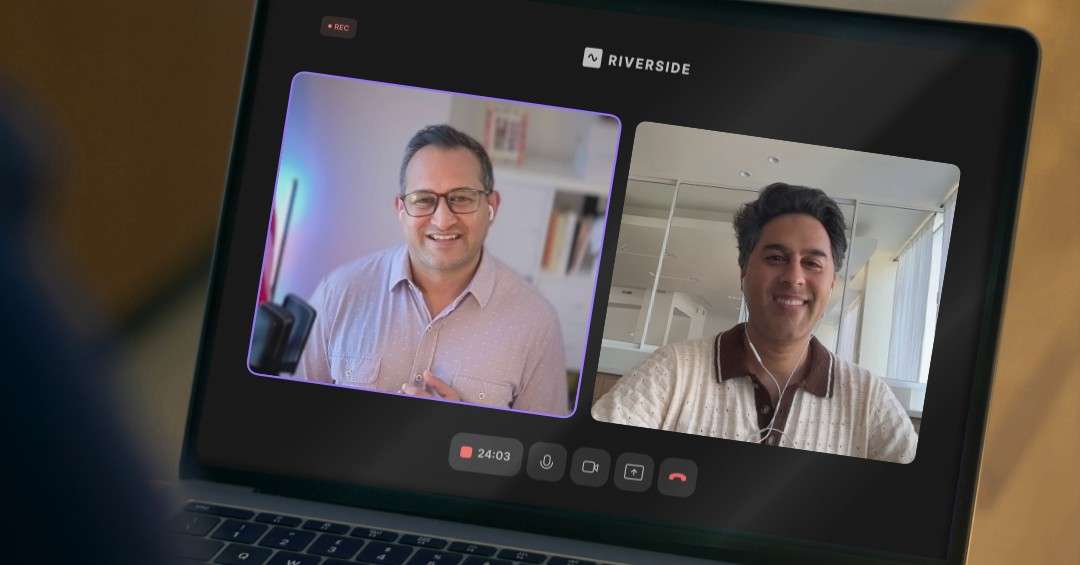
Two podcast hosts smile during a recorded Riverside video session shown on a laptop screen, representing the Letters of Intent episode on blockchain, AI, and copyright law.
Can blockchain replace the Copyright Office? This episode breaks down why a record is not a lock, and what that means for protecting your creative work.

What Copyright Actually Protects

Let’s start with the foundation. Copyright protects the tangible expression of an idea. Not the idea itself, but the expression once you fix it into a medium.

So if you draw a picture on a piece of paper, you instantly hold a common law copyright to it. The same goes for a musical composition, a piece of writing, or even choreography. The moment you fix a creative work into a tangible form, basic copyright protection kicks in automatically.

But here is where it gets interesting. That automatic protection has limits. Say you are not a professional artist, and someone copies your doodle. Are you really harmed? Probably not, and proving damages would be tough.

Registration changes everything. When you register a unique work with the U.S. Copyright Office, you unlock something powerful called statutory damages. That means the law awards you damages when someone infringes, without requiring you to prove exactly how much you lost.

Think of it as the difference between having a right and having teeth. Common law copyright gives you the right. Registration gives you the teeth to enforce it against a commercial infringer. This distinction matters enormously for any business built on creative work. At Carbon Law Group, we help creators register their work so they actually have the power to defend it.

The Difference Between a Record and a Lock

Here is the core of the whole debate, and Sahil framed it perfectly. Blockchain and copyright solve two different problems. One creates a record. The other provides a lock.

Blockchain is excellent at recording provenance, or chain of title. It creates a transparent, hard-to-alter public ledger showing who registered a work and when. In fact, it may track origin better than the Copyright Office, whose website has long been notoriously clunky.

But recording ownership is not the same as protecting it. Sahil compared it to owning a house. You want a clean chain of title registered with the county. Yet you also need a lock on your front door. Blockchain handles the title. It does nothing about the lock.

This is the flaw in the “blockchain replaces copyright” claim. The internet already runs on copies. Memes are copies. We copy and paste our way to new content every day. A ledger entry does not prevent any of that.

The lesson for businesses is clear. A record of ownership is useful, but it is not protection. You still need real legal tools to stop and punish infringement. We help clients build both the record and the lock.

Can Blockchain Decide What Is Even Copyrightable?

There is a second problem that blockchain cannot solve. Someone has to decide whether a work qualifies for copyright in the first place.

Creating something is only step one. The harder question is whether that creation is actually copyrightable. This is exactly what the Copyright Office evaluates before it grants registration. It is a genuine legal analysis, not a simple yes or no.

Blockchain has no mechanism for this judgment. It can record that you submitted a work. It cannot rule on whether that work deserves protection. So who plays that role in a decentralized system? Right now, no one.

Consider how nuanced copyright law really is. Lawyers rely on a massive treatise called Nimmer on Copyright to navigate it. Courts constantly shift the lines of what qualifies. The fashion industry shows this beautifully. Courts have ruled that a garment’s shape is a “useful article” and cannot be copyrighted. But the unique prints and patterns on that garment can be. This is why fast fashion can legally copy a $2,000 luxury silhouette and sell it for $20, as long as they swap the print.

That gray area requires human judgment and evolving case law. A blockchain ledger simply cannot make these calls. This is why the technology, for all its promise, cannot replace the legal system that interprets these rules.

AI and the Human Authorship Requirement

Now add artificial intelligence to the mix, and things get even trickier. This is one of the fastest-moving areas in all of IP law.

Here is the key rule. The Copyright Office requires a meaningful level of human authorship to grant protection. If you simply type a prompt into an AI tool, generate an image, and use it commercially, you probably cannot copyright that output.

Why? Because a human did not create enough of it. Someone, currently a person at the Copyright Office, has to determine that enough human creativity went into the work. Without that human element, the work may not qualify at all.

This creates real risk for businesses. Imagine you build your brand around AI-generated art. You invest heavily in that look. Then you discover you cannot copyright it, and competitors can freely use it. Your investment is suddenly exposed.

The line here keeps shifting too. As AI improves, the boundary between human author and machine output grows blurrier. Courts and the Copyright Office are still working out where to draw it. What passes today might not pass in a year.

So founders using AI tools need to be careful. Document your human contribution. Understand what you can and cannot protect. We are already drafting agreements that address these exact questions, because the businesses that plan ahead will avoid painful surprises.

The OpenSea Cautionary Tale

If you want proof that a record is not a lock, look no further than NFTs. Pankaj called this his favorite stat of the whole episode, and it is striking.

OpenSea was the biggest NFT marketplace in the world, huge news back in 2022. In January of that year, the company admitted something damning. More than 80 percent of the NFTs created with its free minting tool were plagiarized works, fake collections, or spam.

Think about what that means. Bots were scraping artwork from real artists on platforms like Twitter and DeviantArt. Then they minted that stolen art as NFTs without permission. The blockchain dutifully recorded every one of these transactions.

Here is the tragic irony. The technology that was supposed to protect creators became the machine for monetizing stolen work at scale. It recorded the origin of works that could not even have been copyrighted in the first place.

The NFT comparison to art makes the point vivid. You can right-click and save a $60 million NFT image, and the file on your computer is essentially identical. Just like you can hang a print of a Picasso, the copy exists freely. The blockchain record did not stop any of it.

This is a hard lesson for the digital age. Unchecked technology can facilitate IP theft at an exponential scale. Once creative work escapes into the wild, it is incredibly hard to pull back. That is precisely why strong legal safeguards still matter so much.

What This Means for Your Business

So where does all of this leave founders, creators, and business owners? With a balanced and practical takeaway.

First, give blockchain its due. It genuinely helps with three things: provenance, authenticity, and royalties. It is a great timestamp, a solid way to trace authorship, and an increasingly useful tool for licensing and royalty payments. As Sahil noted, your voice, image, and creative work all have value, and blockchain can help you track and monetize that value.

But do not overstate what it does. As Pankaj put it, we are not ready to replace the court system with blockchain yet. If anything, we need a strong legal system more than ever. AI and unchecked technology are undermining the entire IP framework, letting people steal and monetize work without paying creators.

So here is the practical playbook. Use blockchain for what it does well, tracking title. But also do the fundamentals. Register your trademarks and copyrights. Register your patents. Use contracts to protect your trade secrets. These safeguards are not optional, even in a world of blockchain and AI.

One more piece of advice for founders. If you can license the IP you use, license it. That is exactly what major companies like OpenAI and Anthropic are doing. Yes, there is a cost, but it is the safe path as copyright infringement grows more rampant.

The law is slow to catch up with technology, but it always does. If you build on stolen IP, it will catch up with you eventually. At Carbon Law Group, we protect creators, artists, and entrepreneurs. We file infringement claims, register works, and build the legal foundation that blockchain alone cannot provide.

If you want to protect what you have created in this fast-changing digital world, contact Carbon Law Group today at carbonlg.com. Until next time, keep making smart deals and taking calculated risks.

🔗 Learn More
Website: carbonlg.com

The Future of IP: Blockchain vs. Copyright Law

Pankaj (00:16)
All right, ladies and gentlemen, welcome back to another episode of Letters of Intent. My name is Pankaj Raval. I’m your co-host and founder of Carbon Law Group. And I’m joined today by my trusted co-host, Sahil Chaudry. Sahil, how are you?

Sahil (00:26)
I’m doing great. This is Sahil Chaudry, corporate attorney here at Carbon Law Group, and we’re gonna do a deep dive today into some pretty interesting issues.

Pankaj (00:34)
Yes, so before we get into it, we want to start off with a little video. We find these are great because it kind of really sets the stage. So watch it all the way through because Sahil and I are going to have some very important and valuable hot takes based on what you’re seeing right now.

Sahil (01:09)
That’s so interesting. I feel like there are a lot of issues at play here, Pankaj, that we need to dissect.

Pankaj (01:15)
There’s a lot. There’s a lot. I think one thing that’s clear from this is that Gary Vee is not a lawyer, right? So, you know, he’s a very smart, intelligent, bright guy, but he’s not a lawyer. And he doesn’t understand some of the legal implications here of the blockchain and what that means in terms of protecting works. Because, how works are protected is really important. And right now, I think it’s good to kind of set the,

foundation here of like how we’re looking at this because you know as lawyers copyrights essentially protect the tangible expression of an idea right Sahil? It’s very important to clarify that so like what is a copyrighted work? What is a work of art that is subject to copyright? It’s the tangible expression of an idea and that means that if i draw a picture on a piece of paper and if i draw that i have a common law copyright to that if someone else now

replicates it. Now the question is, how am I damaged by that? I’m not a professional artist. If someone draws something that I drew, is it really harming me? Am I suffering damages? Probably not. But if I register that image, that it’s a unique image, it’s a unique work of art that I draw and now, I register it with the U.S. Copyright Office, now I have something called statutory damages. That means by statute, I am awarded damages for someone infringing on my work. Okay, and what we’ve seen in the past is that, okay, when you register a work with the U.S. Copyright Office,

Now you have more teeth to go after an infringer of that work. The challenge has been, okay, well, not everyone knows what’s registered, what’s not, but the fundamental premise of copyright is if someone creates a work, whether it be a picture, a piece of drawing, musical composition, even choreography, a lot of things are covered by copyright. It’s a tangible expression of an idea.

now that is potentially subject to copyright. And I think what Gary Vee is trying to say is like, okay, we’re gonna use the blockchain to kind of create some record of that title, which essentially, I guess he’s saying is gonna replace the Copyright Office. But that’s not clear, right? What is exactly the mechanism behind that? It sounds cool, it sounds good, but how is it actually gonna work? And I think that’s what we’re gonna get into today.

Sahil (03:04)
Yeah,

there are a few different issues. In your example of when you draw something, you’re right, there’s a common law copyright as the moment you fix that creative work into a medium. now there’s title, and then there’s also cataloging that title. So for example, up until now, if you drew that, the copyright office would have no idea that that creative work even exists. But

Okay, in the era of blockchain, you might be able to prove the origin of that creative work because you’re doing it digitally. Maybe you did something on mid journey or you used some kind of digital program to create something. Potentially you could track that, you could track the origination or you could catalog that origination through blockchain. But Pankaj, what happens if I walk over and take a picture of that painting you just drew on the table?

just because you own that, you have a common law copyright to that, doesn’t mean that I can’t still find a way to use that information or find a way to use that creative. And the internet right now is full of copies. I mean you go to memes are copies. You look on the internet every single day. We’re copying pasting our way to new works every day on the internet. So

I do wonder if these are actually two different issues. There’s title, chain of title, and then there’s also use that we’re dealing with.

Pankaj (04:19)
Absolutely, that’s a really good point, Sahil. And I think an important nuance to discuss, Gary Vee is a king of like, 15 second sound bites or 30 second sound bites. But our purpose here today is to dispossess anyone of the notion that it’s this simple and straightforward when it comes to copyright. Copyright is a very complex, there are, millions of pages written on it. There’s a massive treatise on copyright that we look at.

Nimmer On Copyright that we use as lawyers. There’s so much nuance to what is actually copyrightable. I want to give the blockchain its due. Blockchain is really interesting because it’s now trying to create like a one point or source of truth for a lot of things, you know, like for title of property, you know, for anything that requires like chain of title, it could be very valuable because now it’s something that’s supposed to be unalterable or

completely transparent. But the thing is it doesn’t solve the problem that we’re dealing with with copyright and that’s infringement. Yes, like you said, records, it tells you, it’s better at telling you who owns something than probably the US Copyright Office because their website and everything is abhorrent. They’ve improved over the last few years but it’s horrendous overall. It’s very hard to know, okay, who owns something? What is actually that thing that they own?

So the blockchain does potentially have a benefit there a public ledger. But the thing is when you don’t have any control over it, who’s going to be the party that says, this is actually something that can be copyrighted? Because that’s what the Copyright Office will tell you. Can this thing that you’re submitting be copyrighted? And what’s the governing broad body? What’s the bureaucratic mechanism that’s going to determine whether when you submit something to the blockchain,

Is it something that can be copyrighted?

Sahil (05:50)
Right. That’s a great point, which is will the blockchain determine if something is actually copyrightable? Because there’s an added layer. It’s not just you created something. There’s a second level question there, which is, okay, you created something. Is it actually copyrightable? Which is what the copyright office looks at before they execute any kind of registration. So the question becomes,

How do we prove origin in an era where there are potentially millions of copy and paste derivatives of a creative work? And does that matter?

Pankaj (06:22)
Yeah. Well, it’s a great question. And I think that’s what I think probably Gary Vee is trying to solve or claiming the blockchain will solve is like origin, right? Like if now Disney, what are you saying, like registers its work on the blockchain, it shows that it is the original creator of that work. But of course that can be disputed, right? Like, people have claimed many, many times over the years that they’re the original creator of work when they’re not.

Right? They register something that they stole from someone else and they’re not actually the first user of the work. So it doesn’t really solve that problem. It just creates a record that they’re the one that registered that work, but it doesn’t prove really anything, aside from

Sahil (06:58)
Well it it

Pankaj (06:59)
it has, it’s information’s on the blockchain now.

Sahil (07:02)
The other issue is that we’re seeing a lot more, I mean, we’re drafting these ourselves now, the human authorship condition to copyright when it comes to AI. Right now, if you just put something into AI, generate an output, and copy and paste that somewhere, it’s very unlikely that you can copyright that because you need some level of human authorship involved. So the question of if something can actually

be copyrighted or not, there is a level of analysis. There is some kind of body, like in this case the government, the USPTO, that’s going to determine okay, there’s enough human creativity involved in this that we’re going to deem this copyrightable. I mean, presumably maybe you could automate that in some way, but there’s some human making that determination or at least programming the mechanics. And courts are constantly drawing lines that are shifting.

So one thing we know as lawyers is the same result might not apply given some amount of time where you’re looking at okay, what’s copyrightable today versus what’s copyrightable tomorrow. You would need to really continuously update your system of determining what’s copyrightable because courts are changing their opinion regularly, and especially with new technology, new facts are emerging. So I think what we’re talking about here, we’re talking about the difference between a record.

A lock and chain of title. So, it’s useful to think about it as almost like a house. You need to make sure that your chain of title is in fact clean. You want to register that with the county, and then you need to put a lock on your door. And the thing that this doesn’t solve is there’s still no lock on the door. So there are great examples of this.

Pankaj (08:38)
Right, exactly. Like, look at the entire history of NFTs, right? The entire

Sahil (08:41)
Yeah.

Pankaj (08:42)
history of NFTs prove this point over and over again.

Sahil (08:44)
Yeah, right. That’s an interesting case because that might be one area where that there was value in that origination because if you just screenshot most NFTs, there wasn’t much value in them. The value was in the exclusivity that I have the first one or I have the actual

Pankaj (08:59)
You own it. Right.

Sahil (09:01)
authors. Actually, I guess it’s comparable to art, right? You can take a photograph of a Picasso.

but it’s not as valuable as the original. So yeah. Yeah, yeah.

Pankaj (09:09)
Right, I can have a print of the Picasso in my house, right? And

it’s the same as I kind of right click and save, right? Save as

Sahil (09:16)
Yeah.

Pankaj (09:16)
is the same idea, right? Like I could right click and save as the $60 million or whatever image that NFT image that was created and have it now. And you could argue that it’s pretty much the same thing as what the original was, right? It’s all pixels. And at the end of the day, code that is now on your computer is.

Arguably probably the same code that on their computer, maybe they have a high resolution of it who knows but yeah, mean that’s that’s argument

Sahil (09:38)
I would say fashion is an interesting case study here because right now we’re talking about where does value actually come from? Sometimes it comes from it’s a Picasso, so that means it’s worth millions of dollars. And the photograph of that exact same painting could be worth 20 bucks. But fashion is an interesting case study where it is very common for

luxury to create innovative new designs. and also for luxury. I remember there was this whole story about luxury brands that were pulling inspiration from street level styles. You know, taking photographs of street level styles and then recreating those and turning those into their own designs. And fashion is notorious for pulling inspiration

From inspiration or even just stealing patterns and prints and but the fashion industry.

Pankaj (10:23)
I mean, Ralph Lauren

is like notorious for it, right? I think he’s outright said it many times that he’s been stealing designs for the last 40 years, right? Yeah, or more.

Sahil (10:32)
So so

in fashion, the courts have deemed that a pattern, meaning the actual shape of garment is not copyrightable, but prints or the designs

Pankaj (10:39)
because they’ve said it’s like

it’s because it’s a useful article that’s why that’s their basis is that people should just recognize that like why you can’t have a fashion why you can’t have a copyright on a fashion article is that yeah they’ve considered it useful and not purely kind of aesthetic which is why you can copyright prints potentially you can copyright unique prints or patterns you create but not the actual garment themselves yeah garment exactly

Sahil (11:01)
Not the silhouette in the shape. But

but that brings the question, you know, in terms of value, because you let’s take a brand like let’s take Fast Fashion. So

Pankaj (11:11)
Mm-hmm.

Sahil (11:11)
Fast Fashion regularly will take something that is pulled from luxury, which could be a two thousand dollar dress and turn it into a twenty dollar dress. They’ll switch out the fabrics, but effectively it looks like the same product. It’s not

Pankaj (11:23)
Yeah.

Sahil (11:24)
the same material, it might not be the same construction, but

if we were just looking at it from a copyright perspective, very likely that it would look like a derivative use. And so that’s where if we’re looking at value, why is one is $2,000, one is $20. And the only difference is which brand created which product. You switch the labels and there’s going to be a different value associated to each product. So there is value in

tracing the origin of a creative work, we can see that. There are so many examples where we can see that, okay, it’s not the shapes or the lines that are drawn in a creative work. It’s also the person who’s created that that matters. at least we can see it matters to the marketplace. So this is gonna be a very interesting question because increasingly with AI, the line between who is the author

And who is not an AI, that’s gonna get really blurry. And we have a lot of interesting examples of that.

So what we’re seeing is that the blockchain isn’t preventing copying because it’s not a lock like we were saying, it’s a record. And in fact products on the blockchain are actually being copied at a must much faster rate than before.

Pankaj (12:34)
Yeah, it’s interesting, Sahil. So like this is actually my favorite stat of the whole segment. So OpenSea, the biggest NFT marketplace in the world. I don’t know if you guys remember them. They were big, big news around 2022. They came out in actually January of 2022 and admitted that more than 80 % of the NFTs created with their free minting tool, were plagiarized works,

fake collections or spam.

Sahil (12:52)
That’s

Eighty percent from the biggest marketplace. That’s incredible.

Pankaj (12:55)
Yeah, so think about what was happening here. Bots were scraping artwork from real artists and people are posting them on Twitter and DeviantArt and minting those as NFTs without permission. So the technology that was supposed to protect creators actually became the machine for monetizing stolen work at scale.

Sahil (13:12)
And the blockchain is recording all these transactions and recording originations of work that actually couldn’t have been copywritten in the first place.

Pankaj (13:21)
Right, so this is the sad joke and this is the sad reality of looking back at it, it’s kind of a comedy of errors because, it was meant to protect creators, but in the end, ended up harming them even more at an exponential scale because it facilitated copying and monetization of their work without their authority. And as we know, like with technology, is once something’s out of the bag, it’s so hard to protect it, it’s so hard to actually put it back in the bag.

So this is, I think, a good lesson for us going forward as technology and AI advance and we’re gonna see more and more work being used in ways that are not allowed. How are we gonna stop it? How are we gonna prevent it? How are we gonna make the penalties big enough to stop people from using copyrighted work?

Sahil (14:02)
I guess our conclusion here is that we’re not ready to replace the court system with blockchain yet.

Pankaj (14:08)
Exactly right Sahil. I think we’re nowhere close to that and I think if anything, it’s the contrary, right? We need the legal system more than ever to be strong and to enforce the laws and to support creators and people with copyrights more than ever because there’s a real existential threat to what they’ve created and what they’ve done because our entire

IP system is being undermined by AI and the blockchain effectively when people can go out and steal work and monetize it without paying the people who created the work. And that is contrary to our intellectual property system overall and our laws. So, what are we going to do to police it? I think law is slow to catch up with technology. So I think there will be solutions, but they’re going to be a little bit

later down the road. If you’re someone who’s using people’s IP, you got to be careful about that because it will catch up to you at some point. Usually it’s going to be slower than you realize, but we file trademark infringement lawsuits all the time, but it takes us a little while to evaluate the claims, analyze the infringement, and then file them. So people should be aware. Business owners, entrepreneurs should be aware that you still want to play by the rules. If you can license things, you should license it

and get rights. That’s what OpenAI, that’s what Anthropic, that’s all these big companies are doing. And unfortunately, there’s a cost to that, but that’s what we’re gonna have to do if you wanna play it safe in a world where copyright infringement is becoming more rampant. And I think the fallout is gonna be more significant than we’ve ever seen.

Sahil (15:29)
So I do wanna just as we close out, give the other side a little bit of fair time because the blockchain can do some things for us when it comes to IP. and we’ve covered that in this conversation. One is provenance, it is a great timestamp, it is a good way to record the point of origin of a creative work. Second is authenticity, through the blockchain, you can trace authenticity and authorship. And three

this is going to be increasingly important. Royalties and licensing. you don’t even realize from your voice, your image, your creative work, the work that you’re doing to generate IP for your company or as an independent contractor, all of that has value. And we’re seeing that value being monetized in new and interesting ways. And as long as you lock down that asset.

You’re able to monetize it through royalties, licensing, through sales. And chasing that chain of title, tracing that chain of title is going to become increasingly important. And I do think blockchain will be able to help with.

Pankaj (16:27)
Absolutely. And yeah, And as a final note too, I think we’re not in any way discounting the importance of the blockchain. I think it’s an amazing technology. I think it has amazing potential, but I don’t think we should be overstated in terms of the challenges still present in everyday society. It’s not gonna solve our problems here. And what we’ve seen is actually it’s been exasperating some of the problems we’re seeing, so people should just recognize

and operate with a bit of caution, right? Like a lot of people lost a lot and were burned. And I’m sorry for those people who were burned by the NFT craze, but I mean, those are crazes. Those are trends that people take risks on and it’s a timing thing, right? Some people got in and got out, great. You probably made a lot of money. But if you’re there holding the bag at the end, you lost a lot because you thought these were gonna be valuable just like some of these meme coins and they tanked. So you just

Be aware of that, be smart, be a savvy investor, but recognize there’s a whole layer of legal issues that need to be addressed too as a creator. Who’s being harmed here by these works being taken and stolen and monetized without people’s permission? These are the artists and creators and we’re here as a law firm. We protect creators, we protect artists, we protect entrepreneurs and that’s why we’re also raising these issues. If you wanna use a blockchain, use a blockchain.

track title, use it for what it is, but also register your trademarks, register your copyrights, register your patents, use contract to protect your trade secrets. You cannot overlook those important legal safeguards, even the world of blockchain and AI.

Sahil (17:45)
Absolutely. I think Pankaj, we’re gonna have to have more of these conversations because AI is changing the game every day. So make sure you tune in to the next episode of Letters of Intent. We release these episodes weekly. This is the way you can keep up to date on legal developments that affect you as a small business owner, as a founder, as an entrepreneur. So thank you so much for joining us on this episode of Letters of Intent, the podcast for deal makers and risk takers.

Get in touch with us

Lead Form Main

The main Lead Form

This field is for validation purposes and should be left unchanged.
Name(Required)

Download Our Free Guide

We respect your privacy. No spam, ever.(Required)