
Mindful Counsel: Why Meditation Belongs in Every Dealmaker’s Toolkit

Home / Podcast / Mindful Counsel: Why Meditation Belongs in Every Dealmaker’s Toolkit

Mindful Counsel: Why Meditation Belongs in Every Dealmaker’s Toolkit

Mindful Counsel: Why Meditation Belongs in Every Dealmaker’s Toolkit

Dealmakers and risk takers do not usually talk about meditation. Yet in Episode 66 of Letters of Intent, that is exactly what Pankaj Raval and Sahil Chaudry explored. They shifted gears from contracts and negotiations to something more personal: how mindfulness can transform the way founders handle stress, risk, and high-stakes decisions.

Pankaj has practiced meditation for 20 years. In this episode, he shared what he has learned and announced a new offering from Carbon Law Group called Mindful Counsel.
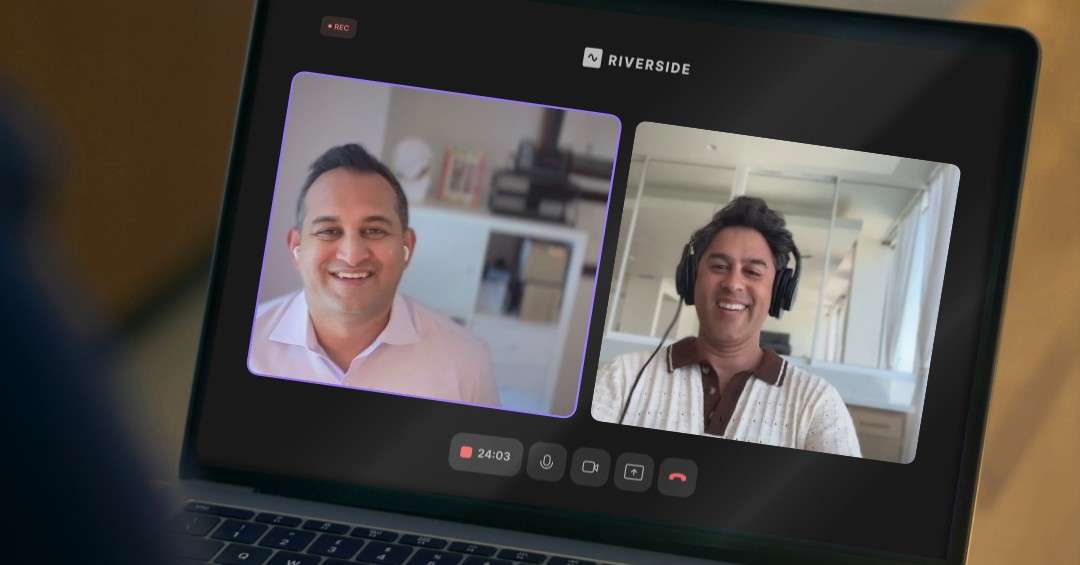
Two podcast hosts smile during a recorded Riverside video session shown on a laptop screen, representing the Letters of Intent episode on mindfulness and meditation for dealmakers.
Dealmakers do not usually talk about meditation. This episode makes the case for why mindfulness might be a founder’s most underrated tool.

The Monday Meditation That Changed a Firm

Every Monday, Carbon Law Group starts its team meeting a little differently. Before diving into firm business, Pankaj leads the entire team through a five-minute guided meditation.

The idea came from an unexpected place. As it happens, Pankaj and Sahil met through IndiCorps, a service program similar to the Peace Corps for second-generation Indians. Years later, Pankaj joined a casual IndiCorps conference call. Before it began, the host asked everyone to take one minute of silence.

At first, it felt awkward. Then it felt powerful. Ultimately, that small moment inspired Pankaj to bring the same practice to his firm.

The impact has been real. After all, everyone is busy and buried in email. Those five minutes let the whole team reset and recenter. As a result, they show up more engaged and productive for the meeting that follows. Consequently, it changes the entire atmosphere of the room.

Not every team would embrace this. Pankaj knows he is lucky to have built a culture that does. For many on the team, the weekly practice has become a genuine unlock.

For founders, there is a lesson here about culture. A small, consistent practice can pay off in focus and calm across an entire company. That is the kind of intentional culture we care about at Carbon Law Group.

Equanimity: Engaged but Detached From the Outcome

One of the most powerful ideas Pankaj shared is equanimity. It is a core concept in Buddhism, and it applies directly to law and business.

Here is the key distinction. Detachment does not mean apathy. It means engaging fully while letting go of the outcome you cannot control. Those are very different things, and the difference matters enormously.

Think about a trial. Both sides put their best efforts forward. However, no attorney controls what the judge or jury ultimately decides. In other words, you can pour everything into your work and still not dictate the result.

Equanimity lets you hold both truths at once. First, you give your absolute best effort. At the same time, you release your grip on the final outcome. That balance is what allows you to maintain composure under pressure.

This idea reaches far beyond the courtroom. After all, every founder faces outcomes they cannot control. For example, a big client might say no, or a deal might fall through. Tying your emotional state to those results is a recipe for constant turmoil.

The practice of mindfulness gives you access to this steadiness. It helps you stay present and focused on what is in front of you right now. In the law, it is easy to worry about the future. The skill is to stay aware of it while acting fully in the present. We bring that same grounded perspective to how we counsel clients.

Meditation as a Practice, Not a Performance

So what actually happens during meditation? Pankaj is refreshingly honest about it. Even he questions whether spending 20 minutes sitting still is a good use of a busy day.

His answer is always the same. In fact, after he meditates, the answer is yes. The practice makes him more intentional and present with everything else he does. Ultimately, that presence is the whole point.

Pankaj also shared something personal. Specifically, he was diagnosed with ADHD at 19, and his mind tends to race. He compares it to the dog from the movie Up, constantly distracted by a “Squirrel!” Fortunately, meditation helps him notice that pull and gently bring his focus back.

That “coming back” is the heart of the practice. Pankaj points to teachers like Joseph Goldstein and Sam Harris, who describe meditation as the simple act of returning. You return to your breath. You return to the present moment. Again and again.

Pankaj has gone on extended retreats nearly every year for a decade. He remembers one at Deer Park Monastery in 2009. Afterward, playing basketball, he could feel every single dribble on the court. That is the grounded presence the practice can build. And it does not have to be perfect to work.

Unplugging From the Matrix

Sahil raised a challenge that feels very 2026. We live in an overstimulated world. Meme coins, prediction markets like Kalshi, overnight success stories, and endless social feeds all compete for our attention.

The constant message is that you are not enough. You are not rich enough, not doing enough, and never at the right party or the right place. That programming runs all day, every day.

This is where meditation becomes a tool to unplug from the matrix. Sahil described it perfectly. Specifically, people are constantly trying to hand you their problems, their narratives, and their version of reality. However, those narratives may have nothing to do with your actual goals.

So mindfulness helps you deprogram. It lets you step back and ask a simple question. What do I actually care about? Often, the answer has nothing to do with the noise online. For example, maybe it is being a great professional, or maybe it is providing for your family. Those goals are yours, and they deserve your focus.

Meanwhile, there are a million self-proclaimed business gurus online, all selling courses and pointing out what you are not doing. Meditation helps you filter the signal from that noise. For founders drowning in manufactured panic, this skill is a genuine competitive advantage. Ultimately, it keeps you focused on your real business fundamentals.

Embracing Wabi-Sabi: Perfectly Imperfect

A recurring theme in the episode was the pressure to be perfect. We see ads for Botox, peptides, and endless self-optimization. The world constantly tells us to fix ourselves.

Pankaj offered a different frame, drawn from Japanese culture: wabi-sabi. Essentially, it is the idea of finding beauty and perfection within imperfection. In wabi-sabi design, the flaw is not hidden. Instead, it becomes part of the art.

This idea is vital for entrepreneurs. After all, law is not perfect. Entrepreneurship is not perfect either, and neither are relationships. Daily operations are messy and flawed by nature.

When you accept that, something shifts. You stop chasing an impossible illusion of perfection. Instead, you operate from a place of wholeness. As Pankaj put it, we are already whole. We just have to accept that we are imperfectly whole.

Sahil pushed back with a fair point. Specifically, many wildly successful people are driven by a feeling that they are not enough. Does that not fuel achievement?

Pankaj acknowledged the truth in that. Indeed, plenty of people accomplish amazing things from a place of lack. But here is the catch. If you believe you are not enough, no achievement will ever fix that feeling. Instead, the belief follows you regardless of what you accumulate.

Accepting imperfection does not mean lowering your ambition. You can still strive to build something great. The question is where that drive comes from. Abundance is a far more sustainable engine than lack.

Sharpen the Axe Before You Need It

Sahil posed the toughest question of all. Imagine a client who is behind on payroll, facing a copyright lawsuit, and watching sales stall. Mindfulness feels irrelevant. Should that person really be meditating?

Pankaj’s answer was clear. That person needs these skills more than anyone. However, ideally you build them before the crisis hits.

He used a simple analogy. You want to sharpen the axe before you need to chop the wood. In other words, cultivate your mental resilience while things are calm. Then the skill is ready when difficulty arrives, whether it is a business problem, an illness, or a stressful lawsuit.

Pankaj has counseled many clients through exactly these moments. For instance, he recalled one client who was wrongly terminated for cause. The company tried to withhold $250,000 they owed him. Pankaj’s advice was to breathe and recognize it as a process, while his team fought at full force. Eventually, they secured a six-figure settlement without even litigating. As a result, the calm mindset helped the client think clearly throughout.

The most common objection Pankaj hears is “I do not have time.” He pushes back gently. We all have 24 hours. It is a question of priorities and how we choose to structure our time. Sahil shared a fitting story. A student tells a monk he wants to meditate ten minutes a day but has no time. The monk replies that in that case, he should meditate for an hour.

Introducing Mindful Counsel

All of this leads to Carbon Law Group’s new offering: Mindful Counsel. Pankaj has held onto this idea for years, and now it is here.

The goal is to integrate mindfulness with the practice of law and business. Pankaj already uses these techniques with clients to help them manage stress. Now, Mindful Counsel formalizes that into a community for entrepreneurs who want to explore how mindfulness can serve their business and their lives.

Pankaj is quick to add that it is not for everyone. For instance, maybe your mindfulness comes from playing soccer or making music instead. Whatever it is, he encourages you to find it and pursue it. His invitation is simple. Just try. Sit for ten minutes, watch your breath, and give yourself permission to be imperfect.

At Carbon Law Group, we believe clear, calm thinking makes better leaders and better decisions. If you want a legal partner who cares about your wellbeing as much as your business, contact Carbon Law Group today at carbonlg.com. Until next time, keep making smart deals and taking mindful risks.

🔗 Learn More
Website: carbonlg.com

Mindful Counsel: Why Meditation Belongs in Every Dealmaker’s Toolkit

Pankaj (00:00)
So Sahil, let’s take a moment to just collect ourselves, close your eyes, maybe point your gaze downward.

and allow yourself to just arrive.

come back to the present moment.

Even though many of us work desk jobs or in offices, our minds can take us many thousand miles a day across many worlds and many different scenarios, many different versions of reality that we constantly analyze and evaluate. This is a moment to just come back and reconnect with your breath in this present moment.

Breathing in, can repeat yourself, breathing in.

Breathing out. I’m breathing out.

taking a moment to just appreciate what you have, appreciate who you are.

Appreciate how far you’ve come.

seeing if you can cover your breath with your entire awareness.

allowing your thoughts to just drift by like clouds.

Not attaching, not grasping, just watching.

How does this feel?

Taking one last deep breath in.

Exhale anything you’re holding on to and just let go.

Welcome back to another episode of Letters of Intent. This, as you can tell, is a different one. So today we’re gonna be talking about how I’ve benefited in my experience with meditation and mindfulness over last 20 years. Sahil is going to

ask me some questions and interview me and also, ask some probing questions about whether it is beneficial we hear a lot about mindfulness today. And everyone knows they probably should do it. Why should we do it? And what are the real benefits? I think we’re gonna get into that a little bit today. So again, this is letters of intent. The podcast for dealmakers and risk takers. But today’s gonna be a little bit different. Dealmakers, risk takers, and potentially meditators.

Sahil (01:31)
That’s right. Pankaj. Well, okay. So a lot of people don’t associate making deals and taking risks with meditation, but it’s a big part of your practice. And it’s also a big part of the, our law firm’s culture. Every Monday you introduce a meditation, guided meditation to us, to the whole team. And you ask us all to spend five minutes doing a meditation. So I wanted to first ask,

What inspired you to incorporate that meditation into our weekly meeting?

Pankaj (01:59)
Yeah, that’s a good question, Sahil. I’m trying to remember when I started that. It’s probably been many years now that we’ve, we’ve been doing it. think I was inspired by, a few calls I had actually with people from Indicorps. For the listeners who don’t know, that’s actually how Sahil and I met is through this organization called Indicorps. It’s kind of like peace core, but for second generation Indians to go back to India to do volunteer and development work.

And Sahil, did a few cohorts after me, but we met at a retreat and became fast friends. so it was through that, there was a call, a conference call that I had with someone who was working with Indicorps. And at the beginning of the conference call, he’s like, can we take a moment of silence? Can we take one minute of silence before we start this call? It was kind of a random call. It was just kind of catching up. But I was like,

wow, okay, this is cool, this is different. And at first it was a little bit awkward, but then I’m like, wow, this is actually really powerful. it was, that I think that inspired me to incorporate it. And honestly, it’s been, I think, really important to now allow us to all reset. We’re all busy during the day, we’re all in emails, and those five minutes allow us to kind of recenter ourselves and I think be much more engaged and productive during that

Monday morning meeting, or we are going to go over what’s going on with the firm. And it just changes the whole atmosphere. And I love that we have a team and a culture that embraces that and actually goes with it. It hasn’t always been the case. I think we’re very lucky today that we have everyone who’s on board with this experience, with this practice. And I think it’s been a huge, huge unlock for a lot of us.

Sahil (03:23)
So what impact do you feel like it has on your law practice? Does it make you think more clearly? Do you feel more calm? Are you able to attack legal questions with more precision and accuracy? What does it really do for you? Why have you made it such an important part of the practice?

Pankaj (03:39)
Yeah, there’s so much timeless wisdom in Buddhism and the Buddhist practice and even Hinduism, Buddhism derived a lot from Hinduism as well. And all spiritual traditions, I think have a lot of similarities to it. I’ve just gravitated towards Buddhism specifically, even though I was raised Hindu, because like I feel it’s most accessible for daily life and daily living. And, for me it’s

helped me in so many different ways. Just to being detached from outcomes, right? It’s so powerful. Not getting so tied up with the outcomes and things you can’t control. A lot of that is in Buddhism. It’s letting go, along those same lines, analogous to being in detachment. And detachment in a way that we’re not attached to the outcome. Not detachment that we’re apathetic. It’s very different, and I think it’s really important to understand that there is a distinction there.

But you can be engaged, but be also detached from the outcome. You can put your best efforts forward, like in trial. Both sides are going to put their best efforts forward, but you can’t really always control the outcome. You can’t always control what the judge is going to decide, what the jury is going to decide. So it’s that idea of being attached, and it allows you to maintain much more composure. So those are just a few of the ideas that I’ve incorporated.

It was letting go, it’s detachment, it’s equanimity. The practice of Buddhism and meditation and mindfulness gives you access to this equanimity that allows you to go through life without so many ups and downs and emotional turmoil because it allows you to just stay present, stay focused in what’s right now, what’s in front of you and not worry so much about the future.

And I think in the law, it’s very easy to worry about the future, but how do be aware of the future, but then act right now, do the best you can right now.

Sahil (05:14)
So Pankaj, in 2026, we’ve got Donald Trump, we’ve got meme coins, we’ve got Kalshi, we’ve got overnight millionaires on OnlyFans. this is a very… Our society feels very overstimulated right now, and there’s always the next shiny object. Everyone is trying to get rich quick. People are… I feel like we’re in a very outcome-oriented time.

Pankaj (05:33)
Yeah.

Sahil (05:38)
We are in a time that is, I’m getting fed programming every day that’s telling me I’m not enough or I’m not doing enough or I’m not rich enough or why am I not going to this place or that place? And how come I’m not at this party or that party? What, it almost feels like the introduction of meditation at this time. It’s hard to absorb the,

the lesson or it might feel like it’s hard to absorb the lesson or it might feel hard to know, what’s the relevance? I feel like if I’m not chasing my next goal, then I’m doing nothing. And I think a lot of people might think, well, okay, if I’m meditating, am I just doing nothing for five minutes and then getting back to, getting back to work, trying to make something happen?

What exactly is happening during meditation and is it really relevant in a time like ours?

Pankaj (06:25)
Yeah, it’s a very, very good question and I think very, very important and often asked. Even asked by myself, it’s like, in my day, I have so many things I need to do as a law firm owner, as a dad, as a lawyer for clients, there’s so many things I could be doing, is spending 20 minutes, 15, 10, 20 minutes a day really a good use of time if I have so many other things to do? And the answer is always yes.

the answer always is yes after I’ve done it, not always before and the reason is that it allows you to be much more intentional and present with everything you do and I think that is huge. How do we become more present with our work and not get as distracted. And funny enough, so I was diagnosed with ADHD when I was like 19 and I just didn’t buy it.

It was an excuse, everyone’s brains are different and I feel like my brain just operates a little bit differently. I think there’s a lot of benefits to it. I’m very musical. I want to try to utilize the pros of this, but also I have to recognize there are challenges in the world, especially when there’s so much stuff being thrown at us. is sometimes challenging to process. Meditation has been a huge, huge benefit to anyone with ADD/ADHD, at least especially me, because it’s allowed me to kind of just

calm the brain, calm what’s going on around me and just kind of create a, I think almost like a force field around what’s coming in and allows things that maybe just slow down a little bit. Other when my brain would be just going at a million miles an hour, looking at every shiny object out there. It’s like that, that dog from the movie UP like, “Squirrel!” like that’s, that’s kind of how my brain is sometimes. But meditation allows me to just, you recognize, my brain is now thinking about a squirrel. Like, why, why is my brain doing that? Let’s bring it back.

And that is really the practice of meditation. Joseph Goldstein, one of my favorite teachers, he talks about the practice of meditation really about coming back. I think also Sam Harris talks about this too. It is really, can you just continually come back, come back to the cushion, come back to the present moment. It is a practice of constantly arriving and it is practice just like we practice law.

Meditation is a practice. You are never done with a practice. There will be benefits that you’ll experience over the years of practicing. I’ve been practicing for now probably 20 years, 15 years pretty seriously. I’ve gone to meditation retreat, extended meditation retreat pretty much every year for the last 10 years now because I can feel the power and the difference, especially coming back from a five-day retreat or a seven-day retreat. Oh my gosh, my brain, I feel like

so locked in. I feel like so plugged into the present moment that it is unbelievable. Unfortunately, that feeling only lasts about the length of your retreat. You’re quick to revert to what you were before. But even that just slight additional awareness of where you are what you’re doing is hugely powerful in the practice of law, business, and life.

Sahil (09:04)
So, okay, you’re launching a new program for our clients called Mindful Counsel. Can you tell us about what inspired Mindful Counsel and what do you hope our clients will get out of it?

Pankaj (09:14)
So I’ve been sitting on this idea for a while. I bought the domain for Mindful Counsel many years ago and I thought this would be great to really integrate mindfulness and the practice of law or business consulting, my different passions. And I said, okay, let’s definitely start doing something with this. I think it’s a great service to a of my clients. I oftentimes use mindfulness techniques with my clients to help them

manage some of the stress that’s going on right now. A lot of my clients, it’s funny, every once in a while my clients are asking, should I be worried? And my answer is always no. Why worry? Worrying is not going to accomplish anything. Yes, these are challenging issues, but as we know, being lawyers, nothing happens overnight. Generally the law is slow and you kind of, there’s negotiations. My clients are dealing with very stressful situations where they were terminated, like just recently, a client that was terminated.

And the company said, you’re terminated for cause. And just kind of made it up. And they tried to keep $250,000 from him because that’s what they owed him. And I said, no way. We kind of went back and forth. We sent a lot of letters. And eventually, we were able to get a great resolution for him and get him six figure settlement without litigating. But it was stressful for him. But I tried to give him some ideas of

just take a moment, breathe, just recognize that this is a process and we’re gonna fight for you, we’re gonna advocate for you, and we’re gonna do our best, you know? And let’s see where we’re at at the end. But then, now is not the time to worry. And I think I try to remind people of that so they can have clear thinking going forward with their project.

Sahil (10:33)
So I’m gonna poke holes in this for a moment. What if, someone is gonna, or a client is gonna say, well, okay, you’re not a licensed therapist. You’re not a certified meditation coach. Why should I listen to you about meditation?

Pankaj (10:36)
Sure, please.

Right. You shouldn’t. You should question everything I say. I don’t ask anyone to listen to me. Listen to whatever I offer with a grain of salt. Just recognize that it’s worked for me. It’s worked for many others, for better or for worse. A lot of the insights I provide are not my own. They’re from books. One thing I do, I read a lot. I listen to a lot. I listen to a lot of, Dharma talks

from very, very well respected and renowned teachers. So I’ve dedicated my life to studying this and understanding Buddhism in a way that I think is providing me lot of insight on the practice. And like to share that. But again, I offer it to people to see how it works for them. Maybe it doesn’t work, but I do encourage everyone to try it because it has

worked for me and thousands and countless, countless others around the world. It’s not just me saying, this has worked, and I’m not selling anything really. It’s, really just a, offering that I’m making to others to see if they can help them. And it helps us navigate life, right. And, and if we can make life a little bit easier for ourselves, if we can be a little bit gentler and kinder to ourselves. And also let that

Flow out to others. I think we’ve done something great

Sahil (11:45)
So I do know though you’ve spent some time with Tibetan monks. So I want to hear about that. What was that experience like and what did you learn?

Pankaj (11:52)
Yeah, so, this is all, Sahil, one thing you probably know by now is, I live my life kind of motivated by serendipity, in going to India with Indicorps. I don’t know if I told you, but they actually denied me the fellowship originally. And then I said, well, I’m coming anyways. So they’re like, okay, well, you can work with us. And then that’s how I went. I worked with them. I did the orientation.

And then I worked with a nonprofit in Ambala and Gujarat and then from there I said, okay, let me kind of make my own experience. And I went to work on a legal case in Bhuj. And then, from there I wanted to learn yoga. So I went to Rishikesh and Dharamshala where, right outside Dharamshala is a small town called McLeod Ganj, which is where the Dalai Lama lives. and, that is the refuge for many.

many Tibetans who have been exiled from Tibet. It was there, actually there was also a class in Ashtanga Vinyasan Yoga that I learned. I studied for about three weeks, four weeks. And during that time I said, oh, I want to also learn more about Buddhism and there I had an opportunity to tutor Tibetan monks in English. So I began tutoring these Tibetan monks in English and I sat with them and then they would teach me about meditation and mindfulness.

And we had amazing conversations. I remember sitting there at the foot of this massive gold Buddha in the temple outside the Dalai Lama’s palace and just practicing. And at that time, I was like, okay, how can I practice non-judgment, non-judgment of myself, of others? There’s a lot of things like mental constructs I realized in my life that weren’t helping me. And you’re wondering, where do they come from? Maybe they’re

programmed, maybe it’s nurture, maybe it’s nature, whatever it may be. My hot take is we all have the responsibility to take what we have where we are and solve these issues ourselves, right? We all have personal responsibility to make our lives better if we want them to be better. And it’s not going to come from anyone else. It’s not going to come from anything else. There’s no device that’s going to help it help you. You don’t need anything else. It is just you sitting with your thoughts

and watching your thoughts and understanding what helps and what doesn’t and how do you act more skillfully in the world.

Sahil (13:44)
I think that’s very powerful, especially because talking about the impact of social media, AI, I mean, we are bombarded with images and programming and this feels like the way to deprogram your mind. It’s like unplugging from the matrix and identifying, okay, wait a second. What do I care about? And what do I not care about? But I think I care about because I’ve just been fed a million images that tell me I should care about something.

Pankaj (14:07)
Yeah. And I think on that, Sahil, you’re so right. It is a great analogy or metaphors as unplugging from the matrix because you’re right. We’re so plugged in all the time. These devices, the screens, the phones, everything is bombarding us with stimuli. We’re overstimulated as a people. And, I think there’s negative repercussions to that. So how do we, let things go, let go of

Sahil (14:07)
Yeah.

Pankaj (14:28)
all this stuff going around and recognize we are enough. We are enough. We are perfectly imperfect as we are. And how do we live in that place where we don’t need to be anything else? We can be, we can always have this want to be more, to make more of ourselves, to be better. But where is that coming from? Right? Is it coming from a lack or is it coming from an idea of abundance? That I want to do something better. I want to create something better for the world. Or is it coming from a place I’m not enough, so I need to do this? And just being aware of that.

Sahil (14:54)
Well,

and what’s the problem with coming from a place of I’m not enough? arguably a lot of the most successful people financially are coming from a place of I’m not enough.

Pankaj (15:04)
Right. So you’re right. You’re right. And, and people have been able to accomplish amazing things with this idea of I’m not enough, but if they recognize and they take a step back and they recognize that if you have this belief that I’m not enough, no matter what, you’ll never be enough. There’s, the thing is not going to make you feel like you’re enough now, because that is a feeling that is a belief that you have

Sahil (15:18)
Yeah.

Pankaj (15:26)
that no thing or accomplishment will really solve. And that’s the sad reality of it, that we’re chasing these things that we think will make us whole, but in reality, we are already whole. But we just have to accept that and accept maybe that we’re imperfectly whole. It’s like, in Japanese culture, it’s that wabi-sabi, Yeah, wabi-sabi is like…

Sahil (15:43)
Yeah, when

you actually use it as part of the design.

Pankaj (15:48)
Yes, exactly. So we’re all flawed, and I think recognizing we’re all imperfect. We’re all flawed, imperfect. Buddhism talks about we are all bound to suffer. Suffering is part of life. And how do you navigate that suffering, right? Without recognizing it, without making it you or yours, but just recognizing it is there and operating from a place of wholeness, because then you can be a greater service to the world and yourself.

And, the argument is, would we have some of the best athletes? Would we have some of the best entrepreneurs if they felt like they were enough? it’s hard to say, right? I think it’s hard to say. But I think there is a reason to understand your mind and understand that, Hey, you know what, are these constructs, are these thoughts,

that my beliefs, are they serving me in a way that allows me to live the best life I want to?

Sahil (16:34)
Yeah, I would say I’ve also felt the effects of meditation in a very positive way. I studied meditation as a kid at Lake Shrine in the town I grew up in.

Pankaj (16:43)
yeah.

Yeah.

Sahil (16:44)
and so we learned very early on to watch your breath. And I think that tool like sit down, watch your breath, watch your thoughts. And I’ve done a few different meditation programs over the years. And I do think the most powerful impact is being able to unplug from the matrix because people are trying to give you their problems and their narratives and their realities. But

It might not have anything to do with your goals. I want to be the best lawyer I can be. I want to fill my bank account. I want to grow as a family person, as a husband. These are the things that I care about in my life.

I need to focus on my life and what’s in front of me and what’s gonna make me grow and so that’s where I would say to our clients that That’s a perspective that we bring and I think we’re sharing it with you now because we recognize that You have a million different business people claiming to be business gurus online today you have people selling you courses you have people telling you all the things you’re not doing

And everybody’s just trying to attack your mind and make money. And so I do think that Carbon Law Group introducing mindful counsel is a way to deprogram your mind. It’s a way to stay focused on the fundamentals, stay focused on your business, stay focused on what matters and build a happy, healthy life. Maybe it could be that you need to earn

Pankaj (17:50)
Yes.

Sahil (18:00)
you need to make a billion dollars to be happy, or it could be you don’t. You need to look at your life and what you need, what your family needs, what’s gonna make you happy and give you a fulfilled You can get inspired by other people, but it doesn’t always come from other people’s examples. And sometimes somebody else is working through their own stuff and you have a different story. So if someone else is working through their own stuff and that’s taking them to this place,

you don’t know if they need that journey to get over what they’re going through. It might not have anything to do with you. So I do think that, I love that Carbon Law Group is introducing this. I think this is a way for us to, at a time when AI and social media are at their peak infiltration in our lives, we need some tools to navigate them. And we need some tools to know what’s real and what’s not real. What we actually care about, what we don’t care about.

So I think this is a really great time to introduce this program. Pankaj, what can we expect from mindful counsel? What kind of lessons? I mean, it sounds like it’s rooted in your life experience. You have been practicing meditation for 20 years and you’ve been studying with, under different teachers and with different schools and you’re going to be sharing, you know, it’s pretty difficult to sign up for every meditation course and read every book.

but it sounds like you’re gonna be sharing your personal experience with these different schools of thought related to meditation and inviting our clients to try them.

Pankaj (19:17)
Yes, absolutely. And we’re going to have some of the teachers that I’ve had over the years be present on some of the webinars as well. Not webinars, but I guess some of the meetings. And we’re really trying to cultivate a community of entrepreneurs who believe that mindfulness is a useful tool for them and want to learn more about it and how to apply it to their business and to their to their lives.

And it’s not for everyone. Maybe mindfulness is not your thing, meditation is not your thing. Maybe it’s playing soccer, maybe it’s something else. There’s a lot of ways to be mindful and be in the present moment and playing music is a great way to do it. So whatever that is, I encourage people to find it and continue to pursue it because I think there’s real value in that. For me, I found that meditation, mindfulness. And I remember my first retreat, I just felt so amazingly connected to this present moment. I remember

it was at Deer Park Monastery in 2009 or something. And I came back and I was playing basketball. I could feel every dribble on the court. It was unbelievable how grounded I felt. It’s an amazing feeling that you’re going back for. But also, just allowing, recognizing that meditation is going to come in many different forms and many different effects.

So you have to be open to that as well. And I think that’s been the real benefit. And I encourage everyone to even just try. There’s a lot of great meditations online, on YouTube. Sit for 10 minutes, see how it feels. Watch your breath. If it’s not perfect, it’s okay. You have to give yourself the flexibility and the permission to not be perfect. And that’s part of the meditation process because the reality is law is not perfect. Entrepreneurship is not perfect. Relationships are not perfect.

We have to be okay with imperfection society. And at a time where like, we see so many ads for Botox and peptides and all these things to be perfect, actually embrace imperfection. And I think your life will be so much more full and you’ll have to put up with so much less worry.

Sahil (20:57)
Let’s say I’m a Carbon Law Group client. I’m behind on payroll. I’ve got payroll coming up, which I don’t think I’m gonna meet. I’m getting sued for a copyright matter for posting the wrong photo. My product isn’t selling. Now, I’m being introduced to mindful counsel.

And it feels like it’s not relevant. What’s relevant is I need to build this bank account and build this business. Is mindful counsel for me if I’m kind of scrambling and trying to make things happen.

Pankaj (21:21)
I would say more so than ever it would be for you because these skills are so important and ideally you’ll have these skills before you get to that point where you don’t feel so overwhelmed. The idea is to build these skills when you don’t need them to sharpen the axe before you need it and then use it when needed. You want to sharpen that axe before the wood is needed. So similarly with meditation, mindfulness, you want to cultivate these skills, cultivate this mindset before it’s really needed, before the difficulty happens in life.

Sahil (21:24)
Yeah. Yeah.

Pankaj (21:49)
Whether it might be someone getting sick, you have some problem with your business. want to build those skills now so you’re ready to use them when needed. But if you’re in the midst of it, then you definitely need to make sure that… I’ve counseled a lot of clients in litigation who went through very stressful times just to sit and just be present and just recognize that this is challenging but all of life goes up and down.

It is always darkest before the light.

Sahil (22:10)
Yeah, that’s right. I remember this quote. It was like a disciple speaking with a monk. And the disciple asks the monk, I want to meditate for 10 minutes a day, but I just don’t have time. And the monk says, OK, well, then you should meditate for an hour.

Pankaj (22:25)
Yes, yes, it’s so true. It’s so true. And the thing is, a lot of people, an excuse I hear a lot from a lot of people like I don’t have the time, right? I hate this excuse, right? Hate is a very strong word, It’s not an excuse. We all have 24 hours in a day. It’s a matter of how we want to use those hours, right? How do we want to use that time? Do you want to watch TV? Do you want to do other things? Maybe you have other obligations. Yes, I understand,

But you’ve got to figure out if this is a priority for you and you want to be more mindful and this sounds like something you want to commit to, then you’ve got to figure out how to restructure your time and make this a priority. It’s not about I don’t have time. It’s about how do you make this priority and restructure your life. So this becomes more a part of your life and what you value and is reflected in what you do.

Sahil (23:04)
I love it, Pankaj. I mean the whole team, we’re all very excited about the launch of Mindful Counsel. It feels very authentic to our firm. It feels really necessary. So thank you so much for spending the time to talk to us about it and to share what the firm is gonna be offering. And thank you all for joining us on this episode of Letters of Intent, where we discuss all things business, law, and now, mindfulness.

So stay tuned because we have a lot more to offer every week, every Wednesday. We drop a new episode and you don’t want to miss the next one.

Get in touch with us

Lead Form Main

The main Lead Form

This field is for validation purposes and should be left unchanged.
Name(Required)

Download Our Free Guide

We respect your privacy. No spam, ever.(Required)