
The Founder’s AI Survival Guide

Home / Podcast / The Founder’s AI Survival Guide

The Founder’s AI Survival Guide

AI tools are now woven into how we work. They write code, draft copy, design images, and even generate video scripts. But as these tools take on more of the creative load, a hard question emerges. Where does your ownership end and the machine’s authorship begin?

In Episode 62 of Letters of Intent, Pankaj Raval and Sahil Chaudry laid out a practical AI survival guide for founders. They dug into the legal gray areas around intellectual property, plus a serious warning about leaking your own trade secrets. Let’s break down what every business owner needs to know.
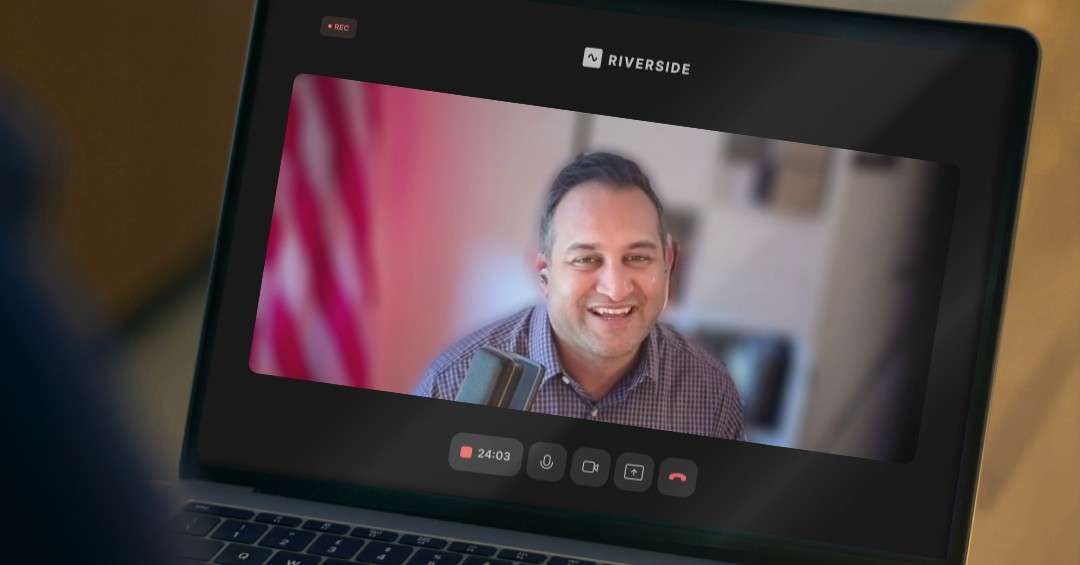
A podcast host smiles into a microphone during a recorded Riverside video session on a laptop screen, representing the Letters of Intent episode offering founders an AI survival guide for protecting their IP.
AI can write your code and design your brand, but who actually owns the result? This episode breaks down how founders can protect their IP before a dispute forces the question.

The Authorship Dilemma: Who Owns AI Output?

For the first time, humans are not the only ones capable of authorship. AI can generate code, copy, and complete designs in seconds. That creates a genuine legal puzzle.

Here is the core problem, as Sahil framed it. You put your original ideas into an AI platform. That platform was trained on other people’s data. So the output you get back may be based partly on someone else’s content, while your own input may be feeding the system’s future training.

The result is a tangled question of chain of title. Chain of title simply means the documented trail proving you own what you claim to own. With AI in the mix, that trail gets blurry fast.

Consider a real example from the episode. Sahil visited a creators summit where YouTube showed off its Creator Studio tools. These tools help generate concepts, scripts, thumbnails, and titles. Incredibly powerful, yes. But it raises the question immediately: how much of that finished video is truly yours?

The honest answer is that the law is not settled. As Pankaj put it, this is very much the wild west right now. That uncertainty is exactly why founders need to be thoughtful today, before a dispute forces the issue. At Carbon Law Group, we help businesses navigate these questions before they become expensive problems.

Why Chain of Title Matters More Than You Think

You might wonder why this matters if the law is still catching up. The answer is timing. Legal problems with IP almost never show up immediately. They surface later, at the worst possible moment.

Pankaj was blunt about the numbers. Roughly 10 percent of clients ask about AI and ownership up front. The other 90 percent charge full steam ahead. That can work for a while. But the risk sits quietly until something triggers it.

Think about when these issues actually surface. A contractor questions who owns the work. An investor’s due diligence flags a gap. Worst of all, you land in litigation, spending tens or hundreds of thousands of dollars. Suddenly you discover a vulnerability you never knew existed, because you used AI in a way that quietly compromised your IP.

That is the trap. The convenience of AI feels free in the moment. The cost only appears down the road.

So it helps to understand the landscape. There are four main areas of intellectual property: copyrights, trademarks, patents, and trade secrets. Each is complex, with its own rules, and AI touches all of them. This is precisely the kind of foundational review we walk clients through.

Proving Human Input for Copyright Protection

Copyright is where the AI question gets especially tricky. A copyright protects the tangible expression of an idea, not the idea itself. But there is a catch that matters enormously for AI users. The work must be generated by a human.

So what happens when a human prompts an AI and the AI creates the output? Is that so different from using Photoshop? Courts are wrestling with exactly this. As Pankaj noted, a text prompt is probably different from using a pen on a digital tablet. Yet digital tablets already smooth your lines and refine your images. The line is genuinely fuzzy.

Here is the practical takeaway. If your work is primarily AI generated with little human input, you may struggle to copyright it. When you do file, you may need to show the Copyright Office how much human effort went in. Maybe you spent hours refining prompts to reach the final result. That effort could matter in what is shaping up to be a multi-factor analysis by courts and the Copyright Office.

The simplest habit to build is saving your prompt history. Your prompts are evidence of the original ideas you contributed. They help prove the human authorship that copyright law requires. It is a small step now that could protect a valuable asset later.

The Poor Man’s Copyright Strategy for AI Design

Pankaj shared a clever, low-cost tactic for anyone using AI to create designs or images. It starts before you ever open the AI tool.

The idea is simple. Create a crude hand drawing of your concept first. Sketch it out yourself, by hand. Then copyright or officially timestamp that human-made sketch. Because the AI-generated versions become derivative works of your original drawing, you establish ownership over what follows.

How do you timestamp it without filing a formal copyright every time? One classic method is the so-called poor man’s copyright. You mail the sketch to yourself by certified mail. The postal service creates a dated, verified record showing you created the work on that date. If ownership is ever questioned, that timestamp becomes useful evidence.

Filing a formal copyright is always the strongest option. But it is not practical to file for every single image or iteration. That gets expensive and time consuming fast. The hand-sketch approach gives you an affordable middle ground.

Think of it like planting a flag. You mark the human origin of the concept before the AI touches it. That flag anchors your claim to everything the AI helps you build on top of it.

Protecting Trade Secrets From AI Data Leakage

Now for the warning that should make every founder pause. Inputting proprietary company data into a free, public AI chatbot is a serious legal risk.

Here is the danger. Imagine an employee at a biotech company using a public chatbot, and their prompts include the company’s trade secrets. That input could count as public disclosure. And public disclosure can destroy trade secret protection or even kill a patent. One careless prompt can undo years of protected work.

So what should businesses do instead? Pankaj recommends a few concrete safeguards. First, use enterprise-level software, not the free consumer version. Enterprise platforms typically include contractual language protecting your confidentiality, similar to how a business associate agreement works under HIPAA in healthcare.

Second, build a closed system. That means an NDA with the provider and clear internal rules. Redact personal identifying information and client information before it ever reaches the platform. There are even services that layer on top of AI tools to handle this redaction automatically.

Third, opt out of training. Even on free versions of tools like Claude or ChatGPT, you can usually opt out in the settings.

The reality is that we have trusted cloud services like Google Drive and Dropbox for over a decade, and they carry similar risks. The goal is not to avoid AI. It is to limit how much confidential information you expose. We help companies build prompting guidelines and closed systems that keep their secrets safe.

The Litigation Discovery Trap

There is one more risk that catches people off guard. Be very careful about asking AI chatbots sensitive legal questions about your business.

Why? Because whatever you divulge to an AI platform could become subject to discovery in future litigation. Discovery is the process where opposing parties can demand your records and communications. There have already been issues where information a client shared with an AI became discoverable.

Think about what that means. You might type a candid question into a chatbot about a legal problem, describing the situation in detail and maybe admitting a weakness. Later, in a lawsuit, that exchange could surface as evidence. What felt like a private brainstorm becomes a document the other side gets to read.

This does not mean you should avoid AI. These tools are genuinely useful for understanding issues and working faster. The point is awareness. A good rule of thumb is to treat a public chatbot like a public space. Do not say anything you would not want read aloud in a courtroom. For real legal questions about your business, talk to an actual attorney, where confidentiality protections apply.

Building Your AI Strategy the Smart Way

We are still early in the AI era, and the landscape keeps shifting. New tools arrive constantly, including private, on-device models that may soon run entirely on your own computer. The takeaway is not to fear AI or avoid it. These tools are powerful and here to stay. The point is to use them with your eyes open, thinking about the legal implications at every step.

So here is your survival checklist. Save your prompt history to document human authorship. Timestamp your original concepts before feeding them to AI. Use enterprise-level tools with NDAs and redaction for anything confidential. Opt out of training where you can. And never treat a public chatbot as a private or privileged space.

Get these habits right, and you can capture all the upside of AI while protecting the IP and trade secrets that make your business valuable. Get them wrong, and you may not find out until a costly dispute forces the issue.

At Carbon Law Group, we help founders and growing businesses build smart, protective AI strategies. From chain of title and copyright to trade secret protection and enterprise agreements, we make sure your innovation stays yours.

If you want to protect your business as you adopt AI, contact Carbon Law Group today at carbonlg.com to schedule a consultation. Until next time, wishing you the best with your deals and smart risks.

🔗 Learn More
Website: carbonlg.com

The Founder’s AI Survival Guide

Pankaj Raval (00:03)
Hello and welcome back to Letters of Intent. This is your podcast for deal makers and risk takers. So if you’re one of those people, you’re in the right place. I am your host, Pankaj Raval, and I’m joined today by my co host and trusted advisor here, Sahil Chaudry. Sahil, how are you doing today?

Sahil Chaudry (00:19)
I’m doing great.

Absolutely. I’m excited to tackle today’s episode. We’re talking about giving our community an AI survival guide. And this is a really hot topic. I just went to the press published conference, the Hollywood Creators Summit in LA. And it was a major topic of discussion, especially by the YouTube team. So the event was one of the main sponsors of the event was YouTube and Gemini, and they had a YouTube diner where you could

Pankaj Raval (00:29)
Yeah.

Sahil Chaudry (00:46)
Go and talk to the YouTube team about a creator. And one of the most important tools they gave me was the YouTube Creator Studio. it’s incredible. the YouTube Creator Studio is designed to help creators come up with concepts, analyze the data, analyze their viewership, but it gives you scripts, it gives you thumbnails, it gives you titles. So it’s a very powerful tool, but it does beg the question.

Where does your ownership begin and where does AI’s authorship begin?

Pankaj Raval (01:16)
Absolutely. It’s a big question. It’s a very big question that I think we’ve discussed in the past is not settled. There’s gonna be a lot of litigation, there’s gonna be a lot of discussion. we’ll see how much actually regulation there’s gonna be. This administration’s not really interested in regulating this area, but it’s gonna need regulation, right? Because it is really very much the wild, wild west right now. but I think there are some

important learnings we’ve seen even over the last few years in this kind of nascent and world of AI and leveraging AI chatbots, which has really taken over the internet well it has really changed the way we operate, like very few other things there.

Sahil Chaudry (01:48)
Well

The new development is that human beings are not the only ones capable of authorship. You can generate code, you can generate copy designs, which you were able to seek copyright protection for your original ideas. Now you’re putting your ideas into an AI platform which is using your ideas as part of its training So you could be unintentionally using other people’s

Pankaj Raval (01:55)
Right. Right.

Sahil Chaudry (02:14)
And not only that, what you are generating could be based on other people’s content. So the question we want to answer or at least help our community answer is how do you determine where your chain of title begins and ends? And it’s not a satisfying answer because the law is unsettled here, but we can give our community here

Some best practices. For example, when we’re talking about the ownership gap, since we know that courts have held human authorship has a collaborative element with AI, and the human elements are copyrightable, you need to make sure you’re documenting.

The ways that you as a human being are interacting with the AI, what are the original ideas that are going into your prompts? So, for example, a very practical step here to evidence your chain of title is to save your prompt history and make sure that you have some evidence of the original ideas you’ve put into AI.

The second thing that we would suggest is make sure you’re using an enterprise level software. They can be expensive, but that’s the reality that similar to let’s say a business associate agreement when you’re dealing with HIPAA compliance in the medical field, the AI platforms at the enterprise level have contractual language that protects your confidentiality.

Usually. And you do need to investigate which platform you’re using and how they’re protecting your data. But generally the enterprise levels of these software platforms are protecting confidential information. So I know Pankaj you deal a lot with chain of title when it comes to IP. How are you seeing clients deal with this question and what would you recommend?

Pankaj Raval (03:53)
Yeah, the truth is don’t think clients are thinking about it enough. Most clients aren’t. I would say ten percent do ask the question, but ninety percent are just going full steam forward. which I think is one strategy, I don’t know if it’s always the best strategy because the issue with all these legal anything legal is always it comes up after the fact. It doesn’t happen immediately, right? No one hears immediately, but later on when

contractors question when your IP is questioned, when, in litigation, worst case scenario, you’re spending, tens, hundreds of thousands of dollars on litigation. And all of a sudden now you find out you have a vulnerability because you used AI in a way you didn’t realize could compromise your IP. So I think we’ve gone over a little bit in the past, but I think it’s a worthwhile refresher about like just the universe of IP specifically. And then we could talk about other areas of

How AI is being used. But if you’re a business owner, IP is a very important area that you need to understand and focus on. And when you think talk about IP, there’s four main areas of IP. You’re talking about copyrights, you’re talking about trademarks, you’re talking about patents, and you talk about trade secrets. Okay. and within those, there’s a whole universe, right? People generally focus on one area. Like example, I focus mainly on trademarks, we do copyright as well. But the thing is like they’re all very complex areas of law.

and a lot of nuance there. So when you talk about copyright, we’re talking about okay, copyright is the tangible expression of a idea. Okay. It’s not the idea itself, but it’s the tangible expression of idea. But one of the requirements of copyright is that the work be generated by a human. Okay. but then it gets complicated because like okay well what if a human prompted the AI, the AI created it. How is that different from using Photoshop?

Right. And the courts have looked at this, right? And courts are looking at this and they’re probably gonna say, yes, it is somewhat different because a prompt versus you using a pen to draw something on a digital tablet is different. But then now digital tablets are helping you, draw a smoother line, draw a more, refined image, right? So these are very fact specific, nuanced questions that will need to be addressed in the future.

But for business owners, you need to realize that if your work product is primarily AI generated and doesn’t really have much human and this is something where you may need to also like look at the record, right? Like when you’re submitting these, you need to show the copyright office how much human effort went into this, right? Maybe you spent hours prompting this to get to where you want it to go. Maybe, that’s sufficient. But I think it will

of a multi factor analysis that the copyright office and courts are using. Then talk about trademarks. Yeah, go ahead.

Sahil Chaudry (06:12)
So

no, so outside of saving your prompt history, what are some other ways our clients can prove their authorship?

Pankaj Raval (06:20)
Well, taking some action before filing a copyright of the hand drawing, right? Maybe you draw it out a crude hand drawing and you copyright that and then you prompt it because then you would own all derivative uses of that image. So it could be, anything hand drawn and then you could file a copyright for that. There’s ways you could like mail yourself that. There’s kind of the poor man’s copyright or patent where

you create something, you mail it to yourself, certified mail. So there’s like a time stamped documented copy that’s verified by the post office that says, yeah, I created on this date and send it to myself and this is it. And maybe that’ll help you prove that you created it on those dates and then any derivative uses of that would still be yours.

Always best to file, but it’s not always practical to file every copyright, every image, everything you’ve ever created because that can be expensive and time consuming. So those are ways to think about it.

Sahil Chaudry (07:06)
let’s say I’m an employee and I’m working for a biotech company and I’m using Chat GPT, but part of my prompts include the company’s trade secrets. Is there any risk of public disclosure there, could kill my patent or trade secret protections?

Pankaj Raval (07:21)
Absolutely. Absolutely. Yeah. What companies wanna do is have prompting guidelines and also have a closed system. At the end the day, you need, especially enterprise level, you need to have a clearly closed system where there’s maybe an NDA in place with a provider. it’s clear that anything you guys use this for is covered by this NDA, but also that there’s no

any kind of personal identifying information or client identifying information is redacted. There are services out there that lay on top of AI platforms that will help you redact called PII, like, patient information or other confidential information. in healthcare you really gotta be aware of this. But in many different sectors you gotta be aware of what kind of confidential information is being released out there. And making sure that, you’re working

with a large provider that will ensure that your information is kept safely. But the reality is that, we’ve been using cloud services for the last more than decade, right? Like Google, Drive, OneDrive, Dropbox, all these cloud services that are susceptible to the same potential disclosure, right? Right now, those are your private documents, but the question is, could they get out there? What if there’s a hack? So there’s always that risk.

So you wanna make sure that also to the extent possible, you’re limiting how much confidential information is even being released on these platforms.

Right. So fundamentally, and I’m not a computer scientist, I can only tell you what I understand from a lay person’s approach, is that they do not share that information for training. They don’t use that information that you’re uploading for training. That’s what they’re saying, okay? and we have to take them at the word. I don’t know if anyone’s actually looked into that deeper. I’m sure larger enterprises maybe have.

But they don’t use that information for training and any information that potentially is also encrypted. So they should be using high-level encryption so that they cannot see what you’ve been uploading. So at the end of the day, they can’t tell what it is that you’ve been uploading. It’s only personal and proprietary to you and your workspace. So that’s what they should be using, that’s what they should be implementing. who’s verified that, who’s checked that?

That’s another question to solve.

And then I think part of that too, is like make sure you have if the options there, opted out from training. Right. So that’s another important element you could do. Even if you’re using the free version of I think Claude or Chat GPT, you can opt out of training. So that’s usually in a settings.

So I think these are all, very important concepts and issues to remember when you’re thinking about using AI in your business. Anything from looking at IP to just how you interact with these platforms is important. And also people should know that, hey, if you’re also asking questions about any legal

You want to be careful there too, because you want to make sure that’s not discoverable. So what you ask, there’s been issues where clients asking, divulging information to the AI cases has become subject to discovery. So just be careful about like, what you put in, how you ask these questions. Not to scare anyone and say, hey, don’t do it, because these AI tools are very useful and very powerful and especially helping understand issues.

But you need to just be aware of how information’s being used and where it’s going. And just have a certain amount of everything a little bit because we still don’t know exactly what’s all being used and how, and it’s important to ask these questions.

And I think, everyone, it’s still kind of early in the game for AI. so many changes coming. We just saw it I think it was yesterday Nvidia and Microsoft are teaming up for a new AI laptop where you can now run a lot of these right on your own computer. So there might be like a private LLMs in the future. So, it’s still an evolving landscape. but it’s important to

legal implications at every step of the way, just so to make sure you’re protected and don’t step into any kind of legal issues that want to deal with. can continue to focus on your business and growing your business.

Thank you again, Sahil. Great episode. Hopefully everyone found this helpful. And like, share, follow for more. We always love to hear from our listeners too. There’s anything you wanna hear from us. And until next time, wishing you the best with your deals and taking smart risks.

Get in touch with us

Lead Form Main

The main Lead Form

This field is for validation purposes and should be left unchanged.
Name(Required)

Download Our Free Guide

We respect your privacy. No spam, ever.(Required)