
When to Convert Your S-Corp to a C-Corp

Home / Podcast / When to Convert Your S-Corp to a C-Corp

When to Convert Your S-Corp to a C-Corp

Founders spend countless hours perfecting their products, sales funnels, and marketing campaigns. But sometimes the most valuable decision is not what you are building. It is how you structure the company that builds it.

In Episode 61 of Letters of Intent, Pankaj Raval and Sahil Chaudry tackled one of the highest-stakes topics in corporate structuring: when and how to convert an S-Corp into a C-Corp. As Pankaj put it on the show, this is not the sexiest podcast topic. But for serious entrepreneurs, it can mean the difference between a clean funding round and a deal that falls apart, or between a fully taxable exit and one that saves you millions.

Let’s break down what they covered and what you should do about it before your next big move.
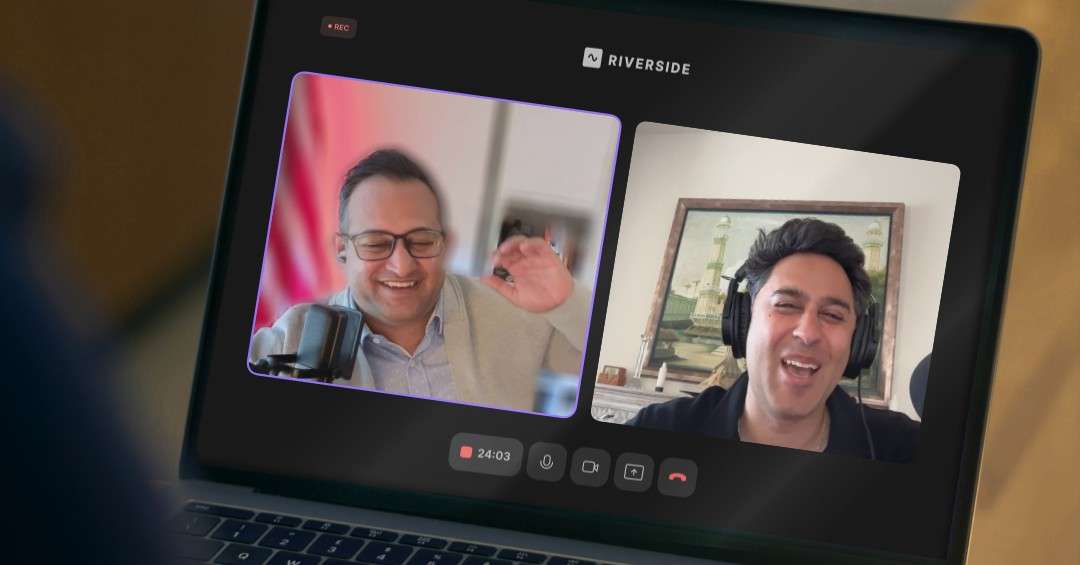
Pankaj Raval and Sahil Chaudry of Carbon Law Group recording Episode 61 of Letters of Intent on Riverside, discussing when founders should convert an S-Corp to a C-Corp, the F-Reorg, and the QSBS tax exemption.
The most valuable decision a founder makes is not always what they build. It is how they structure the company. Pankaj Raval and Sahil Chaudry break down when an S-Corp needs to become a C-Corp.

Why Founders Start With an S-Corp in the First Place

Before we talk about converting away from an S-Corp, it helps to understand why so many businesses start there. At Carbon Law Group, we are big advocates of the S-Corp when you are launching a company. The benefits are real.

The biggest advantage is pass-through taxation. In an S-Corp, the profits flow directly to the owners and get taxed once on their personal returns. This avoids the double taxation that C-Corps face, where profits are taxed at the company level before any dividends reach the owners. For a cash-flowing, owner-operated business, that single layer of tax is a meaningful saving.

This structure works beautifully for certain businesses. Professional services firms, medical practices, agencies, consultants, and closely held family businesses all tend to thrive as S-Corps. These are companies with steady revenue, limited ownership, and no plans to raise outside money.

So if the S-Corp is so good, why would anyone leave it? Because businesses evolve. A company that started as a simple cash-flowing operation can suddenly turn into something much bigger. Investors come knocking. A major exit starts to look possible. And that is exactly where the S-Corp structure begins to hit a wall.

The S-Corp Limitation That Stops Founders Cold

Here is the problem that catches so many founders by surprise. An S-Corp simply cannot accept the kind of investment that fuels serious growth.

The restrictions are baked into the tax code. An S-Corp can only have individual shareholders. It cannot accept investment from another company. It cannot have foreign investors. And it is capped at 100 shareholders total.

Think about what that means in practice. Most venture capital comes from a firm, which is a company, not an individual. Most institutional money flows through corporate entities. So the moment a VC firm or a corporate investor wants to put money into your S-Corp, the structure legally blocks it.

As Sahil described it on the podcast, trying to sell shares of your S-Corp to outside capital is “like selling pieces of the Taj Mahal. You just can’t do it.” The vehicle does not allow it.

There is another layer too. S-Corps cannot issue multiple classes of shares. Venture capital firms almost always want preferred shares with special rights, such as liquidation preferences and convertible securities. An S-Corp cannot offer any of that without blowing up its S-election entirely. SAFEs, warrants, and equity incentive plans all become extremely difficult.

This is why investors dislike the S-Corp structure. Beyond the share restrictions, the pass-through taxation creates messy K-1 filings that institutional investors do not want to deal with. They prefer clean shares in a C-Corp, along with the shareholder protections that come with a Delaware corporation.

The takeaway is simple. If you want to raise serious capital, the S-Corp structure will stop you. And most founders do not realize it until the worst possible moment.

The Capital Roadblock: Why Timing Trips Up So Many Founders

Imagine this scenario, because it plays out constantly. Your business is doing great. Investors are excited. You have a term sheet in hand and you are ready to draft the closing documents. Then your lawyer says, “Hold on, we have a problem. You’re an S-Corp.”

As Sahil joked on the show, “This is not Call Me Daddy. This is call your lawyer.” And that call usually comes too late.

Here is the issue. Corporate cleanup and restructuring must happen before you are ready to close a funding round. You cannot wait until the money is on the table. By then, you are scrambling to fix a structural problem while an eager investor waits, and deals can die in that delay.

The restructuring is rarely as simple as flipping a switch. When founders finally call us, two problems usually surface at once. First, the company needs to convert. Second, the company has not authorized enough shares to accommodate the investment. There is no headroom in the cap table to make the deal work.

Many founders are not even aware of their own share structure. How many shares were originally authorized? How many were actually issued? These are the administrative details that brilliant entrepreneurs rarely have time to track. And that is completely understandable. Most of our clients discovered something valuable in the marketplace and poured their energy into building it, not into corporate paperwork.

That is exactly why this conversation matters. Corporate cleanup is a precursor step to raising capital, not an afterthought. As Pankaj emphasized, structuring it correctly at the early stage is critical when millions of dollars are at stake down the line.

Unlocking QSBS: The Multimillion-Dollar Reason to Convert

Raising capital is not the only reason to convert. There is another powerful driver, and it can be worth millions in tax savings. It is called Qualified Small Business Stock, or QSBS.

QSBS is a unique provision in the tax code that applies to shares in a C-Corp. Here is the magic of it. If you hold qualifying C-Corp stock for five years, you can potentially sell those shares without paying any federal capital gains tax. For a founder selling a successful company, that is an enormous windfall.

How much can you exclude? Under the current rules, the exclusion covers the greater of $15 million or 10 times the value of your shares at the time they were issued. As Sahil noted, you are talking about excluding up to $15 million in what would otherwise be taxable gains. The government also recently raised the asset limit at issuance from $50 million to $75 million, which means more companies qualify.

But here is the detail that trips people up. The five-year clock starts from the date the C-Corp is formed, not from the date your business began. Even if you have operated as an S-Corp for ten years, the QSBS clock has not started yet. You need to hold your shares as a C-Corp shareholder for the full holding period.

There is now a tiered system that allows you to start excluding gains beginning in the third year, with the benefit increasing through the fourth and fifth years. But to keep it simple, plan to hold for five years if you want 100 percent of the exclusion to apply.

The lesson is clear. QSBS can be worth millions, but only if you plan early. The sooner you convert and start the clock, the sooner you unlock this benefit.

The F-Reorg Solution: Converting Without Losing Your Foundation

So how do you actually make the transition? This is where a sophisticated legal maneuver called an F-Reorganization, or F-Reorg, comes in.

Let’s keep it simple. We already established that an S-Corp cannot take on corporate or foreign investors, but a C-Corp can. An S-Corp is itself a corporation, and a corporation is allowed to own another corporation. The F-Reorg uses that fact cleverly.

In an F-Reorg, you form a brand new C-Corp. Then your existing S-Corp becomes the owner of 100 percent of that new C-Corp’s shares. The new C-Corp becomes the vehicle you use to accept investment. At the moment those shares are issued, you can capture QSBS benefits for both the existing shareholders and the new investors coming in.

To put it as plainly as possible: an F-Reorg is where the S-Corp owns a newly formed C-Corp, which becomes the vehicle to raise investment and capture QSBS.

It is an elegant solution to a tricky problem. It lets a founder transition the entity to accept venture capital while preserving the value built up over the years and unlocking the tax advantages of a C-Corp structure.

That said, this is not a do-it-yourself project. As Pankaj stressed on the podcast, this is not something you handle online or hand off to an AI tool. Every company is a little different, and a single misstep can jeopardize millions of dollars in potential tax savings. The mechanics have to be executed correctly for the QSBS benefits to actually hold up.

At Carbon Law Group, this is precisely the kind of work we do. We guide founders through the F-Reorg, handle the corporate cleanup, and structure everything so the benefits are preserved.

Who Should Be Thinking About Converting Right Now

Not every business needs to convert. In fact, for many companies, staying an S-Corp is the smarter choice. So how do you know which camp you are in?

Let’s start with the businesses that should seriously consider converting. Five categories stood out in the conversation.

First, companies planning to raise outside capital. Second, founders expecting substantial growth. Third, businesses that may be acquired within five to ten years. Fourth, companies considering SAFEs, convertible notes, or venture financing. And fifth, companies that need to issue multiple classes of shares.

If you are a software company, a scaling medical device company, or any business planning to grow through outside investment, this conversion is for you. The simple test, as Sahil framed it, is this: if you are planning an exit or planning to raise outside money in the next five to ten years, you need to be thinking about converting now.

Now let’s talk about who should stay put. Some businesses are better off keeping their S-Corp status and enjoying the pass-through taxation.

Family-owned businesses that are closely held and not seeking outside capital should generally stay as they are. Lifestyle businesses fit here too. Think of a chain of laundromats or any cash-flowing business that plans to remain small. Small professional practices, such as law and medical firms, also fall into this group, partly because they are not eligible for QSBS and cannot raise capital in their professional corporations anyway.

The thread connecting all of these is simple. They are privately held, limited in ownership, and cash-flowing. These companies benefit most from pass-through taxation and do not need to take on the cost of double taxation that comes with a C-Corp.

Key Takeaways for Founders

Let’s sum up the most important points from the episode.

Your entity choice is a strategic decision, not just a tax filing. This is worth repeating because so many founders treat their structure as a box to check rather than a foundation to build on. The choice you make early shapes what is possible later.

Raising money may require restructuring long before investors write checks. Do not wait for the term sheet. As Pankaj put it, you do not want to blow your S-election by accepting a check you cannot cash.

QSBS can be worth millions, but only if you plan early. The five-year clock and the structuring requirements mean that timing is everything.

And finally, remember the big picture. Founders spend enormous energy thinking about product, sales, and marketing. But the most valuable decision is sometimes not what you are building. It is how you structure the company that builds it.

Build Your Foundation Before You Need It

The story Pankaj and Sahil told on this episode is one we see play out constantly. A great entrepreneur builds something valuable, growth accelerates, investors show interest, and only then does the structural problem surface. By that point, fixing it under deadline pressure is stressful and risky.

The better path is to have this conversation early. Whether you are just forming your company or already running a thriving S-Corp that is starting to attract attention, understanding your options puts you in control.

At Carbon Law Group, we help founders and growing businesses across Los Angeles and California make these decisions with confidence. We evaluate whether conversion or an F-Reorg makes sense for your situation, handle the corporate cleanup, coordinate the QSBS planning, and time everything so your funding round and your tax benefits both stay protected.

If you are planning to raise capital, expecting significant growth, or thinking about an exit in the next five to ten years, now is the time to talk. Contact Carbon Law Group today at carbonlg.com to schedule a consultation. Let us help you structure the company you are building so it is ready for whatever comes next.

🔗 Learn More
Website: carbonlg.com

When to Convert Your S-Corp to a C-Corp

Pankaj Raval (00:00)
Welcome back to Letters of Intent. My name is Pankaj Raval, the founder of Carbon Law Group, and I am joined today by my trusted co-host, Sahil Chaudry. Sahil, how are you?

Sahil (00:09)
I’m doing great. This is Sahil Chaudry here, corporate attorney here at Carbon Law Group. And today we are talking about something that we deal with very often, S-corps. we are big advocates of S-corp when you are launching your company. There are plenty of tax benefits, but there are plenty of limitations as well, and we’re gonna get into why you might need to convert or why you might need to do what’s called an F Reorg.

Pankaj Raval (00:33)
So let’s just imagine this, right Sahil? Let’s set this up, right? Let’s set the scene of why we’re talking about this today. so some of you guys, it may not be as sexy as a topic as, what you might hear on another podcast about call me daddy. But this is not that, but it is if you’re a business owner, if you’re a serious business owner, if you’re a serious entrepreneur, this is very important for you to listen to. we’re gonna try to a lot of complex issues in about fifteen to twenty minutes to hopefully help

you make a much more informed decision and not lose millions of dollars when you sell your company. So imagine this your business is doing great. Your investors are interested, super excited to invest. and then your lawyer says, Hold on, we’ve got a problem. You’re an S Corp. What do we do, Sahil?

Sahil (01:10)
This is not

this is not call me daddy. This is call your lawyer. That’s the segment we’re at right now. When you hit this point and this happens. Yeah, yeah, right. So this happens very often. I mean, we do this so often where someone is a brilliant entrepreneur, has got an amazing product or service, they’re growing, and now they’ve got interest.

Pankaj Raval (01:15)
Yes. Or call your daddy call your lawyer daddy if you want. Hell, we don’t care. Right.

Sahil (01:33)
From a venture capital firm or from an angel investor. Now, most likely that investment is gonna come from a company. and in an S-corp, you can’t take investment from a company. In fact, you can only have individual investors, you can only have up to 100 shareholders, and you cannot have any non-US persons invest in that S-corp. So it’s great when you’re privately held, you’ve got a cash-flowing business.

But when you start to open up to new investors, you’re gonna have to make some changes. And we see this all the time where people are ready to raise capital. They’ve got a term sheet. they’re right near that opening mark of let’s draft the documents. And then everybody realizes, and that’s when they call us, first of all, we need to convert. and second of all, we don’t have enough shares that have been authorized in this company. We haven’t accounted for the headroom that’s gonna be required to make this work.

that’s where when you’re an entrepreneur and you’re thinking about future investors, venture capital, institutional money, exit planning, and also QSBS benefits, that’s the point you need to call us because you’re going to need to convert from an S-corp a C Corp.

Pankaj Raval (02:37)
Absolutely. Absolutely. this is critical. We’re talking about millions of dollars at stake here, when you sell this company. so structuring it correctly now, you’re early early stage is very, very important. And and it’s not just, yeah.

Sahil (02:48)
So I ⁓

Pankaj, I can imagine some of our clients will be like, hey, Pankaj and Sahil, you guys told me to start with an S Corp. Why are you telling me now, to go with a C Corp? So look, I think we should talk through a few of the the major benefits of an S Corp. Why do we suggest it in the first place? there’s pass through taxation. So you are avoiding double taxation in a C Corp.

Pankaj Raval (03:02)
Yeah.

Sahil (03:09)
Your profits are going be taxed before you’re able to authorize any dividends. payroll tax planning, the simplicity for owner-operated businesses. there are plenty of benefits. And these are great, especially if you have a professional services firm for medical practices, agencies, consultants, closely held family businesses. But eventually you’re gonna evolve. so Pankaj, why don’t investors like S-corp?

Pankaj Raval (03:32)
So S Corps are a bit messy when it comes to like anything with pass-through taxation. This is why also we don’t suggest like a legal tech startup going to an LLC, the tax as a partnership, or these private equity firms, venture capital firms, don’t like pass-through taxation. and there’s a variety of reasons for that, but one of them is that it makes things messier for them if they have to, deal with a bunch of K1s and things like that. So it’s better that they have shares in a company.

there’s also certain protections that they like to get, especially in Delaware as shareholders compared to owners of an LLC or shares in an S Corp.

Sahil (04:03)
Yeah, that’s right. You can’t have multiple classes of shares either in an S Corp. So in an S Corp, you would break the if let’s say you have a venture capital firm that wants preferred shares, Corp status is blown up. So you can’t have preferred stock, you can’t have liquidation preferences, you can’t have convertible securities. It’s very hard to do SAFEs or warrants. It’s very difficult to plan for, let’s say, an equity incentive plan. if you wanna have

Pankaj Raval (04:08)
Right.

Yeah, yeah.

Yeah.

Sahil (04:28)
different types of rights go to the equity incentive plan. So it’s very tough. A lot of VCs are like you just said, are gonna want some kind of preferences, some kind of difference from the common shares.

Pankaj Raval (04:40)
Yeah. And I think fundamentally, if you’re like starting a company, you gotta think about like, what’s important to you right now, right? and also, not only right now, but what’s important to you in the future, right? Because like we have companies starting, hey, I just want to get this going. I expect to make a good amount of money, they’re throwing off a lot of cash. So hey, maybe S Corp is good, but then they think about it, wait, maybe I do want to sell this, maybe I wanna actually this could be really great. This could be a company that have really strong enterprise value.

And what’s happened with some of our clients where it started off as a kind of very strong solid cash flowing business, but then all of a sudden then turned into something more and bigger. And that’s where we talk about the F reorg, which is a good problem to have, but also important to address early on because one of the main drivers is also converting to a C Corp is you’re getting investors, but also something called QSBS, right? We’ve talked about QSBS a little bit

on the podcast, but it’s really important for anyone in the startup world, in the tech world, because it’s a unique element of the code that allows you to have shares in a C Corp. And when you sell if you hold them for five years, now all of a sudden you can sell them without having to pay any kind of capital gains tax, which could be huge, right? That could be a huge windfall for you if you do it right.

So if you structure a company right and can take advantage of QSBS, now I think the first fifteen million is gonna be tax free or 10x whatever the value of your shares were. so it’s a greater of those two. So it could be really

Sahil (05:59)
Yeah, you’re talking about excluding up to fifteen million dollars in what would have been taxable gains. And also the government has also raised the asset limit that you can have at issuance from fifty million to seventy-five million dollars. And I just want to emphasize that this is from the date of the C Corp being formed. So even if you’ve been in business for 10 years, if that has been an S Corp for 10 years,

Clock doesn’t start yet. and you need to hold as a C Corp shareholder for five years. Now there’s a tiered system where you can start excluding gains beginning on your third year. And there’s a tiered system, third year, fourth year, fifth year. But to keep things simple, you need to hold for five years if you want a hundred percent of those exclusions to apply to you.

Pankaj Raval (06:44)
Yes, exactly. So very good point, very good qualification to make, Sahil. So let’s jump in a little bit to the F reorg. So explain to us, it’s a complicated topic, but let’s talk about it. You’re very good about, simplifying these things. So what is an F reorg and how does it work exactly?

Sahil (06:58)
Okay, so to try to keep this simple, the F-Reorg is where now what we just explained is that an S-corp cannot take on investors that are not individual US persons. But a C Corp can. And an S-corp it’s a corporation, it’s a company. And

a corporation can take on corporate or company investors. So that C Corp is going to we’re going to form a new C Corp, and that S Corp is gonna own 100% of the shares of the C Corp. And that allows for that C Corp to issue shares. And the point at the point these shares are issued, we’re able to capture QSBS for the pre-existing investors and for the new investors who will invest in.

in the C Corp. So to put it simply, an F reorg is where the S-Corp owns a newly formed C Corp, which becomes the vehicle that you use to raise investment and capture QSBS.

Pankaj Raval (07:58)
Absolutely. Okay. Yeah, absolutely. So that’s a great explanation and I think super helpful. obviously every company’s a little bit different. So, we’re not gonna bore you guys with all the nuances here today on this podcast, especially if some of you guys are driving. So we don’t wanna create any kind of health hazards. But the concept is extremely important and something everyone should know about if you’re an S Corp or are contemplating creating an S Corp, because this is the mechanics, these are the ways that you can actually

benefit converting to a QSBS but doing but doing it right is extremely important, right? and if you make a misstep here, this is not something you’re gonna do online or, going to ask AI to do, because if you make a mistake, now you’re gonna be jeopardizing millions and millions of dollars for you.

Sahil (08:38)
That’s right. Absolutely. And we do see this all the time where companies kind of, I mean, we know what it’s like to be a small business owner. You are most of the time, it’s a person who has discovered something extremely valuable to the marketplace. They’re an excellent entrepreneur. but you don’t think about the administrative side or you don’t have time for it. Most of the time, our clients are not even aware

what were the initial authorized shares? What were the initial issued shares, or even if they did issue the shares. And so there’s a whole level of corporate cleanup that generally has to happen before you take on outside investment. And we don’t expect you to know that or to understand it. That’s our job. but the reason we are talking about this on this podcast today is you need to know that that is going to be a precursor step to use raising capital.

or to you capturing QSBS. If you want to do either of those things, you’re going to neither either do an F reorg or convert to a C Corp. So while pass-through is great, gives you a lot of benefits when you’re small, there is a reason to pay that cost of the double taxation for a C Corp. There are important reasons that that exists.

Pankaj Raval (09:42)
Absolutely. So Sahil, one last thing I want to talk about is like, who should be thinking about this, right? I think it’s a big question. Who should be thinking about this right now? we’ve talked a little bit about, people who are S Corps, but I would say like, there’s probably a few different categories of people who should be thinking about this. Can you walk us through like who should be thinking about this right now?

Sahil (09:58)
Absolutely. I don’t think that this will usually apply to a professional services company because you’re not going to be raising, you know. Yeah, you’re not gonna be eligible. Yeah, you’re not gonna be eligible for QSBS. And also, you are raising capital, you’re gonna be raising capital in a different company. Because usually as a professional, let’s

Pankaj Raval (10:07)
eligible for QSBS. Well you’re not gonna be eligible for QSBS, so yeah, yeah.

Sahil (10:20)
an attorney or a doctor, you’re not going to be able to raise capital in your professional corporation. Now, the other people who I think would not be thinking about this, if you’re planning on staying closely held and you are not planning on raising outside capital, then you’re better off staying as an S Corp and capturing that pass through taxation. If you are, let’s say, a software company,

Or you are company that’s planning on scaling, and you’re planning on scaling your medical device company and you’re planning on scaling by raising outside capital, absolutely this is for you. if you are any kind of company that is I think if we had to simplify it, if you are a company that is planning on having an exit or you’re planning on raising outside money,

Pankaj Raval (11:01)
the last

mix like five to ten years, right? I mean you wanna think about like a longer term horizon, but yeah. Yeah.

Sahil (11:03)
Yeah. Exactly. Then then

you then you need to be thinking about this.

Pankaj Raval (11:08)
So Sahil, we talked a little bit about like who should be thinking about this, but like what are some different categories of people that really should be considering this right now?

Sahil (11:15)
Well, okay, so the companies that should be considering this, number one, companies that are planning to raise outside capital. Number two, founders that are expecting substantial growth. Number three, businesses that may be acquired within five to ten years. Number four, companies that are considering offering SAFEs, convertible notes, or venture financing. And I would also say companies that are planning on issuing multiple classes of shares or who need multiple classes of shares.

But there are some businesses that don’t need to think about this. One, the first are family-owned businesses that are usually closely held, family-owned. They’re not looking to get outside capital. Number two, lifestyle businesses. Let’s say you own it’s in a similar category. You’re talking about a chain of laundromats. You’re talking about cash-flowing businesses that are going to remain small, that are not going to take on outside capital, small professional practices.

And the thing that the thread that unites all of these companies together is these are privately held, limited ownership, cash flowing companies. Those are the groups that are gonna benefit most from pass-through taxation. and they don’t need outside capital. So there’s not a need to convert to an C Corp and it wouldn’t be beneficial.

Pankaj Raval (12:22)
So maybe we can just sum this up in a few takeaways, right? First thing I think I’m hearing is that your entity choice is a strategic decision, not just a tax filing. You should be really thinking about this early on.

So the second thing is, raising money may require restructuring long before investors write checks. So you wanna make sure if you’re getting a check from an investor, make sure you’re structured correctly and you don’t blow your S election by accepting a check. What’s the saying, accepting a check you can’t cash, right? So you don’t wanna do that.

Sahil (12:46)
Yeah, that’s right.

That’s right.

Pankaj Raval (12:47)
⁓ the

next thing is, you know, QSBS can be worth millions, but only if you plan early. So structuring QSBS correctly and going through that whole process and analysis is really important, especially if planning up for high growth. And then the closing is, founders spend a lot of time thinking about how product sales, marketing work, but sometimes the most valuable decision isn’t what you’re building, it’s how you structure the company that you’re building.

Sahil (13:08)
And founders, you don’t really need to know all the details, but you do need to know that when you’re in S Corp, you’re not able to sell shares to outside capital. when that outside capital is in the form of a company or a corporation, which is what most venture capital firms are, that’s like selling pieces of the Taj Mahal.

You just can’t do it. It doesn’t exist. So remember to convert to a C Corp or do an F And that’s what we’re here for.

Pankaj Raval (13:34)
Absolutely. So yeah, we hope you guys have found this insightful. It’s really important information. We hope we didn’t bore you. But I think if you’re a business owner, if you’re a small business owner, this is very important for you to understand and the back of your mind as you grow your business. Well

until next time, we thank you guys again for listening, liking, commenting, sharing, and supporting this podcast. if there’s anything you want to hear about or any comments you have about what we said, please reach out. We always love to hear from our listeners and sure that we are providing valuable advice for everyone here. With that being said, this is also not legal advice. This is more educational information that we are sharing. We are lawyers, but not your lawyer. If you do want us to engage us, we do need an engagement letter in place.

but we would love to help you if you’re a business owner looking to scale, grow and potentially sell your business, always here for you. Sahil, thank you again. Great episode and appreciate your insights.

Sahil (14:22)
Yes. Until next time, keep on taking risks, keep on making your deals. This is Carbon Law Group, Letters of Intent

Get in touch with us

Lead Form Main

The main Lead Form

This field is for validation purposes and should be left unchanged.
Name(Required)

Download Our Free Guide

We respect your privacy. No spam, ever.(Required)