
The $110B Pause – Inside the Paramount–Warner TRO

Home / Podcast / The $110B Pause – Inside the Paramount–Warner TRO

The $110B Pause – Inside the Paramount–Warner TRO

The $110B Pause: What the Paramount-Warner TRO Teaches Every Business Owner About M&A

One of the biggest deals in entertainment just slammed to a halt. Paramount Skydance agreed to buy Warner Bros. Discovery in a $110 billion acquisition. Then a group of state attorneys general stepped in, and a judge hit pause.

In Episode 67 of Letters of Intent, Pankaj Raval and Sahil Chaudry broke down what happened and why it matters. The case is a masterclass in antitrust law, deal structuring, and risk management. As Pankaj put it, the lessons apply whether you are closing a $110 billion deal or a $110,000 one. Let’s dig in.
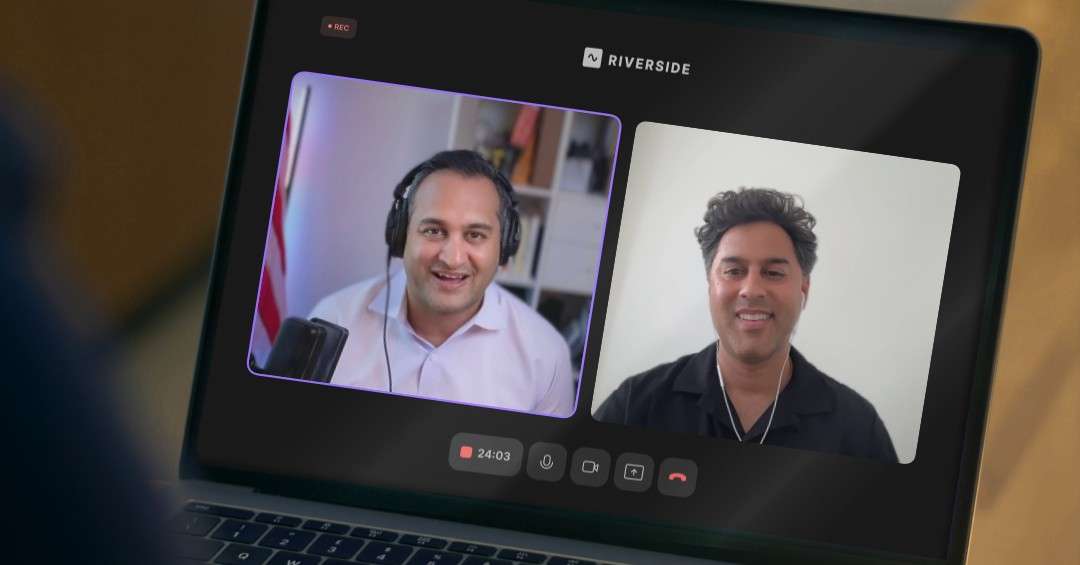
Two podcast hosts smile during a recorded Riverside video session shown on a laptop screen, representing the Letters of Intent episode on the paused Paramount-Warner deal and M&A lessons.
A $110 billion deal just hit pause. This episode unpacks what the Paramount-Warner freeze teaches business owners about mergers, acquisitions, and risk.

What Actually Happened With the Deal

Here is the setup. Paramount Skydance agreed to buy 100 percent of Warner Bros. Discovery for $31 a share in cash. That values the target at roughly $110 billion. It is a massive combination of two entertainment giants.

Then came the twist. Twelve state attorneys general filed for a Temporary Restraining Order, or TRO. A judge granted it, freezing the deal for 14 days. Suddenly, one of the largest media transactions in history was on hold.

Why would a court step in? The concern is antitrust. In simple terms, antitrust is the body of law that stops any single company from getting powerful enough to kill competition and dictate prices. The attorneys general argue this deal could create a conglomerate that dominates the market.

Look at what each side controls. Paramount Skydance owns CBS, Paramount Pictures, and Paramount Plus. Warner Bros. Discovery owns Warner Bros. Studios, HBO, HBO Max, CNN, TNT, and TBS. Each of those is a major business on its own. Combine them, and you get an enormous concentration of media power.

The judge did not rule that the deal is illegal. The TRO simply creates a pause to review the concerns. But as Sahil noted, where there is smoke, there is often fire.

The Anatomy of a TRO

So what exactly is a Temporary Restraining Order? Sahil explained it clearly. A TRO is a judge’s short emergency pause, meant to stop something before it becomes impossible to undo.

His metaphor was perfect. Once you scramble the eggs, you cannot unscramble them. A giant merger is exactly like that. Once two companies combine their assets, operations, and teams, pulling them back apart is nearly impossible. So the court freezes the action first, then sorts out the details.

A TRO lasts only 14 days. It is actually the first step toward a broader court order. If a party wants a longer freeze, they must move for a TRO before they can seek an injunction. An injunction, by contrast, is an indefinite freeze that a judge grants only after both sides fully argue the case.

There is a specific legal test for granting a TRO. The party asking for it must show four things. First, they are likely to win the case. Second, they will suffer irreparable harm without the freeze. Third, the balance of hardships favors them. Finally, the freeze serves the public interest.

The threshold is not formally lower than other remedies. However, it is different, because you can get a TRO fast. The court is not examining every detail of the market yet. It is simply deciding that there is enough concern to justify a brief, protective pause.

Merger vs. Acquisition: Know the Difference

One of the most useful lessons from the episode is a vocabulary distinction. People throw around “merger” and “acquisition” as if they mean the same thing. Legally, they do not.

Sahil laid out the difference. When you want to combine with another company, you have two main options. You can do a merger, or you can do an acquisition. Each works very differently under the law.

A merger is a specific legal term. It happens through a document called a merger agreement. In a merger, two entities dissolve into one. The surviving entity absorbs all the assets and liabilities of the other. The other company effectively ceases to exist.

An acquisition works differently. In this Paramount deal, the buyer is purchasing stock. Paramount is buying 100 percent of Warner Bros. Discovery’s stock. But buying the stock does not automatically dissolve the company. Both entities keep existing legally. The buyer can take later steps to dissolve the target, but the stock purchase alone does not do it.

There is a third flavor worth knowing: the asset acquisition. Here, a buyer plucks specific assets out of a company. The goal is often to grab a valuable profit center while escaping the company’s liabilities. You buy only the asset you want, not the whole business.

Why does this matter for you? Because these same structures apply to small deals too. Whether you are buying a competitor or selling your own company, knowing whether you want a merger, a stock deal, or an asset deal shapes everything. We help clients choose the right structure from the start.

Ticking Fees and the Cost of Delay

Here is a detail that stunned both hosts. The Paramount deal includes a ticking fee of $650 million per quarter if the deal fails to close. That works out to roughly $7 million a day.

What is a ticking fee? It is a penalty baked into a deal to discourage delays. Big deals cannot drag on forever. Delays affect share prices, tie up capital, and create uncertainty for everyone involved. The ticking fee puts a price on that delay.

Think about why this matters so much. When a company agrees to be acquired, it takes itself off the market. It stops entertaining other buyers. It commits its time, attention, and resources to closing this one deal. If the buyer drags its feet or fails to close, the seller has lost enormous opportunity.

That is the concept of opportunity cost. If you are locked in with one party, you are not free to pursue another. There is a real price for that lost freedom, and a ticking fee compensates the seller for taking that risk.

In this case, the stakes are staggering. If the deal collapses, Warner Bros. Discovery could collect up to $7 billion in penalties. As Pankaj noted, that is a very nice check to receive if a buyer ties up your company and then cannot get the deal done.

Diligence-Proofing Your Own Business

This is where the giant deal becomes personal. Pankaj drove home the key point. It does not matter if your deal is worth $110 billion or $110,000. The same principles apply.

Every deal starts with early documents. First comes the letter of intent, or LOI, and the term sheet. This is where both sides get on the same page. Crucially, it is also where you spell out what happens if things go wrong.

So ask the hard questions early. What is the recourse if the deal falls apart? What are the termination or ticking fees? You want those answers in your letter of intent, before you ever reach the full purchase agreement. Waiting until later is a costly mistake.

Then comes the Purchase and Sale Agreement, or PSA. But signing the PSA does not mean you are done. Next comes diligence, and there is a lot to do in that window. The other side will pick your business apart and ask tough questions.

Your company may not face the scrutiny of a $110 billion deal. But make no mistake, there will be scrutiny. Someone on the other side will examine your contracts, your finances, and your operations. You want to be ready for that.

This is what it means to be diligence-proof. You anticipate the problems before they arise. You keep your contracts clean, your records organized, and your protections in place. Warner Bros. Discovery’s lawyers did exactly that, and it may earn their client billions.

At Carbon Law Group, this is precisely what we help clients do. We build solid contingencies into your LOI and PSA. We make sure you are protected if a buyer fails to close. And we prepare your business to withstand the diligence process.

The Bigger Picture for Business Owners

Step back, and this deal reveals a larger tension. Every founder wants their company to grow big and succeed. Society encourages that. Yet at some point, consolidation can start to harm the very consumers it claims to serve.

Pankaj sees real risk in the entertainment consolidation. Less competition means less pressure to innovate and less pressure to keep prices fair. History backs this up. We saw the harm of monopolies with the railroads and with telecom. Now we may be seeing it again with these media giants. That is why the concerns of the twelve attorneys general are worth taking seriously.

For your business, the takeaways are practical. Learn the vocabulary of mergers and acquisitions. Understand TROs, injunctions, and ticking fees. Build strong letters of intent and airtight purchase agreements. And plan for the deal that does not close, not just the one that does.

You do not have to be a media giant for any of this to matter. Someday you may buy a company, sell your own, or face a deal that goes sideways. When that day comes, preparation makes all the difference.

If you are planning to buy or sell a business, or you simply want to protect yourself in a future deal, contact Carbon Law Group today at carbonlg.com. Until next time, keep making smart deals and taking calculated risks.

🔗 Learn More
Website: carbonlg.com

The $110B Pause – Inside the Paramount–Warner TRO

Pankaj (00:16)
Ladies and gentlemen, welcome back to another exciting episode of Letters of Intent. I’m Pankaj Raval, the founder of Carbon Law Group, and also the co-founder of this podcast, Letters of Intent, where we

are talking about the juiciest deals for deal makers and risk takers like yourself. I’m joined today by my co host, Sahil Chaudry. Sahil, we got an interesting one today. Tell us a little bit more about what we’re getting into.

Sahil (00:36)
Absolutely. So we have some big news in the M&A world. The Paramount Skydance Warner Brothers deal is put on pause after a number of state attorney generals filed for a temporary restraining order. So let’s check out this clip because it tees up the issues that we’re gonna talk about.

Pankaj (00:55)
Absolutely.

Sahil (03:29)
six hundred and fifty million dollars if the deal doesn’t close per quarter.

Pankaj (03:34)
I was looking at it. Yeah, seven million dollars a day, apparently. Seven million dollars a day. Yeah. Yeah.

Sahil (03:37)
Wow, that

is a huge penalty.

Pankaj (03:41)
it is interesting. The purpose of a ticking fee too is interesting too, right? Like we don’t want to drag these deals along because it affects share prices. There’s a lot of moving indicators here that will be affected by this deal’s being dragged out. So, what are you listening? What do you hear when you see this issue come to light and now the courts putting a pause on this?

Sahil (03:58)
So Pankaj, what I see is if the judge has granted a temporary restraining order, that means there’s a very high likelihood that while it’s not dispositive, there is a likelihood that this deal is gonna violate antitrust. And just to put it in simple terms, antitrust is the body of law that stops any single company from getting too powerful enough to kill competition.

And dictate prices. So that means that this judge is saying, hey, look, the attorney generals who have filed for this TRO are saying this is going to create a conglomerate that’s going to be able to essentially monopolize the market and dictate prices, and suffocate competition. And so what this means is the judge is saying, Okay, well, there’s enough here, there’s not enough here for me to

You know, the the determination of the answer for that question is going to be decided in court, but there’s enough here for us to review this for 14 days, to hit pause on this deal for 14 days. So

Pankaj (04:54)
Yeah.

Sahil (04:54)
Pankaj, have you kind of seen TROs? What is a TRO, and essentially it’s an injunction that you can get, but it’s only effective for 14 days.

Pankaj (05:04)
Yeah, it’s called a temporary restraining order. And that’s the reason you have to go move for a TRO before you can get an injunction. So that’s the first step towards getting an all outright injunction. But that’s where the courts will say, okay, hey, you can’t move forward. There’s a temporary restraining order while we figure out what you can do. and this it’s an equitable remedy. And in this situation, when you have companies taking action that could really affect competition, affect the entire market.

for entertainment, it’s a big deal and we don’t want to just let that go willy-nilly and this is why we have regulators. of course, there’s a lot to be said about the efficacy of the regulators today when the FTC and other institutions are being gutted. But that being said, we still have laws and it’s interesting to see how these laws are going to be enforced in the context of the political climate today.

Sahil (05:47)
That’s right. And just to kind of back up and zoom out, what is this deal? This deal is Paramount Skydance agreeing to buy 100% of Warner Brothers Discovery for $31 a share in cash. and so actually, even though there are a lot of words getting thrown around like merger, this is actually an acquisition of stock. It’s not actually a merger. and the deal values Warner Brothers Discovery at about 110 billion dollars. yeah.

Pankaj (06:10)
what’s the difference between

a merger and acquisition? Because it sounds like it’s also a merger too, you’re merging one company into the other, how are they different?

Sahil (06:16)
Yeah, it does sound like a merger and that’s why these words get thrown around. But you have two options when you want to combine with another company. One is a merger, one is an acquisition. And when we’re talking about a merger, that’s actually a legal term and it’s executed through a document, which is a merger agreement, where two entities get dissolved and one entity survives.

And the entity that survives absorbs all of the assets and liabilities of the other entity. Now, in an acquisition, both entities actually are surviving. What is happening is you have stock. So every company has stock that you can purchase. So in this case, Paramount is buying 100% of the stock of Warner Brothers Discovery. But that doesn’t mean that Warner Brothers Discovery is automatically being dissolved.

They can take steps to effectively dissolve the company, but legally, just the purchase of stock doesn’t dissolve that company. And so the difference is, in plain terms, a merger effectively dissolves one entity and allows one entity and one entity to survive through the means of a merger agreement and an acquisition of stock is one company selling the other company.

its stock, all of the stock that it holds.

Pankaj (07:30)
Interesting. Interesting. This is a pretty important deal, right? This is gonna have pretty serious effects on the entertainment world, a lot of, IP and assets that Warner Brothers owns. Do you think this is actually a threat to competition?

Sahil (07:43)
Well, it certainly could be.

Without doing any kind of analysis on market share and control, the fact that this judge has indicated that there needs to be a fourteen-day pause for this TRO, the fact that the judge is granted the TRO means that there at least is some reason to believe that this is a threat to competition.

You know, honestly, Pankaj, I think without going into what kind of percentage of market these companies will control, I don’t have an opinion on that. But I would want to ask you, what do you think? Do you think that this paramount buying Warner Brothers is going to be a threat to competition?

Pankaj (08:15)
I think so. I think there’s a big threat here of consolidation here with the content markets. And I’m always concerned that there’s too much power being consolidated in these networks and then there’s gonna be influence over who can say what, our freedom of press, there’s a lot of news networks, there’s a lot of the content is gonna be controlled. Anytime we have a consolidation of corporate interests, I think is a threat to consumers because now

there’s less competition and less competition means there’s less pressure to provide competitive services and even innovate, right? So when you have competition, there’s a lot more innovation happening because everyone’s trying to beat the other side. But now in this situation where you have such consolidation, I think is a real risk. And I think that’s why these attorney generals are so concerned. you’re gonna have such consolidation of power

And now that’s effectively gonna hurt the consumers because undoubtedly they’re gonna raise prices and I think that’s gonna affect consumers the most.

Sahil (09:04)
So I find it difficult. I think that there has to be some kind of objective measured line to determine at what point are you affecting the market because anybody that is starting a company wants it to grow and become big. So there’s some threshold that we’re saying as a society, yes, we want you to make money and we want you to become big. We just don’t want you to become a threat to competition so that

society gets price gouged. So I agree with that on principle. I just don’t know where that line is.

Pankaj (09:34)
I would argue that the bar is a lot lower than it probably is right now. Because I just think, we look at the nineteen twenties, oligopolistic, monopolistic competition is extremely harmful and detrimental to consumers. And we saw it with the railroads, we saw it with telecom, and we’re seeing it again today, with these entertainment telecom companies.

You’re seeing Paramount Skydance has CBS, Paramount Pictures, Paramount Plus, and then Warner Brothers has Warner Brothers Studios, HBO, HBO Max, CNN, TNT, TBS. These are very popular channels. These are massive industries. Each channel is a multi billion dollar company. So now you have these two conglomerates merging. I just see it as a real risk.

to consumers and I think the concerns of these twelve state AGs are absolutely warranted.

Sahil (10:14)
If we look at the legal test for a TRO, it’s that the party has to show it’s likely to win, likely to suffer irreparable harm without the freeze.

and the balance of hardship favors it and that the freeze favors the public interest. So the threshold isn’t formally lower, but it is different because you’re able to get a TRO fast.

So though that’s the test for the TRO. The TRO is not examining the details of the case. It’s not examining the details of the market. But that being said, there is at least enough evidence for the judge to determine that this is in the public interest, which is kind of where there’s smoke, there’s fire. So I would say that there’s a good chance that this

if a TRO has been granted, that there’s more to the story here and that we’re not close to closing this deal. And I think we’re likely to see Paramount ending up paying that six hundred fifty million dollar penalty.

Pankaj (11:05)
Yeah. how important is it that, the administration, the executive branch is potentially more friendly to Paramount in terms of the FTC allowing this deal to go through? Do you think that’s gonna be their saving grace here?

Sahil (11:16)
Well, in this case, it depends on how insulated you think the court system is from President Trump. So, the administration might be able to lean more on regulators, but I think historically it’s been very difficult to lean on the American judiciary. And I think it would be very unlikely for the American judiciary to be

so heavily influenced by the administration. We’ve seen President Trump’s appointees rule in ways that don’t always favor him. And so

Pankaj (11:42)
Mm-hmm.

Sahil (11:43)
I think the American judiciary, at least up until this point, still has a level of impartiality. And that’s why this TRO has been granted in the first place.

Pankaj (11:51)
Yeah. So like for smaller companies, for companies, not quite the size of Paramount or Warner Brothers Discovery, what do they have to take away from this? What should investors or smaller companies take away from decision like this?

Sahil (12:03)
So I think for our clients, I want our clients to really understand the differences here in terms of the vocabulary. So a merger is the combination of two companies where one entity completely dissolves into the other and one entity ceases to exist as a legal entity. An acquisition, a stock acquisition is the purchase of stock. It could be 1%, it could be 100%.

There’s a range of stock you can purchase. You don’t necessarily have to buy the whole thing. An asset acquisition is where you pluck certain assets out of a company in order to effectively escape those liabilities because you’ve identified a profit center or something that would be beneficial to your business, but you are solely buying that asset. I want to cover two other vocabulary words here that are getting thrown around the TRO, the temporary restraining order.

Which is a judge’s short emergency pause to stop something before it can’t be undone. So this is basically we’re going to allow the TRO because once we scramble the eggs, we can’t unscramble them. And society has an interest in the outcome of a case. And so there needs to be a pause on something being executed because there is.

some kind of a red flag. An injunction is an indefinite freeze that a judge grants after both sides fully argue it.

So those are some definitions that I think our clients should pay attention to. And I do think

Our clients should pay attention to this deal and how it progresses because it incorporates a lot of concepts that will inevitably touch you, especially a merger acquisition. You don’t have to be a huge company to engage in a merger acquisition or be the subject of or ask for a TRO or an injunction. So there’s a lot of benefit to following this case. Most of all, just getting familiar with the terms here, especially if you’re planning on selling your company one.

Pankaj (13:50)
Yeah, absolutely. Yeah, for me, I think for people listening, it doesn’t matter if this is a hundred and ten billion dollar deal or a hundred and ten thousand dollar deal. There are similarities with regard to, once you get the deal signed, first of all, the letter of intent, the term sheet, you gotta make sure you’re on the same page and know what happens if something goes awry, right? If this deal doesn’t happen

what’s the recourse? what are these termination or the ticking fees? Well you wanna include that in your letter of intent before you even get to the contract, before you get to the purchase agreement. And then once you’re in the purchase agreement, it’s not over, right? You have diligence. There’s a lot to be done in that time. And maybe your company’s not gonna be subject to the scrutiny that these companies are, but there will be scrutiny. There is gonna be diligence. There’s gonna be someone on the other side picking it apart and asking questions. So you wanna make sure you’re ready for that.

And I think that’s what people gotta be ready for in any M&A deal, whether it’s multi-million or in the six figures, you’ve gotta be ready to answer those questions and make sure that your company is diligence proof and that’s something we help with. That’s what any competent council should be helping with is making sure you can anticipate some these problems like the council did for Warner Brothers, because they were able to now

help them generate potentially a good amount of money, up to seven billion dollars if this deal doesn’t go through. That’s a nice check to get if someone tries to tie up your company and they don’t have what it takes to get the deal done.

Sahil (15:01)
Absolutely. absolutely. I think that too often when the deal is being made, people are very optimistic that it’s going to close and there are many steps before a deal actually closes. So you need to plan for a lot of things. So it does make sense to plan for things going wrong, including the idea that the deal might close based on some kind of diligence that comes up.

if you’re a buyer, you want to give yourself plenty of time to review the diligence and ensure that you’re making a purchase that you feel comfortable with. And if you’re a seller, you wanna be able you want to make sure that you’re holding the buyer to their commitments. So I think this is a good example for all of our clients of ensuring that you have done your diligence and that you’ve implemented appropriate penalties and fees that compensate you for.

Hanging on to this deal. I mean, sometimes these deals are an opportunity cost. If you’re selling, if you’re locked in with one party, that means you’re not locked in with another. And there is a price that needs to be paid for that.

Pankaj (15:59)
Absolutely. Absolutely. Yeah. So I think that’s a good place to wrap up today, Sahil. I think we’ve talked about, one of these bigger deals happening right now in the news. but I think we’d also kind of related it to how it affects you. An entrepreneur building a business, potentially selling a business in the future. These are all M&A terms that you should know. These are concepts you should be familiar with. And also when you’re getting to these deals, make sure you have a great letter of intent, make sure your term sheet is solid.

before you get to the PSA. And once you’re at the PSA, making sure you have the right contingencies in place if the deal doesn’t work out, because you don’t want to be in a situation where the buyer is not what they turned out to be and now you’re stuck in a tough spot or you can’t sell the company. We’ve seen that too many times and we want to help people avoid those situations.

Sahil (16:40)
Well, thank you all for joining us again on this latest episode of Letters of Intent. We look forward to you joining us again next week where we cover all things deal making and risk taking. This is Carbon Law Group’s Letters of Intent, the podcast for deal makers and risk takers, and we will see you next time.

Pankaj (16:58)
See you next time. Thank you.

Get in touch with us

Lead Form Main

The main Lead Form

This field is for validation purposes and should be left unchanged.
Name(Required)

Download Our Free Guide

We respect your privacy. No spam, ever.(Required)