
The FanDuel Acquisition: A Legal Breakdown
Imagine building a company for nearly a decade. You take it from a scrappy idea in Edinburgh to a household name, with millions of people using your product every football Sunday. Then the company sells for close to $600 million.
Time to celebrate, surely.
Not quite. In this case the founders walked away with nothing. Not because the deal was small, but because of a handful of clauses buried in term sheets they had signed years earlier.
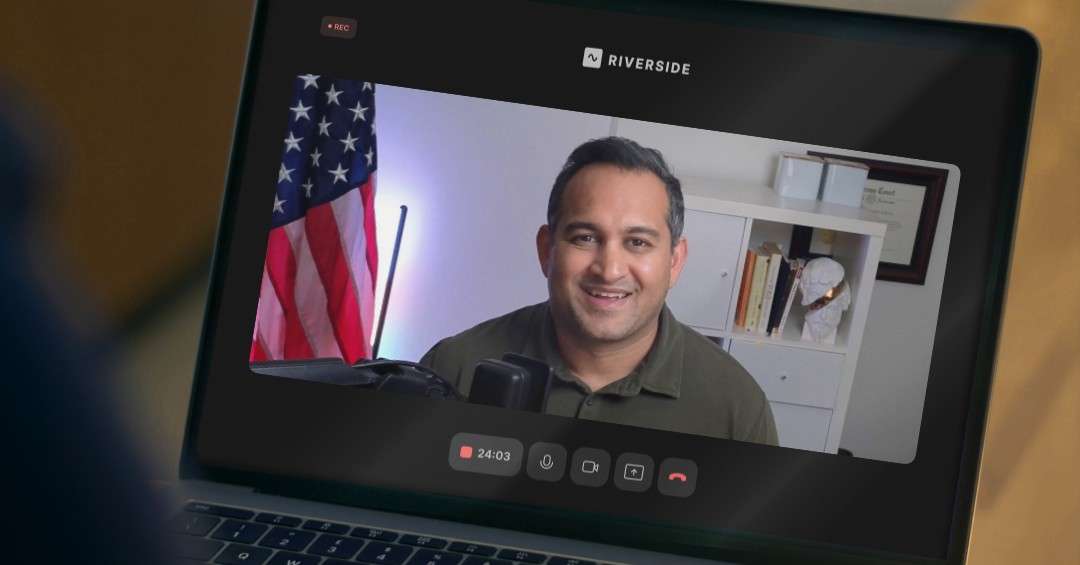
This is the FanDuel story, and Pankaj Raval broke it down on a recent episode of Letters of Intent. It is one of the most instructive cautionary tales in startup history, and every founder raising capital should understand exactly what happened.
How FanDuel Got to That Point
FanDuel launched in 2009 in Edinburgh, Scotland, as a daily fantasy sports company. Its rival, DraftKings, would soon become one of the most expensive competitors in tech history.
Between 2009 and 2014, FanDuel raised roughly $88 million. Then came the big one. In 2015, the company closed a Series E of about $275 million from a group that included KKR, Shamrock Ventures, Google, and NBC. On paper, the company had reached unicorn territory.
The cash burn problem
That Series E turned out to be the last equity round. Afterward, FanDuel raised two more rounds as convertible notes, pushing total financing to somewhere around $444 million.
Underneath the headline numbers, though, the business was burning cash at an alarming rate. By 2017, annual revenue sat near $124 million, while reported marketing spend in the customer acquisition war with DraftKings ran into the hundreds of millions.
Running out of options
With cash running low, the board brought in a new CEO to stabilize the company. Later that year, FanDuel and DraftKings attempted to merge, which would have stopped both companies from bleeding money. Regulators blocked it on antitrust grounds.
That left few options. An offer arrived from Paddy Power Betfair, the Irish bookmaker now known as Flutter Entertainment: $465 million, paid in stock rather than cash. Once you account for how the deal was structured, it is often cited as a transaction worth roughly $558 or $559 million.
Hold onto that number. It matters enormously.
FanDuel was also carrying about $158 million in debt that had to clear before closing. And two lead investors held a liquidation preference entitling them to the first $559 million of any sale.
The offer did not clear the bar. Common stockholders, including founders and employees, received nothing.
Liquidation Preferences: The First Mechanism
Understanding this deal requires understanding liquidation preferences, and most founders sign them without fully modeling what they do.
When a venture capital or private equity firm invests, it typically buys preferred stock. That preferred stock usually comes with the right to be paid back first when there is a liquidity event. Investors put money in because they want to get money out, and the preference protects that.
How the stack builds
The preference is often a multiple of the investment, and it accumulates across rounds. Every round you raise adds another layer.
In FanDuel’s case, two investors held a combined preference covering the first $559 million of proceeds. Everyone else stood behind them in line. When the sale came in below that threshold, the line simply ran out before it reached common stock.
Why this catches founders off guard
A single preference in a Series A rarely looks alarming. Neither does the next one.
The problem is cumulative. As Pankaj put it, the stack that looked reasonable in your Series A can become lethal once three or four more rounds sit on top of it. By the time you notice, the structure is already in place across multiple financing documents, and unwinding it requires the consent of everyone who benefits from it.
That is why the negotiation matters at the moment of signing, not later. These clauses do not matter at all until the day they determine whether you get paid anything.
Drag-Along Rights: The Part People Miss
Here is the question most founders ask at this point. If the deal was terrible for common shareholders, why did the founders not simply refuse it?
They could not. Drag-along rights took that option away.
What a drag-along clause does
A drag-along provision lets a defined majority of preferred shareholders force everyone else to accept a sale on the terms they negotiated. That includes founders and employees holding common stock, regardless of how they feel about the outcome.
In FanDuel, two major investors reportedly holding around 21% and 15% of the preferred shares were designated as dragging shareholders under the company’s agreements. Between them, they could pull everyone along.
The control you did not know you gave up
This is worth sitting with. You can hold a board seat, remain deeply involved in the company, and still have no ability to block a transaction that pays you zero.
As Pankaj said on the episode, you have effectively ceded control of your own exit. The board seat creates an impression of authority that the underlying documents do not support.
So the practical question is not whether your company has drag-along rights, because it almost certainly does. The question is what threshold triggers them, and which specific investors can hit that threshold. Those two details determine whether a small group can compel a sale over your objection.
Management Carve-Outs and Structural Misalignment
The third piece is the one Pankaj said should really make founders sit up.
The CEO brought in to steer FanDuel through the crisis had previously worked at KKR, one of the two lead investors enforcing the liquidation preference.
The reported payouts
When the sale closed, that CEO reportedly received a package worth more than $11 million. The chief legal officer reportedly made around $6 million. Broader executive payouts were reported as high as $13 million in golden parachute and earnout arrangements, with commentary around the deal describing a total management carve-out in the neighborhood of $30 million.
Pankaj was careful to flag that these figures come from public reporting and commentary rather than from his own review of the documents. He is not asserting they are accurate.
Meanwhile, common stockholders received nothing.
Why this is a governance failure
None of this was necessarily illegal. That is precisely what makes it instructive.
A management carve-out can create a situation where the people negotiating a sale on the company’s behalf are financially motivated to close it, rather than to evaluate whether it serves common shareholders. Add an executive with prior ties to the investor holding the preference, and the incentives point in one direction.
That combination is not simply an unfortunate market outcome. It is a structural misalignment, and it is the kind of thing a board should address through independent oversight before a transaction is ever on the table.
The Nuance Worth Keeping
It would be easy to read this as investors versus founders. The reality is more complicated, and founders who miss the nuance negotiate badly.
Venture capital runs on a power law. Investors know most bets will fail, and fund returns depend on one or two enormous winners. Downside protection through liquidation preferences is standard practice in that model, not villainy.
VC and private equity are not the same
One detail deserves attention. KKR is a private equity firm, not a traditional venture fund.
Private equity generally seeks more control and more structured downside protection than early stage venture investors do. That is a meaningfully different incentive set than most founders assume they are negotiating against when a growth round comes together. If your next round involves private equity, expect more aggressive terms and prepare accordingly.
Courts may not save you
Roughly 100 former FanDuel employees sued over the outcome in 2020, arguing the deal was structured unfairly. As of 2022, an appellate ruling went against them.
That result carries its own lesson. These outcomes are not easily reversed after the fact. What protects you is the language you negotiated before anyone made an offer.
Eight Things to Do Before Your Next Term Sheet
Pankaj closed the episode with practical steps. Here they are.
Model your exit waterfall at multiple prices. Include mediocre outcomes, not just optimistic ones. If a realistic, unglamorous exit leaves common shareholders at zero, fix that before signing.
Understand the full preference stack. Know the multiple, whether it is participating or non-participating, and how it accumulates. Push hard for one times non-participating.
Examine drag-along rights closely. Learn the exact percentage that can force a sale and which investors hold it.
Watch for conflicts on your own team. Close ties between an executive and a major investor are not automatically disqualifying, though they should trigger scrutiny from independent board members.
Scrutinize management carve-outs. Insist on transparency around any transaction bonus before the board approves a deal.
Do not raise more than your realistic exit range supports. FanDuel raised over $400 million and still needed a $559 million exit just to get common stockholders to break even. Bigger rounds raise the bar you have to clear.
Be honest with employees about option value. Opacity around cap tables is common, and it is not fair.
Get independent counsel. Not the firm your lead investor recommends. Have them walk you through the preference stack, drag-along thresholds, and change of control payouts every single round.
Where Carbon Law Group Fits
A big exit number in a headline tells you almost nothing about who actually got paid. The real story lives in the preference stack, the drag-along clauses, and sometimes in quiet arrangements for the people running the deal.
None of that is illegal or even unusual. All of it is negotiable before you sign, and nearly impossible to fix afterward.
Pankaj Raval and the team at Carbon Law Group advise Los Angeles founders on exactly this work: reviewing term sheets, modeling what different exit scenarios actually produce for common stock, and flagging the provisions that will matter years from now. We work as independent counsel, which in this context is the entire point.
If you are raising a round or considering an exit, contact Carbon Law Group at carbonlg.com. Do the unglamorous work now, while the terms are still negotiable.
Carbon Law Group’s links: https://linktr.ee/carbonlawgroup