
Publicity in the Era of AI Clones: What Founders and Creators Need to Know
A voice actor books a small job. The fee is modest. Her contract runs four pages, and one line inside it reads like boilerplate: assignment of voice and likeness, in perpetuity, for all media now known or later developed.
She signs it. Why not? It is one project.
Two years later, though, her voice narrates ads she never recorded. Someone trained a model on that session, and the company holding the assignment can use the result forever. Worse, she cannot license her voice to anyone else, because she gave away the exclusive right to it.
This is not a hypothetical. In fact, questions about the right of publicity are the kind of call Carbon Law Group fields more and more often.
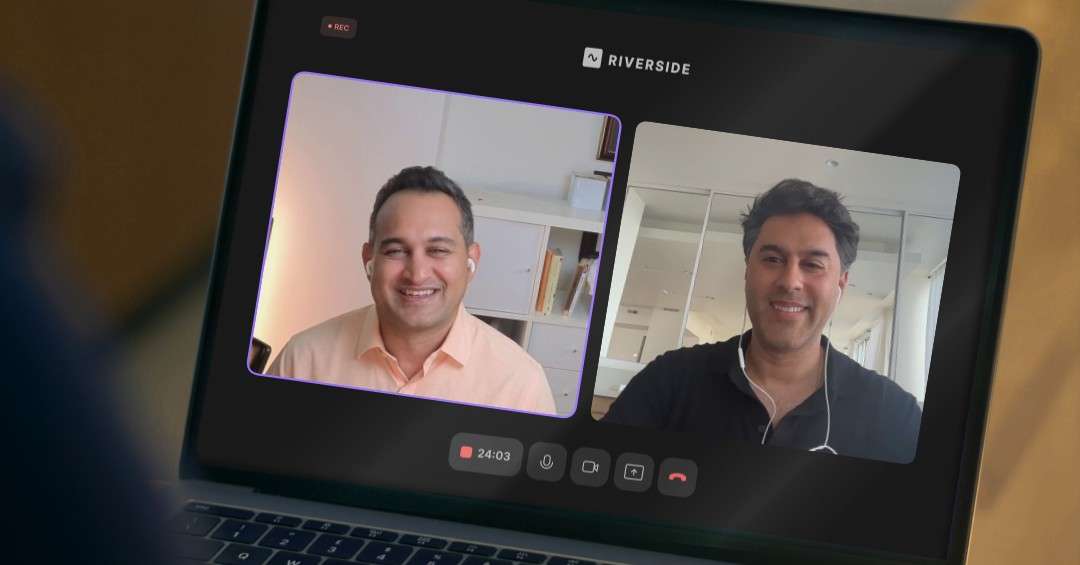
On a recent episode of Letters of Intent, Pankaj Raval and Sahil Chaudry broke down the law behind these situations: the right of publicity, and how artificial intelligence turned a quiet corner of state law into one of the most urgent issues in dealmaking today.
So here is what business owners, creators, and founders should understand.
Pankaj Raval and Sahil Chaudry break down the right of publicity in the era of AI clones on Letters of Intent, the podcast for dealmakers and risk takers.
Copyright Protects What You Made. The Right of Publicity Protects Who You Are.
Two rights, two different questions
Start with the distinction, because almost everything else follows from it.
Copyright protects the tangible expression of an idea: a script you wrote, a video you filmed, a song you recorded. It attaches only once you fix that work in some medium.
The right of publicity works differently. It protects your identity. Your name, your image, your likeness, your voice. In short, it stops other people from selling who you are without your permission.
As Pankaj put it on the episode, copyright protects what you made, while the right of publicity protects who you are.
This right emerged around the 1950s, once companies started using celebrity voices and images to sell products without asking first. Courts then had to answer a new question. Does a person own the commercial value of their own identity?
In most states, yes. But there is a catch.
Why copyright alone falls short
Federal law barely touches this area. Instead, the right of publicity lives mostly in state law, and the rules shift when you cross a state line. California sits at the center of the conversation, for obvious reasons. Hollywood is here, and so are most of the deals.
So why does copyright not simply solve the problem? Because your face is not a tangible expression of an idea. When an AI tool generates a voice that sounds like a well known actor, it may never copy a single recording. Nothing protected changes hands. Yet the harm is obvious.
There is a trademark angle too, since a distinctive voice can work as a source identifier. Matthew McConaughey has taken that route, for example, securing registrations tied to his persona, including a sound mark of his famous line from Dazed and Confused. However, trademark claims in this space have had mixed results, and courts have often pushed them back toward publicity law.
The right of publicity therefore stands on its own. It answers a question no other area of law handles cleanly: how do people recognize you, and who gets to profit from that?
The Perpetuity Trap: Assignment and License Are Not the Same Word
License, assignment, and the word “exclusive”
Here is where small businesses and individual creators get hurt.
The two words look interchangeable in a contract. They are not.
A license is permission. You keep ownership of your identity and let someone use it, on set terms, for a set period. An assignment transfers the right itself.
Now add the word exclusive, and the stakes climb again. If you grant an exclusive right, you cannot make money from that same voice or image with anyone else. You have not simply shared it. Instead, you have taken yourself out of the market.
Then add in perpetuity. Forever. No renewal date, no renegotiation, no second bite at the apple once your career takes off.
Pankaj described the outcome plainly. Someone does one project for a thousand dollars. AI then duplicates their voice. Suddenly it turns up everywhere, selling anything, and they have lost the ability to earn a dime from their own voice for the rest of their life.
This is not only an actor problem
Think about how many businesses now put people on camera.
Maybe you film a testimonial with your operations manager. Or you build a brand around a founder’s face. Perhaps a freelancer records your phone greeting, or three employees star in your TikTok account. Every one of those situations touches someone’s name, image, and likeness.
Two risks run in opposite directions here, and business owners should watch both.
As the talent, you risk signing away something you can never get back. As the company, you risk using an employee’s likeness beyond what you actually have permission to use, especially after that person leaves. A release covering one campaign does not automatically cover the AI version of that employee you create next year.
How we usually fix it
Carbon Law Group’s transactional team reviews these agreements constantly. Fortunately, the fix is rarely dramatic. Usually we convert an assignment into a license, narrow the exclusivity, add a term, define permitted media, and address AI training and synthetic copies head on rather than leaving them to guesswork.
Those changes cost very little at signing. Afterward, they are close to impossible to claw back.
The Imitation Precedent: Why the Law Was Already Ready for This
Midler v. Ford and the cases that followed
One of the most useful points Pankaj made is that this is not entirely new legal ground. Courts have handled imitation before.
Consider Midler v. Ford Motor Co., decided in 1988. Ford wanted Bette Midler’s voice for a commercial, and she declined. So the company hired a sound alike instead, someone who could deliver the same performance in a strikingly similar voice.
Midler sued. The court held that deliberately imitating a widely known, distinctive voice was actionable in California.
Waits v. Frito-Lay followed a similar path, paired with a false endorsement theory, after Tom Waits objected to the use of his sound in a commercial. More recently, NFL players brought claims against EA Sports over the use of their names and likenesses in video games.
Read those cases together and a principle emerges. The right of publicity reaches imitation, not just literal copying. Therefore it reaches AI clones.
What AI actually changed
That bridge matters, because creators are not waiting for Congress to invent a remedy from scratch. A framework already exists.
What changed is scale and speed. Before AI, imitation carried friction. You had to find a sound alike, book a studio, produce the spot, and buy media. Each step took time and money, and each step left a trail.
Today a convincing clone of your voice takes seconds. Someone can build a fake version of your face on a laptop and use it to sell anything to anyone. Pankaj mentioned watching an AI recreated episode of a well known sitcom riffing on current events, and noted the obvious: this technology keeps getting better.
The law survived the analog era of imitation. Now AI has supercharged the problem, and the volume of potential violations has exploded.
The No Fakes Act: What Federal Law Would Change
California’s guardrails today
California already offers real protection. Under state law, you cannot sign your publicity rights away in passing. A valid waiver generally requires voluntary and informed consent, specificity, and terms that are not unconscionable.
That structure exists because of the power gap between large studios and individual artists chasing their first break.
What the federal bill would do
Meanwhile, federal law is catching up. Different versions of the No Fakes Act have moved through committee for roughly three years.
If it passes, several things change at once.
First, the bill would create a federal cause of action for AI impersonations and deepfakes that violate publicity rights. Today you might have a state claim. Then you would have both.
That difference carries real weight. As Pankaj explained, federal court generally means a higher bar, sharper handling, and higher damages. Carbon Law Group litigates trademark matters in federal court regularly, and the change in posture is significant. State courts, by contrast, are often overwhelmed, and cases can drag for years.
Second, the bill would limit what a contract can do. Licenses would run in ten year intervals, with a renewal process rather than a permanent grant, and an outer limit of roughly seventy years after death.
Most importantly, you could not assign the federal right during your lifetime.
Sahil summed up the effect in one line. You will not be able to sell your identity outright. You will be able to license it.
For anyone negotiating in film, television, video games, music, or social media, that is a real shift in leverage. Until the bill passes, though, contract law carries the weight. Your agreement is your protection.
Someone Cloned My Voice. Now What?
Say the worst has already happened. A client calls because a stranger is using their voice or face online. Here is the analysis Pankaj walks through.
First, the facts of the use. What exactly appeared, where did it run, and who is behind it? Location drives which state laws apply, and often several apply at once.
Second, the contract. Does an agreement govern this use? Did anyone actually sign a release? Absent an active grant, the right of publicity generally stays with the person.
Third, the surrounding claims. Did the use imply endorsement or sponsorship? Does the conduct support a false endorsement claim, an unfair competition claim, or a consumer protection claim? Is there an underlying copyright in the recording or image?
Fourth, takedowns. Where copyright applies, the DMCA can be a fast lever for pulling content off platforms.
Finally, state specific statutes. A growing number of states have passed deepfake, digital forgery, or criminal impersonation laws that may apply on their own.
In short, no single statute solves this. Instead, we usually assemble the remedy from several sources at once, and the order matters.
Where Carbon Law Group Fits
Most people do not lose control of their identity in a dramatic moment. They lose it in a paragraph they skimmed.
Pankaj Raval and the team at Carbon Law Group work with founders, creators, actors, and business owners on exactly this. We review name, image, and likeness terms before anyone signs. Then we convert assignments into licenses, set time limits, define permitted uses, and address AI replication head on. Our team also builds the release process a business needs before it puts employees in its content.
If someone has already used your voice or image without consent, we can help you map the claims and pursue a takedown.
You do have rights here. The work is making sure your contracts do not quietly give them away.
Ready to talk it through? Reach Carbon Law Group at carbonlg.com, or schedule a call using the link below.
🔗 Learn More
Website: carbonlg.com
Connect with Pankaj: https://www.linkedin.com/in/pankaj-raval/
Connect with Sahil: https://www.linkedin.com/in/sahil-chaudry-6047305/
Carbon Law Group’s links: https://linktr.ee/carbonlawgroup
Click Here To Schedule A Call With Us