
What does it take to build a company from a simple idea, scale it to the NASDAQ, and then figure out what comes next?
Brendan Rogers knows the answer. He is the co-founder of Wag!, the pet services marketplace that became a household name and went public on the NASDAQ. Before that, he built and exited a social platform acquired by IAC. Today he is a partner at 2AMVC, investing in the next generation of founders building for India’s massive and rapidly growing consumer market.
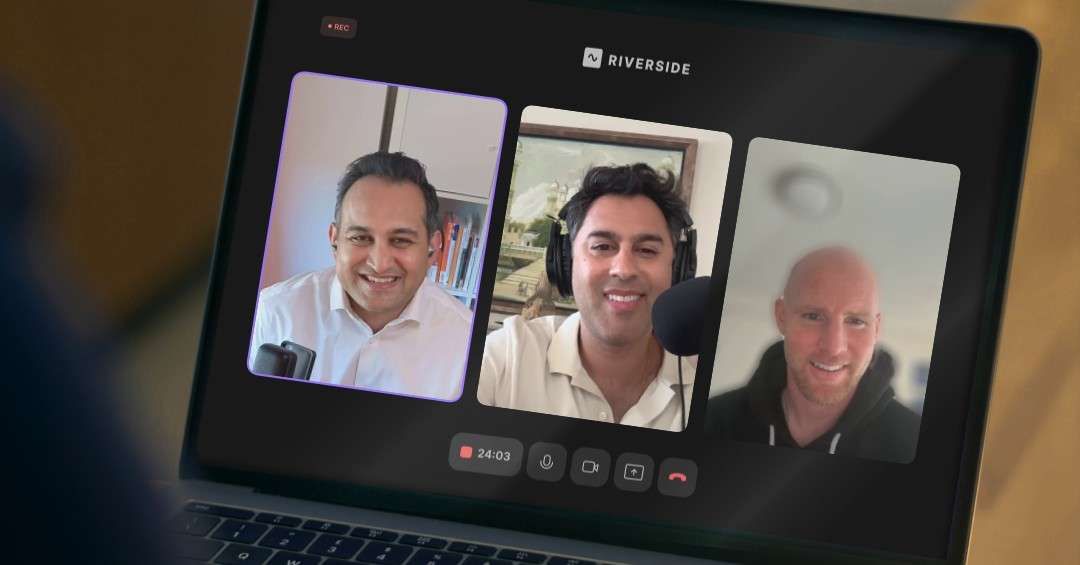
In Episode 58 of Letters of Intent, Pankaj Raval and Sahil Chaudry sat down with Brendan for a conversation about what actually goes into building a business. Not the highlight reel. Not the clean narrative version you see in press releases. Instead, it was the real thing: the discipline, the rejection, the chaos, and the uncommon ability to find peace within all of it.
The insights from this conversation apply to every stage of business. Whether you are launching your first company, scaling past your first ten employees, or trying to understand what success actually looks like on the other side of an exit, Brendan’s framework cuts through the noise.
The Athlete’s Edge: Why Sports Taught Brendan to Build
Before Brendan Rogers was a founder or a venture capitalist, he was an athlete. And that background, he argues, gave him something that no business school curriculum can replicate.
“I loved being on teams,” Brendan told the Letters of Intent hosts. “I loved the ups and downs and just having the same mission and being passionate about doing the same thing.”
Athletics teaches you to show up when you do not feel like it. Progress happens in the repetitive, unglamorous work that occurs before anyone is watching. Teams win, not individuals. And perhaps most importantly for entrepreneurs, athletics teaches you how to lose without quitting.
That athlete’s mindset carried directly into Brendan’s entrepreneurial journey. After his first exit, he did not take a year off. Instead, he looked at the momentum in mobile technology, saw the opportunity taking shape around social and consumer apps, and stepped back up to the plate. Not because he had to. Because that is what athletes do.
This principle resonates for small business owners too. Many of the best founders are not necessarily the most technically gifted or the most connected. They are the ones who treat their business like a sport. Daily practice becomes a habit. Competition gets studied carefully. Teams form around shared goals. And even when the scoreboard is not in their favor, they keep showing up.
Ask yourself: are you treating your business with the same discipline and commitment you would bring to a sport or physical practice you care deeply about? If not, that gap is worth closing.
The Scalability Formula: How Wag! Identified the Right Market
One of the most instructive parts of Brendan’s story is how Wag! was built. It was not a random idea. It was the product of a very deliberate analysis of what makes a category scalable.
The insight was simple but powerful. The relationship between Americans and their pets had fundamentally changed. Brendan put it directly: “The dog was in a dog house outside. Now the dog is in your bed. The care changed, and the LTV changed.”
LTV, or Lifetime Value, is the total amount of revenue a business can reasonably expect from a single customer over the course of their relationship. When you understand that a pet owner will spend thousands of dollars on care, grooming, training, walking, and boarding over the lifetime of their pet, you understand why building the central platform for that relationship is such a valuable position to occupy.
Wag! focused on Los Angeles as the launch market for a specific reason. High demand for pet care services existed alongside a large, flexible workforce of active people looking for income. Additionally, a culture that treats pets as full members of the family created the ideal environment for a marketplace to thrive.
The lesson for small business owners is this: before you build, study the category you are entering at the LTV level. Are your customers likely to return? Is the problem you are solving one that recurs frequently? Furthermore, is the market you are entering large enough to support real scale?
High-frequency categories with high emotional investment from customers create the kind of loyalty that sustains businesses through rough patches. Identify those categories early and build your product around them.
Shamelessness as a Skill: The Art of the Reach-Out
There is a word Brendan uses to describe one of the most important qualities in a founder. That word is shameless.
Not shameless in a negative sense. Shameless in the sense of being genuinely comfortable with rejection. This means reaching out cold to people who do not know you, pitching an idea before it is fully formed, and asking for the meeting or partnership before you feel like you have earned it.
“Why build someone else’s dream when you can build yours?” Brendan said on the podcast. “I’m going to swing for the fences.”
That mentality requires a level of comfort with discomfort that most people never develop. The impulse to wait until you are ready, until your product is perfect, until your pitch deck is polished, is one of the most reliable ways to never actually build anything.
Brendan offers a practical exercise. Whether you run a smoothie shop in Long Beach or an AI company in San Francisco, practice the reach-out. Send the email you have been hesitating to send. Ask for the introduction. Make the call. The worst outcome is a no, and a no costs you nothing.
For small business owners specifically, this lesson is immediately actionable. Your next key hire, your next major client, your next investor conversation, your next strategic partnership: all of these require someone to make the first move. Shameless does not mean desperate. Rather, it means confident enough in your vision to share it before it is perfect.
At Carbon Law Group, we see this quality in the founders who scale successfully. They reach out early and ask for help. Advisors, attorneys, and partners get brought into the process before a crisis forces the issue. That proactive posture makes every subsequent challenge easier to navigate.
The India Thesis: Why 2AMVC Is Betting on a Billion Consumers
Brendan’s work at 2AMVC represents a fascinating macro bet. While much of the venture capital world is focused on AI and emerging US markets, Brendan is looking at India.
The numbers behind the thesis are compelling. India has a population where half of its people are under 27 years old. The country has built out a fully digital financial and identity infrastructure: UPI for payments and Aadhaar for identity verification. These systems allow businesses to reach consumers and process transactions at a speed and scale that took decades to build in the United States.
Add to that a generation of young Indian consumers who are digitally native, ambitious, and increasingly able to participate in a growing economy. Brendan describes this as a “massive consumption story.” The opportunity is not just in selling products to Indian consumers. It is in building the platforms and marketplaces that will define how an entire generation shops, banks, communicates, and builds their own businesses.
Brendan was transparent about how he arrived at this thesis. It was not purely analytical. He partnered with a co-founder who had deep roots in the Indian entrepreneurial ecosystem. He recognized, moreover, that investing effectively in a market requires the kind of local knowledge and network that cannot be acquired from a conference room in Los Angeles.
For small business owners, the India thesis carries a broader lesson. The best opportunities are often where your peers are not yet looking. Brendan was early to pet care. Now he is early to India. Being willing to study an emerging market seriously before it becomes obvious is a competitive advantage that compounds over time.
AI, Bubbles, and the Discipline to Think Clearly
When Sahil asked Brendan about AI’s role in his investment thesis, the answer was more nuanced than most founders give.
Brendan is optimistic about AI as a tool. It is transforming how businesses operate, how people interact with technology, and how value gets created across industries. He has, in fact, invested in AI companies he believes in.
But he is also direct about what he sees from a venture perspective. “I think in AI, we are in a massive funding bubble. I don’t know if revenue is being reported correctly.”
That is a significant statement, and it deserves attention from any small business owner evaluating AI investments or partnerships. Not every AI company is what it claims to be. Similarly, not every valuation reflects genuine underlying business performance. In a market driven by FOMO and narrative, the ability to evaluate actual revenue, actual retention, and actual product utility is a critical skill.
Brendan’s discipline here reflects the athlete’s mindset applied to investing. Discipline means not chasing the crowd. Hard questions deserve answers, even when the excitement in the room makes that uncomfortable. Ultimately, it means betting on fundamentals: strong cultures, genuine consumer demand, and real revenue.
This is a framework that applies directly to how small business owners should evaluate their own partnerships, technology vendors, and strategic decisions. Just because something is trending does not mean it is right for your business. Ask for the proof before you commit.
Redefining Success: Peace Within the Chaos
The most memorable moment of the episode was Brendan’s answer to a simple question in the rapid-fire round. What does success mean to you today?
His answer: “Having peace within yourself.”
Not the exit number. The NASDAQ bell did not make the list. The valuation, the portfolio, and the recognition were all absent. Peace within yourself.
Pankaj paused the conversation to sit with that answer. It is worth pausing here too.
Brendan has built companies, exited, raised funds, and is now deploying capital into the next generation of founders. He has seen both sides of every stage of the entrepreneurial journey. And after all of that, the definition of success he returns to is internal. It is about self-awareness. Specifically, it is about enjoying the journey while it is happening. About not waiting for an outcome to give yourself permission to feel like you have made it.
“Sometimes slow is faster,” Brendan reflected near the end of the conversation. “Slowing down, going within, slowing the thoughts, because sometimes when you’re a founder and in this world, you can lose yourself.”
This is a message that every small business owner needs to hear regularly. The grind is real. The pressure is real. But ultimately, if you cannot find meaning in the process itself, no outcome will deliver what you are actually looking for.
Build the Right Foundation for Your Business
The lessons from Brendan Rogers are powerful because they are universal. The athlete’s discipline. The courage to reach out shamelessly. The ability to identify high-value markets before they become obvious. The clarity to think critically when everyone else is caught in hype. And the peace that comes from doing the work with integrity.
At Carbon Law Group, we work with founders and small business owners at every stage of this journey. Building the legal foundation of a growing company, from entity formation and equity agreements to contracts, employment compliance, and intellectual property protection, is what allows you to focus on the things that actually build a great business.
The legal structure of your company is the foundation everything else rests on. When it is built correctly, you can move fast, take risks, and focus on growth. When it is not, however, those same moves expose you to risks you should not have to carry.
Schedule a consultation with Carbon Law Group at carbonlg.com. Let us help you build on solid ground.